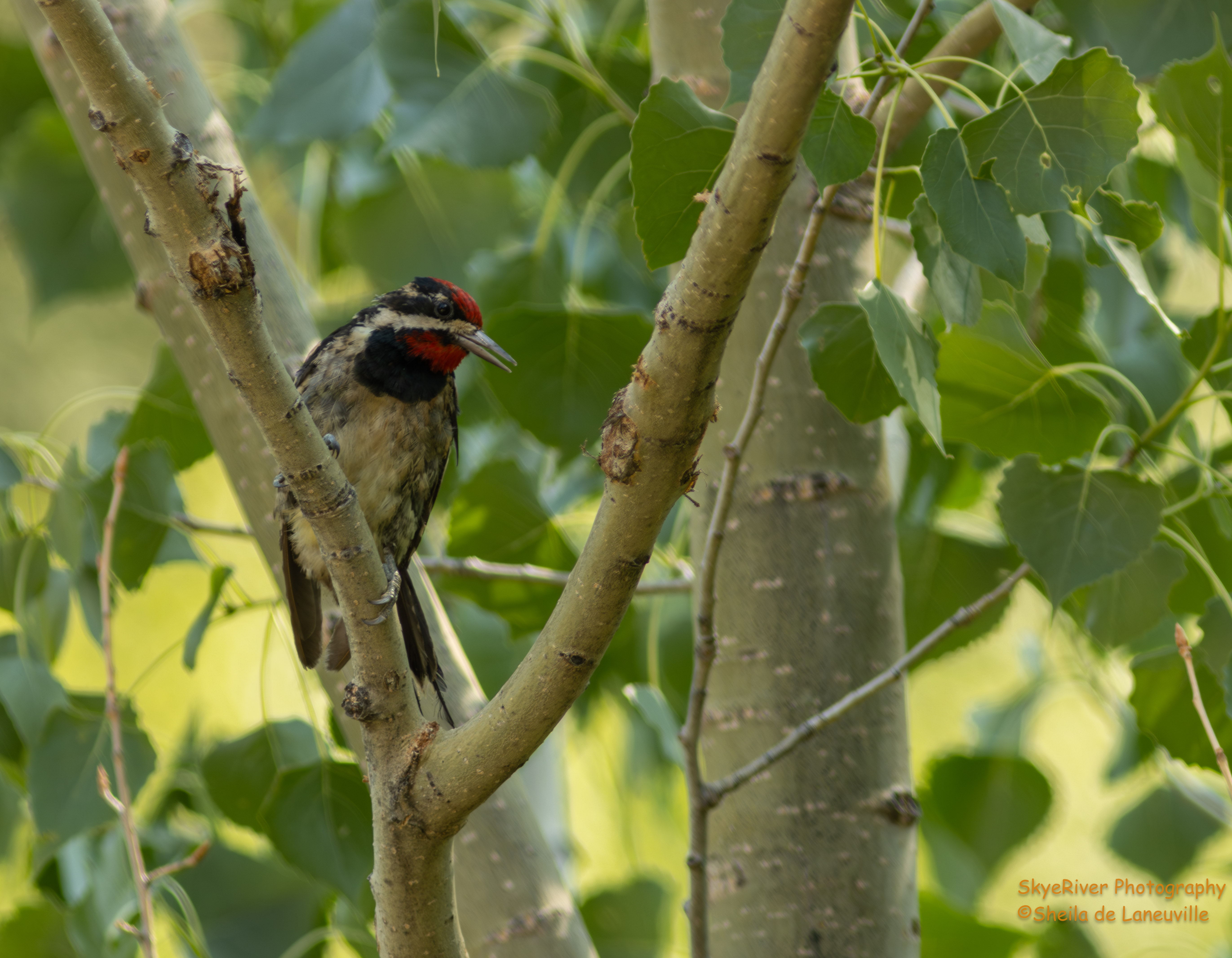
I have been enjoying seeing Red-naped Sapsuckers flitting around in my back yard. We have numerous Aspen, Birch and Pine trees on our property, which they seem to love.
Female. Look at her pretty yellow belly.
Red-naped Sapsuckers: Are industrious woodpeckers with a taste for sugar. They drill neat little rows of holes in aspen, birch, and willow to lap up the sugary sap that flows out. The presence of sap wells is a good indication that they are around, but so are their harsh wailing cries and stuttered drumming. The red patch on the back of their head helps separate these sharply dressed black-and-white sapsuckers from Yellow-bellied Sapsuckers in the East and Red-breasted Sapsuckers along the western coastal states. (taken from the web).
Male. A handsome guy dressed in shades of Red, Black and Yellow.
Cool facts: (taken from the web)
If you think 3 of the 4 species of sapsucker look remarkably similar, you’re not imagining it. The Red-naped Sapsucker is closely related to Yellow-bellied and Red-breasted Sapsuckers. All 3 were considered the same species and called Yellow-bellied Sapsucker until 1983 when researchers found that they were distinct species. The red-naped hybridizes where it comes in contact with the other two species, and birds intermediate in plumage are sometimes found.
Sapsuckers, despite what their name implies, do not suck sap, but are specialized for sipping it. Their tongues are shorter than those of other woodpeckers, and do not extend as far out. They lap sap up with the tip of the tongue, which has small hairlike projections that help hold the sap, much like a paintbrush holds paint.
Sugary sap is a hot commodity and some species, such as the Rufous, Calliope, and Broad-tailed Hummingbirds, follow Red-naped Sapsuckers around, stealing a sweet drink when they can. These hummingbirds can also get an easy meal by picking out insects stuck in the sap.
Sapsuckers drill hundreds of tiny holes in trees. Surprisingly, most trees survive this quite easily, in the same way that maple trees survive humans tapping them for maple syrup.
The oldest recorded Red-naped Sapsucker was at least 4 years, 11 months old when she was found in Wyoming in 2011, the same state where she had been banded in 2008.
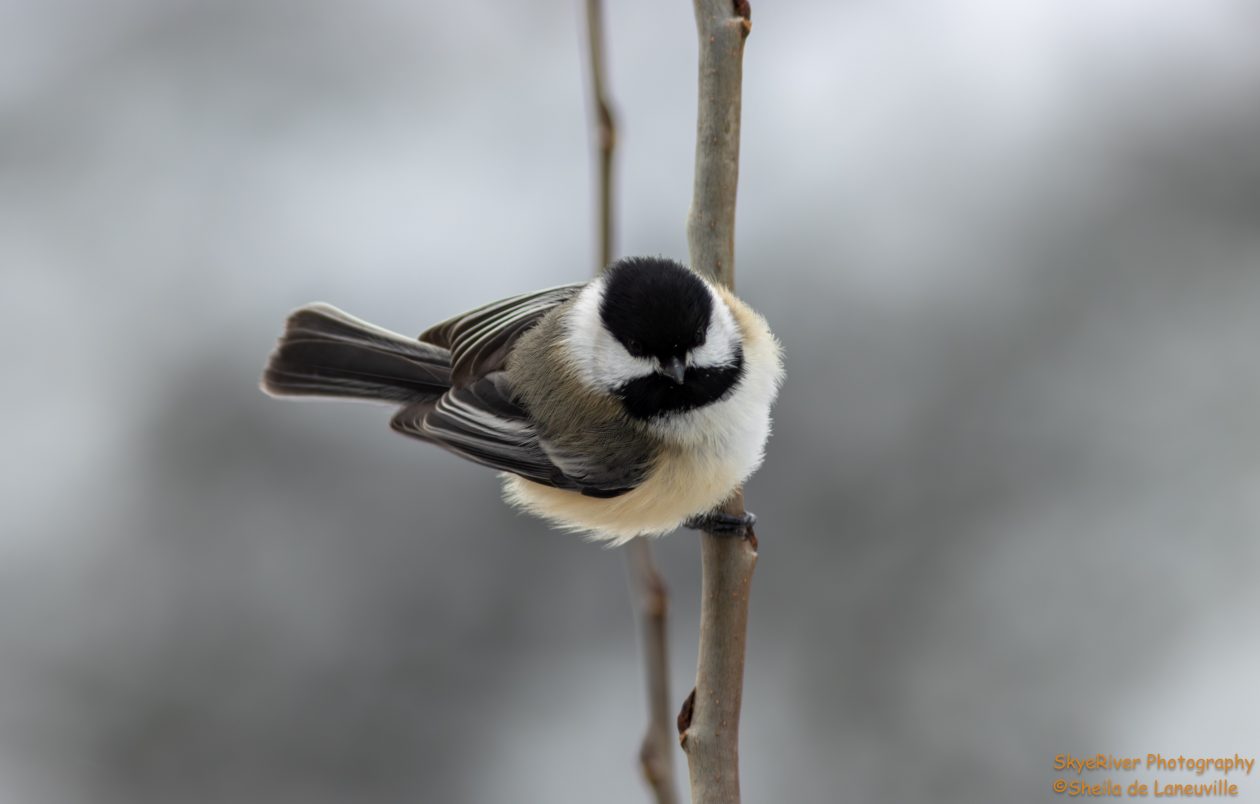
Red-naped Sapsucker nest holes make good homes for other species. Many species that nest in holes don’t have a specialized bill needed to carve out their own home, including Mountain Bluebirds, nuthatches, and chickadees. The small holes excavated by sapsuckers provide safe places for smaller hole-nesting birds to nest.
A fun hobby that keeps you active while learning new interesting facts about nature!
HAPPY BIRDING!
LikeLoading...
Related
One thought on “~Red-naped Sapsuckers among the Aspens”
Very educational. Y’all both are really wonderful nature lovers… It does my heart so good to see guys like you care for what God has put on this dedicate earth!

 Wolf Song Blog
Very educational. Y’all both are really wonderful nature lovers… It does my heart so good to see guys like you care for what God has put on this dedicate earth!
Thank you!