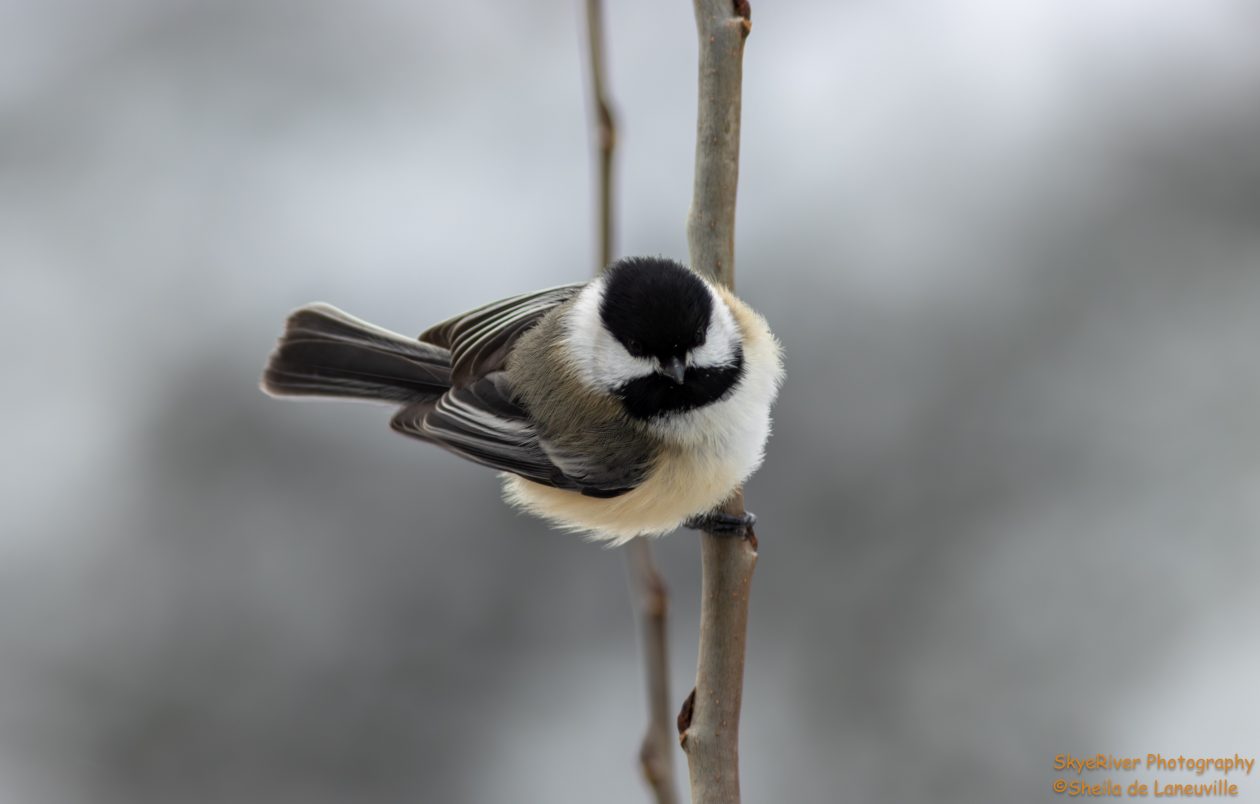
Pink-sided. Winter brings them into our yard, They love eating seed and suet.
The Dark-eyed Junco is a medium-sized sparrow with a rounded head, a short, stout bill and a fairly long, conspicuous tail.
Dark-eyed Juncos are birds of the ground. They hop around the bases of trees and shrubs in forests or venture out onto lawns looking for fallen seeds. You’ll often hear their high chip notes, given almost absent-mindedly while foraging, or intensifying as they take short, low flights through cover.
Dark-eyed Juncos breed in coniferous or mixed-coniferous forests across Canada, the western U.S., and in the Appalachians. During winter you’ll find them in open woodlands, fields, parks, roadsides, and backyards.
(Info taken from the web)
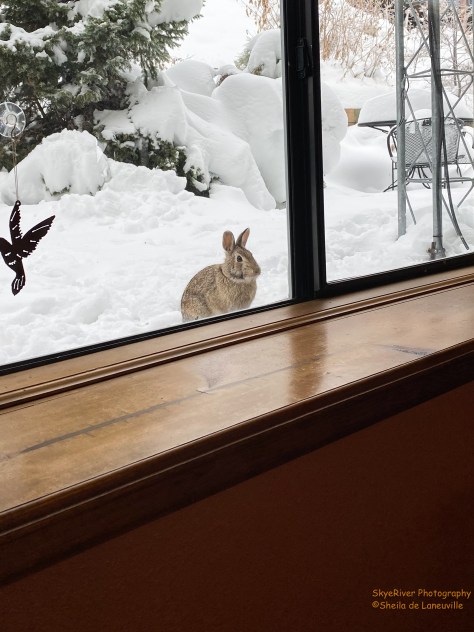
~We had a little furry visitor this morning. It was 18 degrees outside. I should have let her in.
Please remember to help the birds survive the winter by putting up bird feeders.
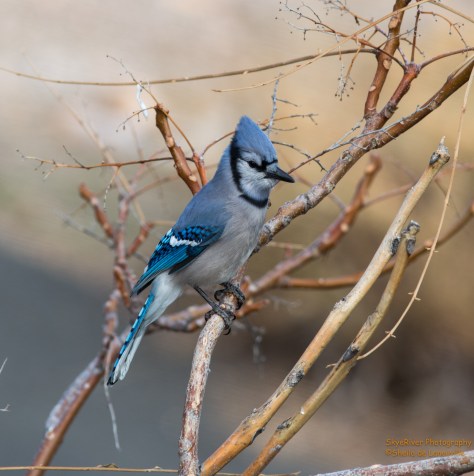
What a wonderful surprise it was to glance down at one of our feeders and see this beautiful, perhaps first spring, Indigo Bunting. I don’t like posting photos of birds at the feeder, but he was so skittish I was just glad to capture him at all.
We haven’t spotted him since this photo was taken and we are hoping, after being in its breeding range this spring and summer, he is well on his way to winter ranges.
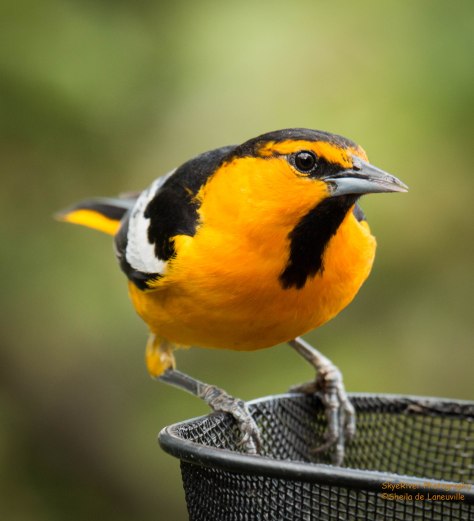
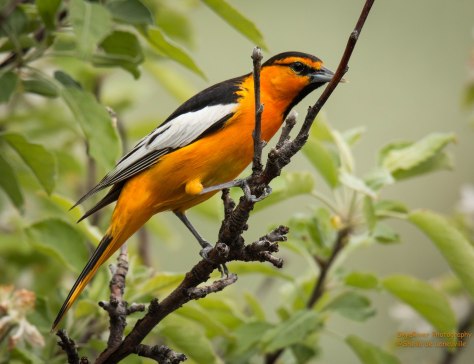
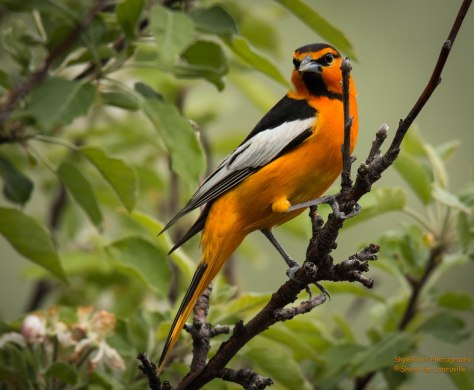
As I mentioned in one of my previous post, the Bullock’s Orioles have migrated north. Some will nest and spend the summer here in Loveland, Colorado. I look forward to their arrival every spring and enjoy seeing them in my yard. I have seen six males at my feeders so far, no females.
“Did I eat it all?”
A new feeder I purchased last week. They go through a lot of oranges; I just put these out.
“Where’s the Peanut Better?”
These photos were taken using my Canon 70D with Tamron 600mm lens.






 Wolf Song Blog