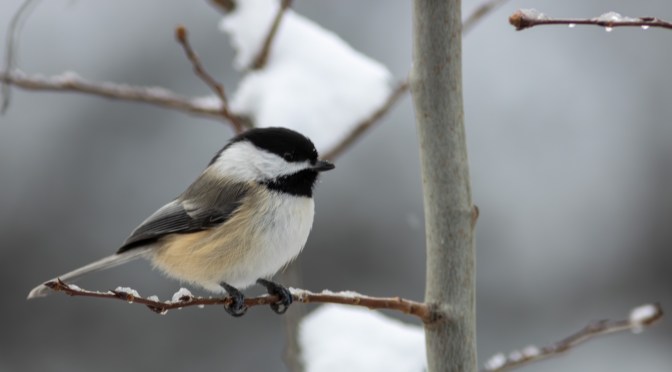
I was looking at my posts today and discovered I started this post on the Black-crested Titmouse last year, but didn’t publish it.
The Black-crested Titmouse or Mexican titmouse, is a passerine bird in the tit family Paridae. Once considered a subspecies of the tufted titmouse, it was recognized as a separate species in 2002. It is native to southern Texas, Oklahoma, and east-central Mexico.
~Photos taken January 17, 2024 at South Llano State Park
While on a walk I came upon this cute Black-crested Titmouse as it seemed to study this faucet. With the South Llano River very close, I had to wonder why this Titmouse felt it necessary to try and drink from this faucet. It might have been just easier. The river water might not have been easily accessible. If I remember right it was pretty cold and this faucet might have been turned on to drip to keep the pipes from freezing. It sure gave me a smile and made a fun photo.
These guys are hard to capture, because they don’t stay still for very long. I got lucky because it was determined to get a drink.
Well done!
Quote:
“Intelligence without ambition is a bird without wings.” Dali
I truly didn’t realize it has been so long since my last post. Time sure seems to fly by. I would like to get back to posting and decided to start with this post.
I want to share a significant change in my life. After thirty-nine years in Colorado my husband and I decided to move to Spearfish, SD.
As snow-birds, since retiring, we have traveled in our RV to many states, mostly in the south and west. When we decided we wanted to leave Colorado it became a question of where – Texas, Florida, Arizona, Wyoming, Idaho.
After many discussions and observations along our travels we decided that the western part of the United States suits us best. Since we both grew up and lived in Louisiana until 1986, we hold a deep fondness for the south. We have family and friends there and we will continue to travel and enjoy our time with them.
Why Spearfish, SD? We visited the Black Hills a few years ago and liked the area. We returned about two years ago to again look around and get a better sense of the area. After considering a move to Wyoming or Idaho we thought we would again go stay a while in Spearfish, SD and look at homes.
Colorado is a beautiful state and we enjoyed our time there. We have many happy memories of spending time with our wonderful friends, and enjoyed many types of activities in the Rockies. Colorado is where I met my birding mentor and developed my fondness for birding. However, it was becoming much too crowded for our liking. So we were ready to move.
This past July we purchased a home in Spearfish on 4.5 acres with lots of Oak, Pine and Aspen trees. Love them! It is about four miles from downtown Spearfish in an area called Eagle Ridge. There are only 33 homes on this mountain, which makes it so nice. One way in and out.
This area supports Wild Turkeys, White-tailed Deer, and even a Mountain Lion that we captured on camera right out side of our front door. Yikes! It was huge and appeared healthy. I will post vids of the Turkeys, Deer and the Mountain Lion in my next post along with a few of my South Dakota bird friends.
The western vibe of Spearfish with only 12,000 people simply speaks to my heart as Loveland did when we first moved there. If you would like to learn a little more about Spearfish go to the web-site below.
Getting our Colorado home ready to sell was arduous to say the least. Many trips to give items away, take items to the dump and even harder deciding what to keep and pack up. There were times of feeling sad and questioning if this was the right decision. Those thoughts were probably expected and didn’t last too long. We had a great realtor and a great moving company that made the experience better and the house sold in 1.5 days.
One of the couples that viewed our Loveland house wanted to do so around 8:30pm. I believe they wanted the experience of seeing the night view, the city lights of Loveland from the deck. I took this photo before leaving the house so they could take the tour. We turned on all the lights.
I am going to miss our view of Loveland from our hill and the Black Bears that came to visit every fall. And, the full moon rising over the city. But, I don’t miss living in a tri-level home on a hill. We lived there since 1987.
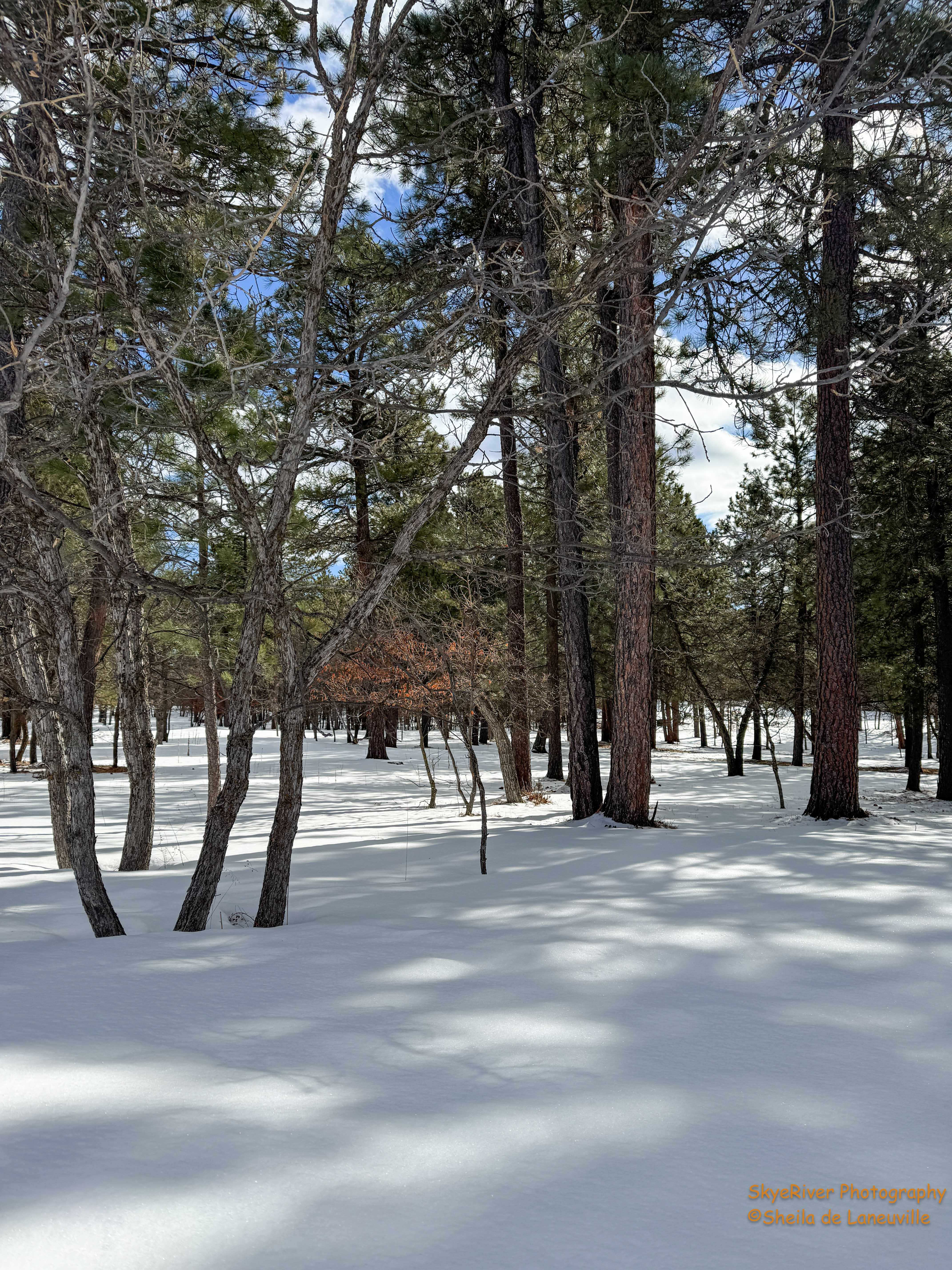
We are pretty much settled now in Spearfish and decided not to travel this winter. Since being here we have experienced a warm couple of summer months, a gorgeous fall with all its brilliant colors and currently a beautiful white winter.
~Summer
Summer view of our drive-way, which is about 100 yards.Summer view of our back deck and a portion of the back yard.Here we are last summer, prior to buying the house, riding our e-bikes along one of many trails in and around Spearfish. We stayed at the Spearfish City Park in our RV. It is a very beautiful and popular park with Spearfish Creek running through it.
~Fall
Fall colors of Aspen and Oak trees.
~Winter
My Keeshond, Miss Riley Ann is loving the cold and snow. She wants to be out on the back deck when it is snowing and even when the temperatures are in the single digits. We closely monitor how much time she is out there and only went we are watching her.
Love this girl!
And, we are loving the small town atmosphere, and the slower pace of life that comes with a small community. Not that our lives in Colorado were fast paced. 🙂
So, as I said I want to post more and look forward to sharing more of the Black Hills area with you.
I found this quote the other day and thought it fit. Moving decision made and looking forward to going forward.
I would give credit to whom ever sketched this, but I don’t know.
The Pied-billed Grebe is found on streams, marshy ponds, lakes and freshwater marshes. Winters in estuarine and marine habitats.
I saw my first Pied-billed Grebe in April of 1986 in Colorado. This little guy was swimming with a mate in and out of these reeds.
Pied-billed Grebe
What is special about a pied-billed grebe?
Pied-billed Grebes can adjust their buoyancy and often use this ability to float with just the upper half of the head above the water. They catch small fish and invertebrates by diving or simply slowly submerging. They build floating nests of cattails, grasses, and other vegetation.
Not a very good photo, but it makes me wonder how big a fish they can swallow. I love to just sit and watch them dive for fish.
While I was creating this post and looking up information on the Pied-billed I came across this web-site. I was truly surprised to read that the status of the Pied-billed Grebe is Endangered. Very sad.
This web-site lists information and fun facts about the Pied-billed and the reasons why they are endangered.
The Say’s Phoebe is often found in wide, open settings. They have cinnamon-washed underparts and a gentle facial expression. They are very patient hunters. This Say’s was very patient with me and I believe he was smiling at me as a tried to capture several photos of him.
Say’s Phoebe
Some cool facts about the Say’s: (from the web)
~Charles Bonaparte, a nephew of Napoleon, named the Say’s Phoebe after American naturalist Thomas Say, the first scientist to encounter the bird, at a site near Cañon City, Colorado, in 1819. During the same expedition, Say also collected 10 additional bird species. Despite finding several new bird species in his career, Say is perhaps better known as the “father of American entomology.”
~Say’s Phoebes have been in the U.S. for a long time. Paleontologists discovered Say’s Phoebe fossils in Arizona, California, New Mexico, and Texas dating back to about 400,000 years ago (the late Pleistocene).
~The Say’s Phoebe breeds farther north than any other flycatcher and is seemingly limited only by the lack of nest sites. Its breeding range extends from central Mexico all the way to the arctic tundra. It may be following the Alaska pipeline even farther north, nesting on the pipeline itself. “Cool”
~When a Say’s Phoebe finds a good nesting site, it often uses the nest year after year. In central Kansas a Say’s Phoebe reused the same nest 5 years in a row.
~Say’s Phoebes will nest just about anywhere: in mailboxes, on machinery, and even in old nests built by other species. Researchers reported them using nests built by Black and Eastern phoebes, Cliff, Bank, and Barn swallows, and American Robins.
~They sally from low perches to snatch insects in midair or pounce on them on the ground. Say’s Phoebes often pump their tails while perched on a wire, fence post, or low bush.
Hope you had a gentle expression on your face as you read this posting! Keep Smiling!
A strikingly beautiful gray, black and white bird with a deadly hook at the tip of their bill which helps them kill their prey.
Shrikes are rare among songbirds for their lifestyle of hunting and eating animals. They often kill more prey than they need at one time, but they don’t let it go to waste. They often store food for later by impaling their prey on spines or barbed wire, earning the nickname “butcher birds. (from Web)
This bird was a very cooperative subject! He would return to this “stag” and stay for long periods of time.
This Vermilion Flycatcher would sit in this location for just about the same length of time the Shrike sat in the stag. The Vermilion was hunting insects, right near the Shrike. I sure am glad I didn’t see it becoming dinner for the Shrike. I guess this little guy wasn’t competition.