I took these photos back in 01/2024 at Patagonia Lake State Park. I don’t believe I have shared them.
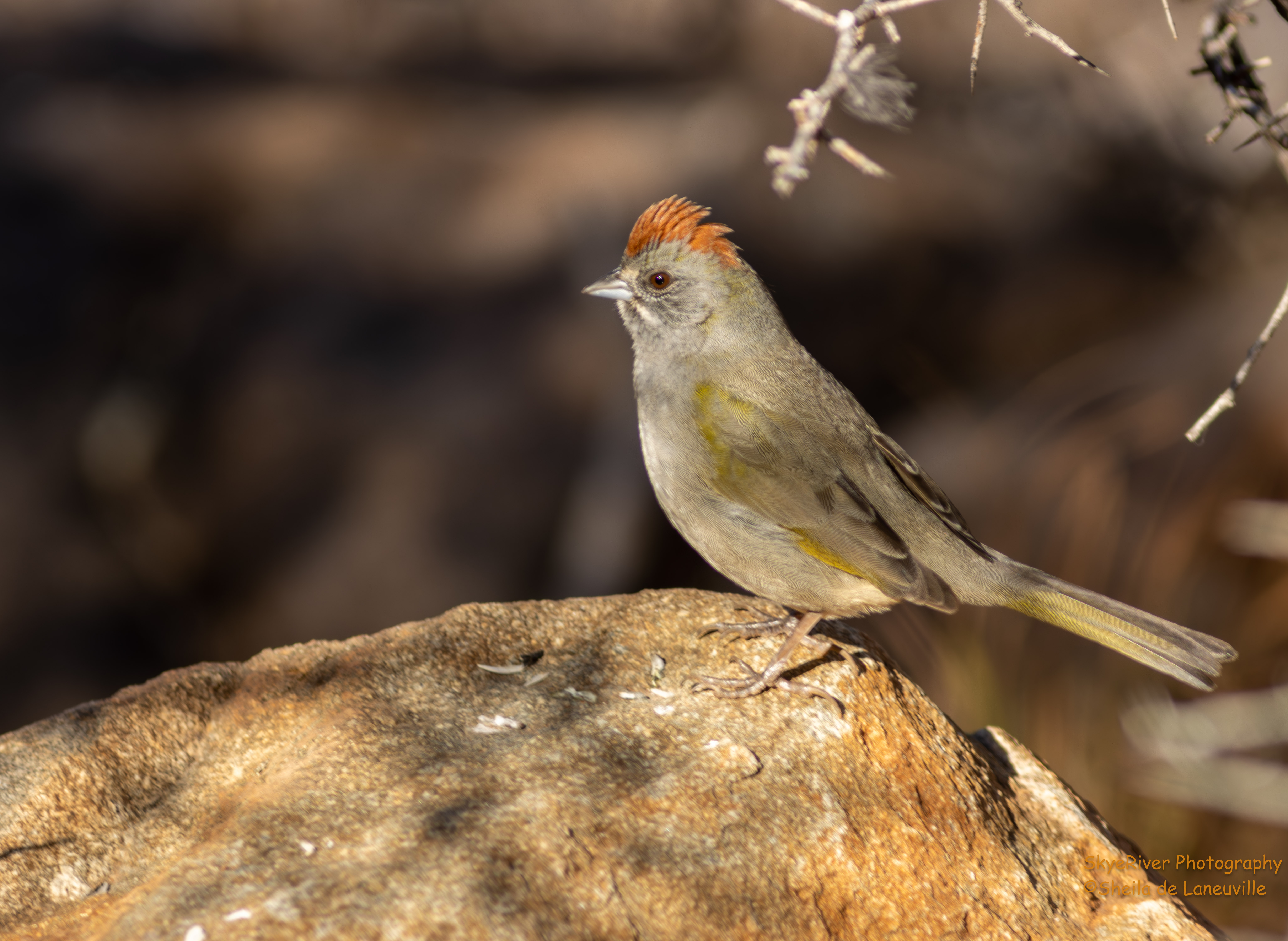
I love Towhees. This Green-tailed Towhee is such a beautiful bird with its white throat, distinct rufous head to its olive green wings, back and tail. It’s one of the smallest Towhees with a huge personality.
They are very secretive, so when this one popped up on this rock I was thrilled. Like most Towhees you find them hidden under scrubs while scratching for food on the ground. They prefer shrubby habitats like sagebrush, mountain mahogany and mixed shrublands. They eat seeds, berries and insects.
This photo shows its rufous colored head.
The Pyrrhuloxia is a red and grayish bird that looks similar to the Northern Cardinal. Sometimes it is referred to as the “desert cardinal”. The Pyrrhuloxia has a beauty all its own with its red face, chest and tail. It prefers arid environments like deserts, mesquite thickets and scrublands. They like to eat seeds, fruit and insects. What a fun word to learn how to pronounce!
Pyrrhuloxia- male
Patagonia Lake State Park has a huge variety of birds and is a fun place to camp.
I hope you have enjoyed seeing these two colorful birds!
The Vermilion Flycatcher, what a beautiful, feisty little bundle of color.
The vermilion flycatcher is a small bird native to Central and South America. They capture insects on the wing by flying suddenly out from an exposed perch. These foraging flights are often short and direct, and often involve a swift swoop that takes them in a looping circle out and back to the same perch. I so enjoy watching them hunt for food and enjoy the challenge of taking their photo.
I found this description of this bird on the web and it certainly fits its personality.
In Aztec mythology, the bird is associated with the god of the sun. It is seen as a symbol of strength and vitality.
Male
I think this juvenile felt very handsome and just wanted his photo taken.
What a beautiful juvenile!
And, last but not least the gorgeous female with her tinge of salmon color.
I hope you enjoyed seeing these colorful Vermilions!
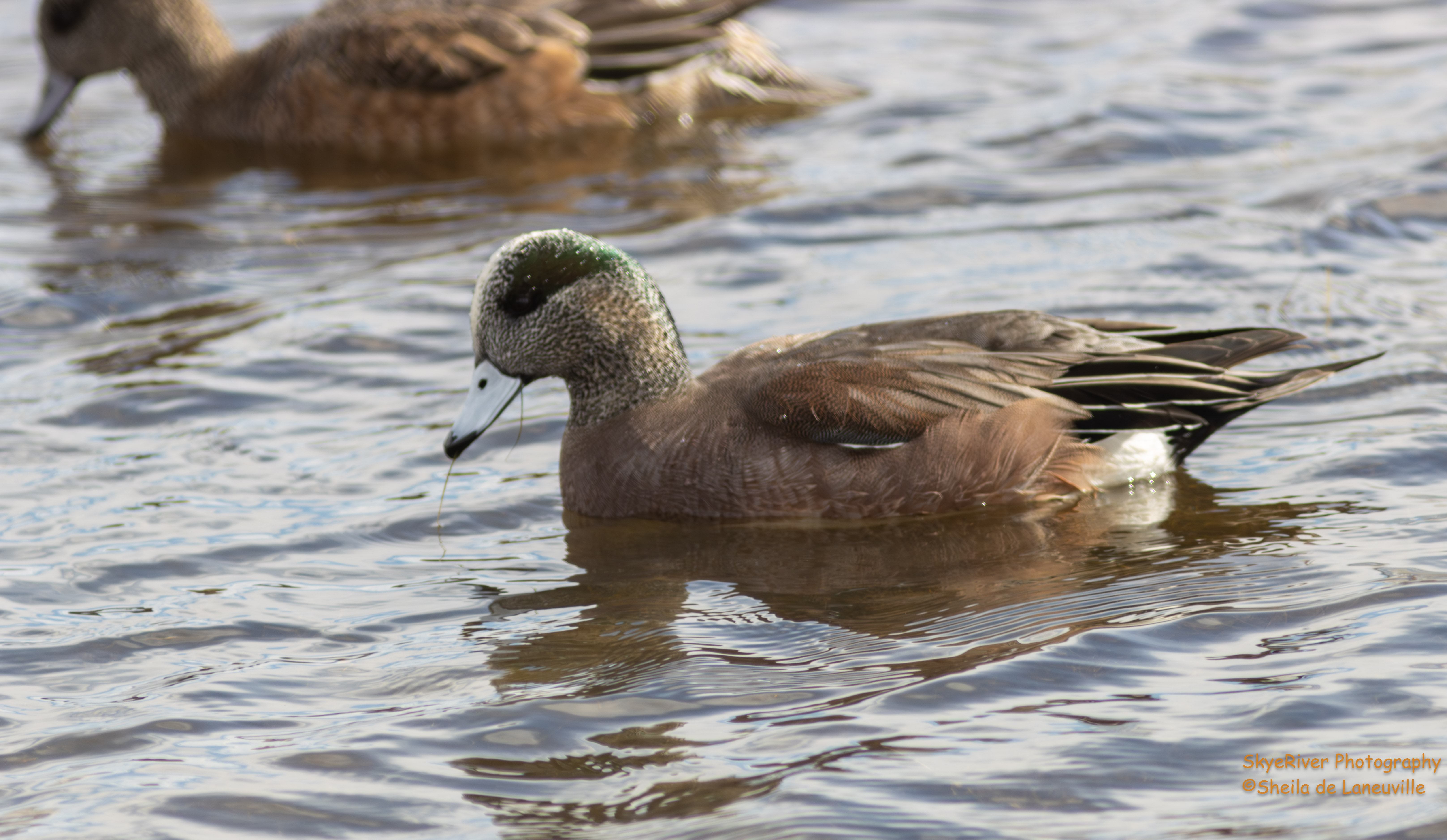
~Photos of the American Wigeon taken at Canoa Ranch near Green Valley AZ – January 2023
Male
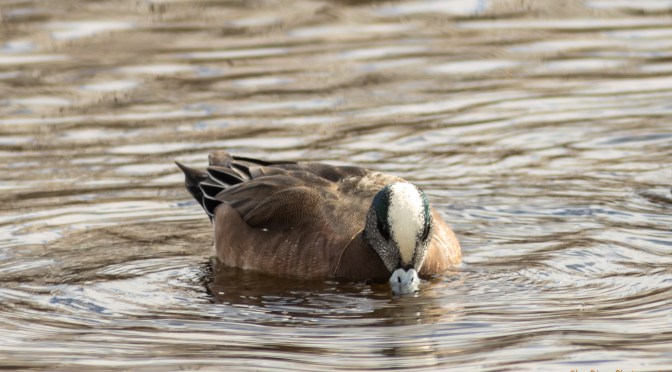
The drake’s are commonly called “baldpates” because of the white on their crown and forehead.
The American wigeon is a bird of open wetlands, such as wet grassland or marshes with some taller vegetation, and usually feeds by dabbling for plant food or grazing, which it does very readily.
While on the water, wigeons (dabblers) often gather with feeding coots, redheads, canvasbacks and other divers, and are known to grab pieces of vegetation brought to the surface by diving water birds, so are sometimes called “poacher” or “robber” ducks. They are fond of wild celery, a deepwater plant, that they poach from divers.
Pair
American wigeons are serially monogamous; they form pairs that remain together during a single breeding season and after the second week of incubation, males usually leave to molt. They nest on dry land.
Wigeons also commonly feed on dry land, eating waste grain in harvested fields and grazing on pasture grasses, winter wheat, clover, and lettuce.
Having a largely vegetarian diet, most wigeons migrate in the fall well before northern marshes begin to freeze. The American wigeon is highly gregarious outside of the breeding season and forms large flocks.
A pretty female.
So, if you are out and about near open fields, ponds and marshes look for this beautiful duck with the white forehead and bright green on the side of their face.
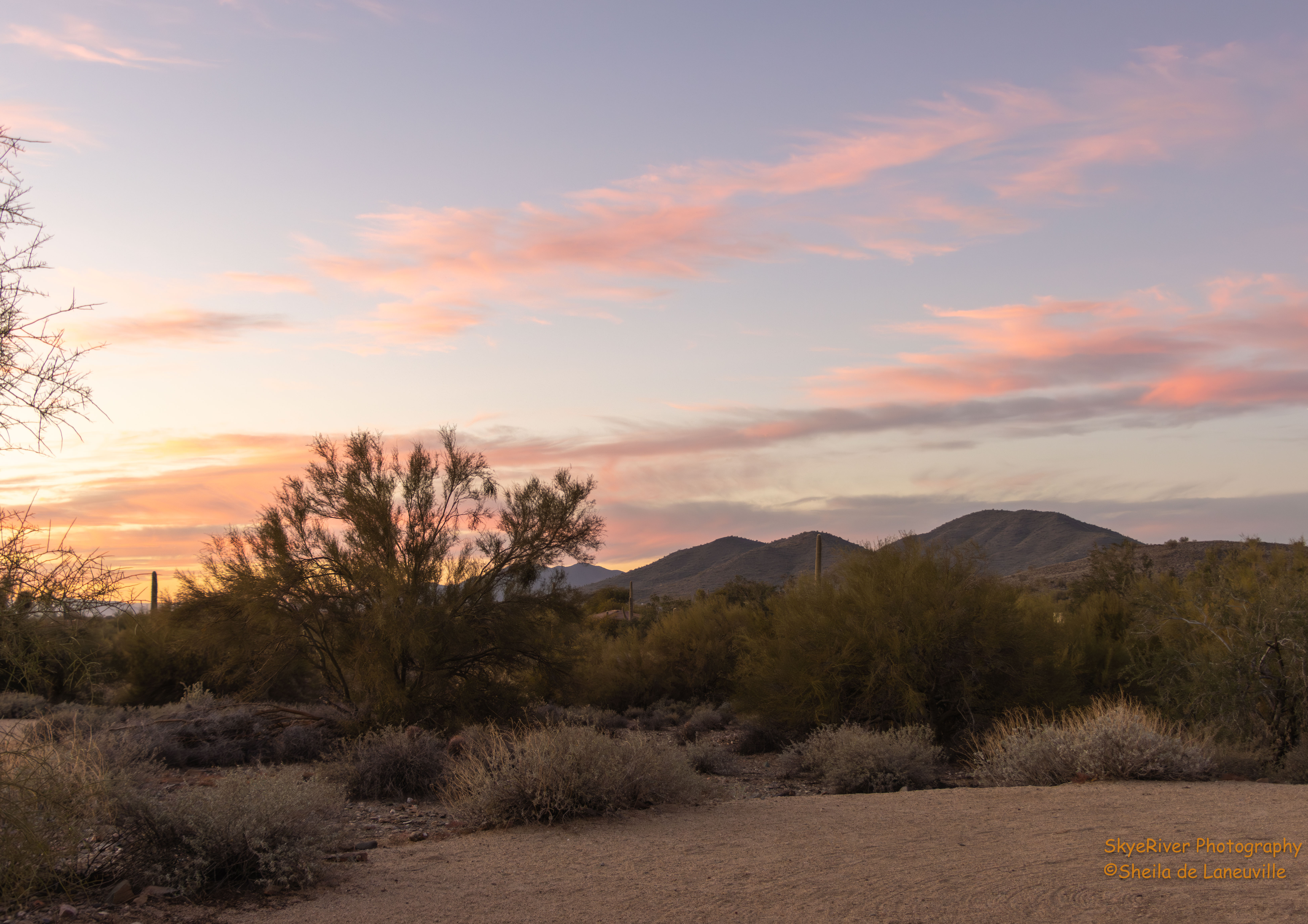
~Cave Creek Regional Park is located in Maricopa County in Cave Creek, AZ.
We have visited this park many, many times over the years. The park is known for camping, hiking, birding and stargazing just to mention a few.
Here is a blurb from the park’s website.
Welcome to Cave Creek Regional Park. The park, which is located north of Phoenix, became part of Maricopa County’s regional park system in 1963. This 2,922-acre park sits in the upper Sonoran Desert and ranges in elevation from 2,000 feet to 3,060 feet. This desert oasis provides any hiker and equestrian majestic views. The Go John Trail loops around a mountain to provide the illusion of being miles away from civilization. In the 1870s, fever stricken gold seekers staked their dreams on the jasper-studded hills. Guided trails to these sites give visitors an opportunity to travel back in time.
If one is so inclined to venture out of the regional park you are within easy access to Cave Creek, Carefree, Phoenix, and Scottsdale. But, truly why would you want to leave the park? You’re there to enjoy nature. Right?
Well, perhaps, to grab a bite to eat. One of my favorite places to eat in Cave Creek is Harold’s. According to their website it has been around since 1935. If you like the feel of an old, western style place serving great food try Harold’s. Here is a bit of their history: https://haroldscorral.com/about/harold-s-history/
If you enjoy watching a sunset and stargazing, Cave Creek is one of the best locations for these activities.
Well, I had to try.
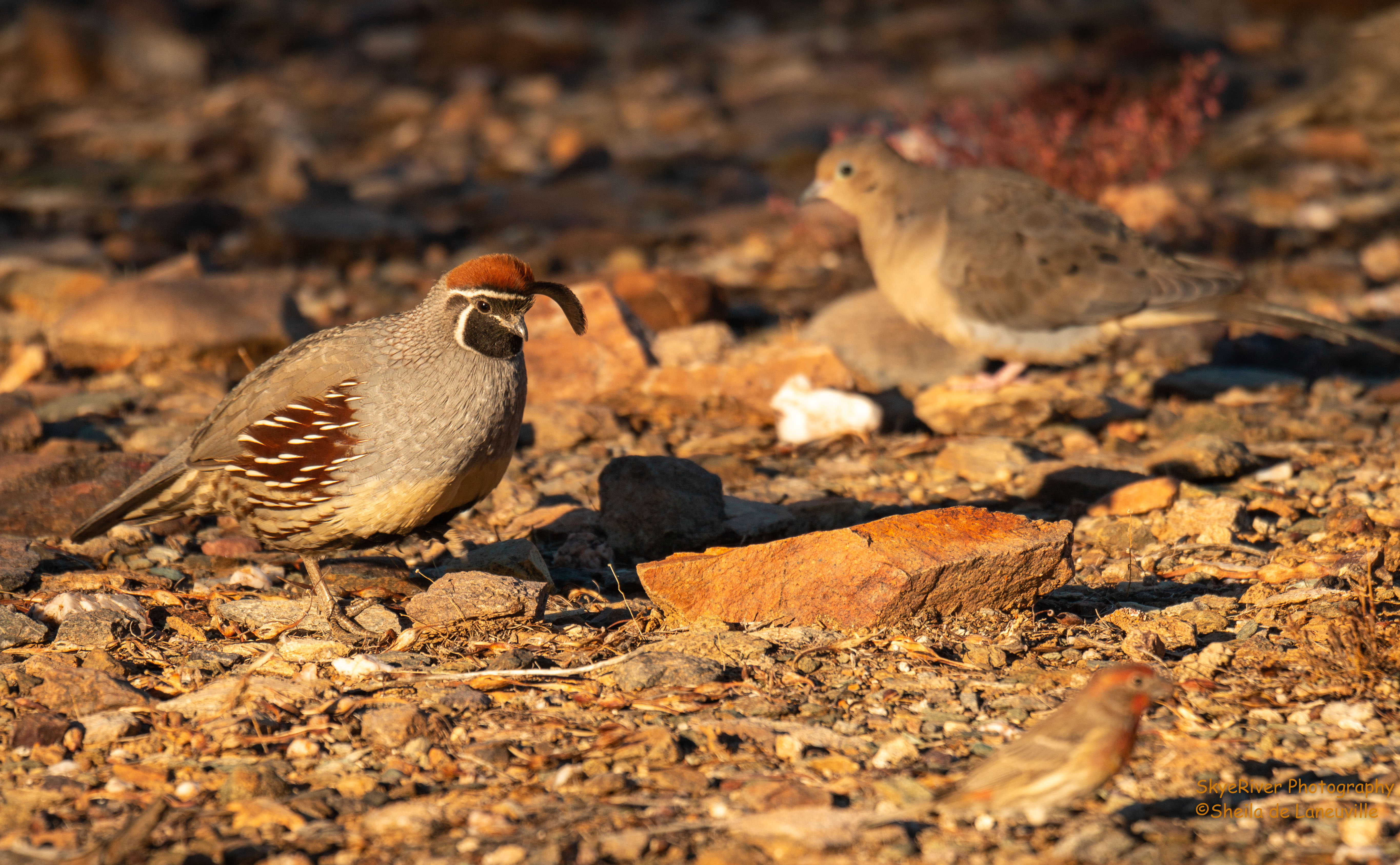
One of my favorite things about this park is the variety of birds that call this area home. And, one of my treasured things to do is to take photos of them. A few from this visit.







 Wolf Song Blog