August 1, 2025
Precious signs of summer, babies.
I wanted to share some photos I took of baby Black-headed Grosbeak’s. I have had adults many times in my yard in Colorado, but never babies. It has been fun watching these babies grow. I first noticed just one male, then both the male and female. Now their babies are very active. Given their current size you would think that the babies would’n flutter their winds for food, but I still see them begging.
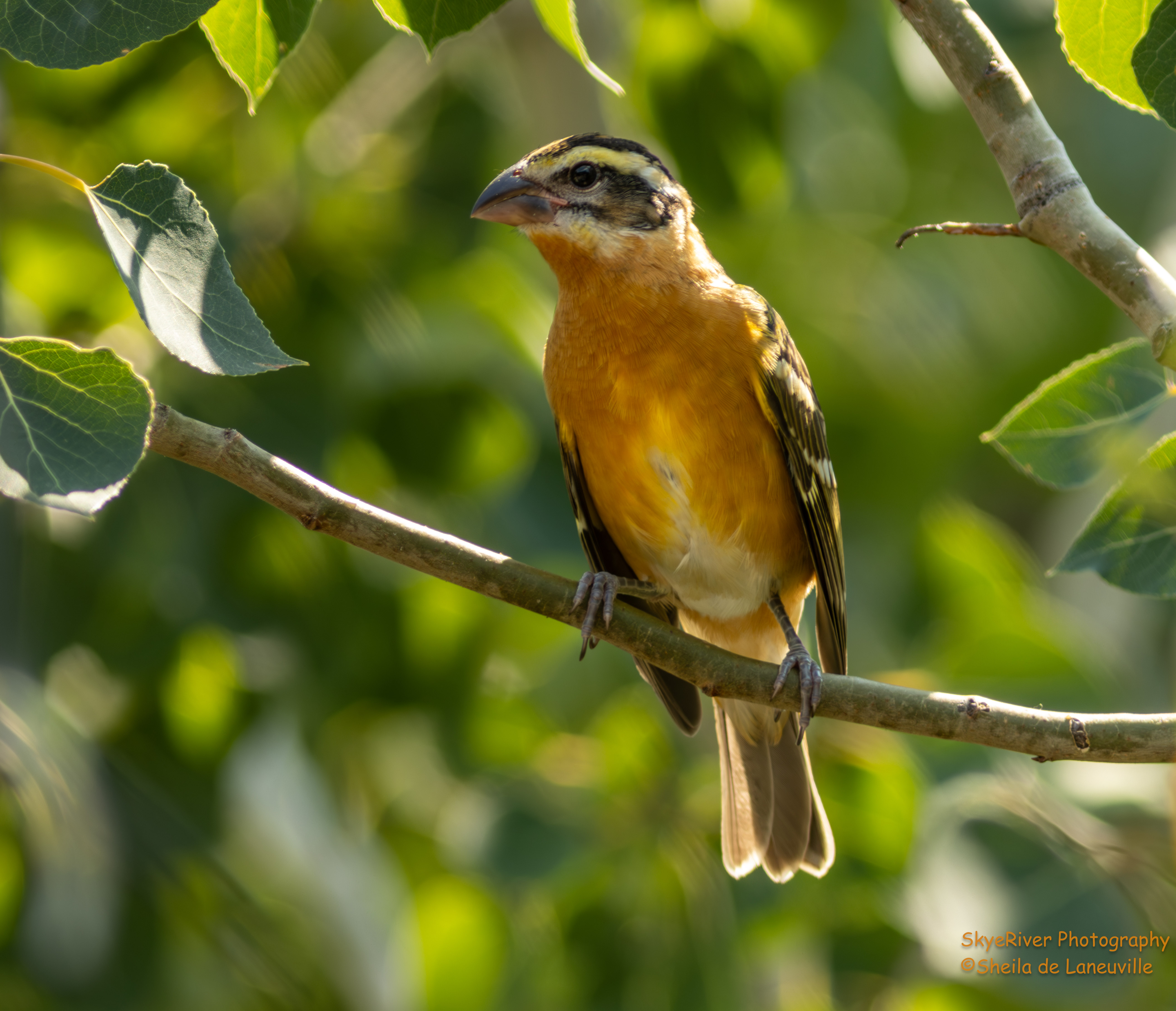
The showy male puts in equal time on the domestic front: both sexes sit on the eggs, feed the young, and feistily defend their nesting territory.

-
Cool Facts from All About Birds:
-
The male Black-headed Grosbeak does not get its adult breeding plumage until it is two years old. First-year males can vary from looking like a female to looking nearly like an adult male. Only yearling males that most closely resemble adult males are able to defend a territory and attempt to breed.
-
The Black-headed Grosbeak’s scientific names are both well-suited. Its species name, melanocephalus, means “black-headed.” And its genus name, Pheucticus, refers either to the Greek pheuticus for “shy” or phycticus meaning “painted with cosmetics,” fitting for a showy bird that forages in dense foliage.
-
In central Mexico, where monarch butterflies and Black-headed Grosbeaks both spend the winter, the grosbeaks are one of the butterflies’ few predators. Toxins in the monarch make them poisonous to most birds, but Black-headed Grosbeaks and a few others can eat them. They feed on monarchs in roughly 8-day cycles, apparently to give themselves time to eliminate the toxins.
-
Both male and female Black-headed Grosbeaks are loud songsters. The female’s song is generally a simplified version of the male song. Occasionally, the female sings a full “male” song, possibly to deceive its mate about the presence of intruders and get him to spend more time at the nest.
-
The oldest known Black-headed Grosbeak was a male, at least 11 years, 11 months old, when it was recaptured and rereleased during banding operations in Montana.
WOW, I can hardly believe it is already August. The summer is passing fast. Get outside and enjoy the sunny, warm days.
-
 Wolf Song Blog