A feathered ember in a desert landscape, the male Vermilion Flycatcher is exactly what its name says: a brilliant red bird that hawks flying insects from conspicuous perches on shrub tops and fences.
This perfectly describes these birds. (taken from All About Birds).
I “chased” these birds around the park for four days. I was able to capture the female pretty well; however, the male was more difficult. He didn’t sit still very long. They are fun to watch. They land on a tree branch and fly up into the air to catch bugs.
Male
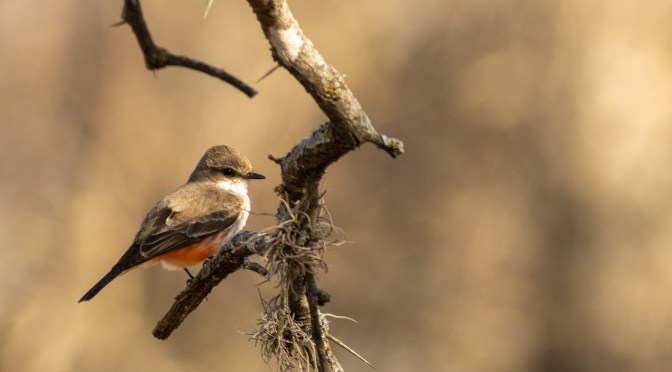
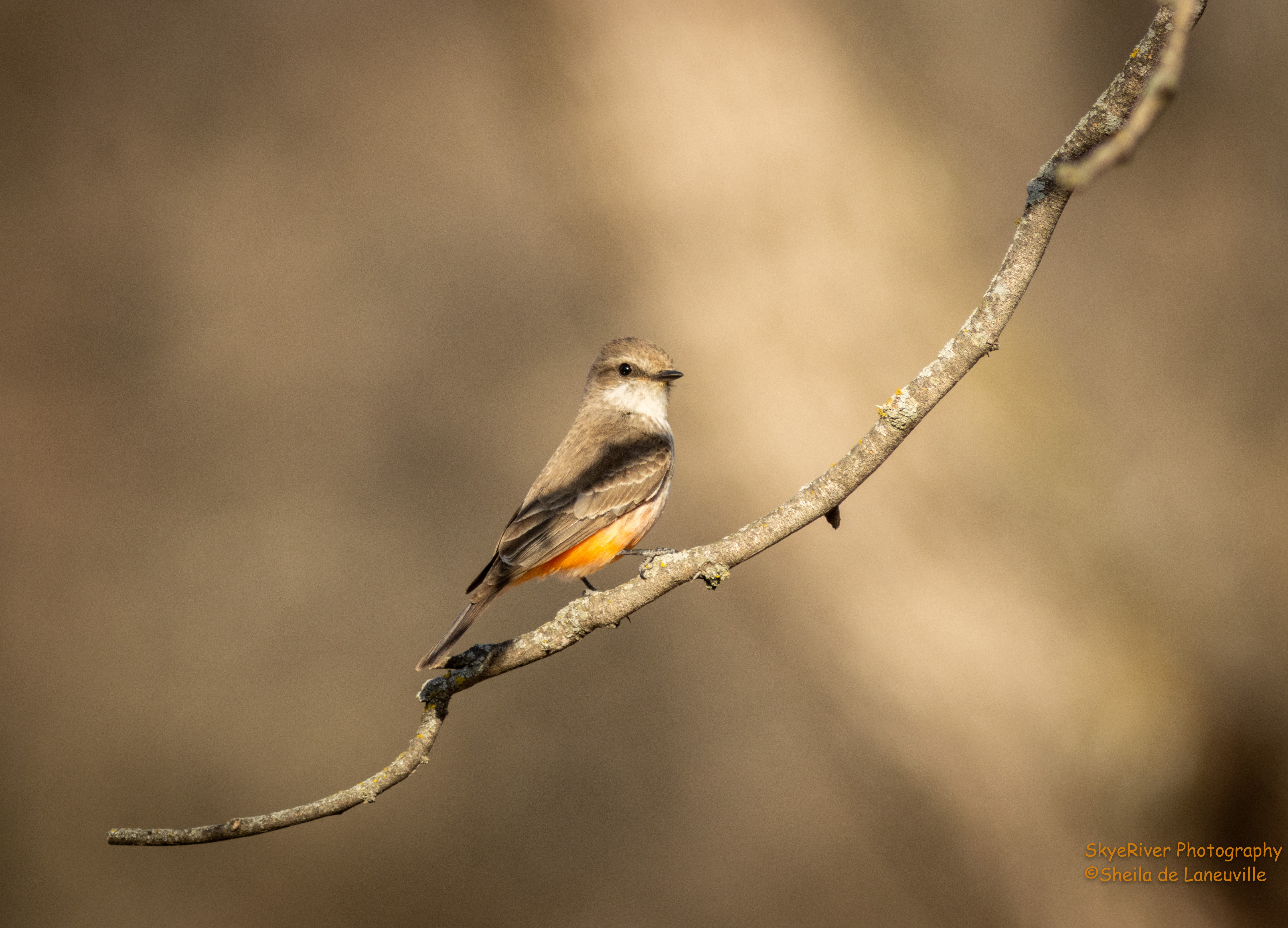
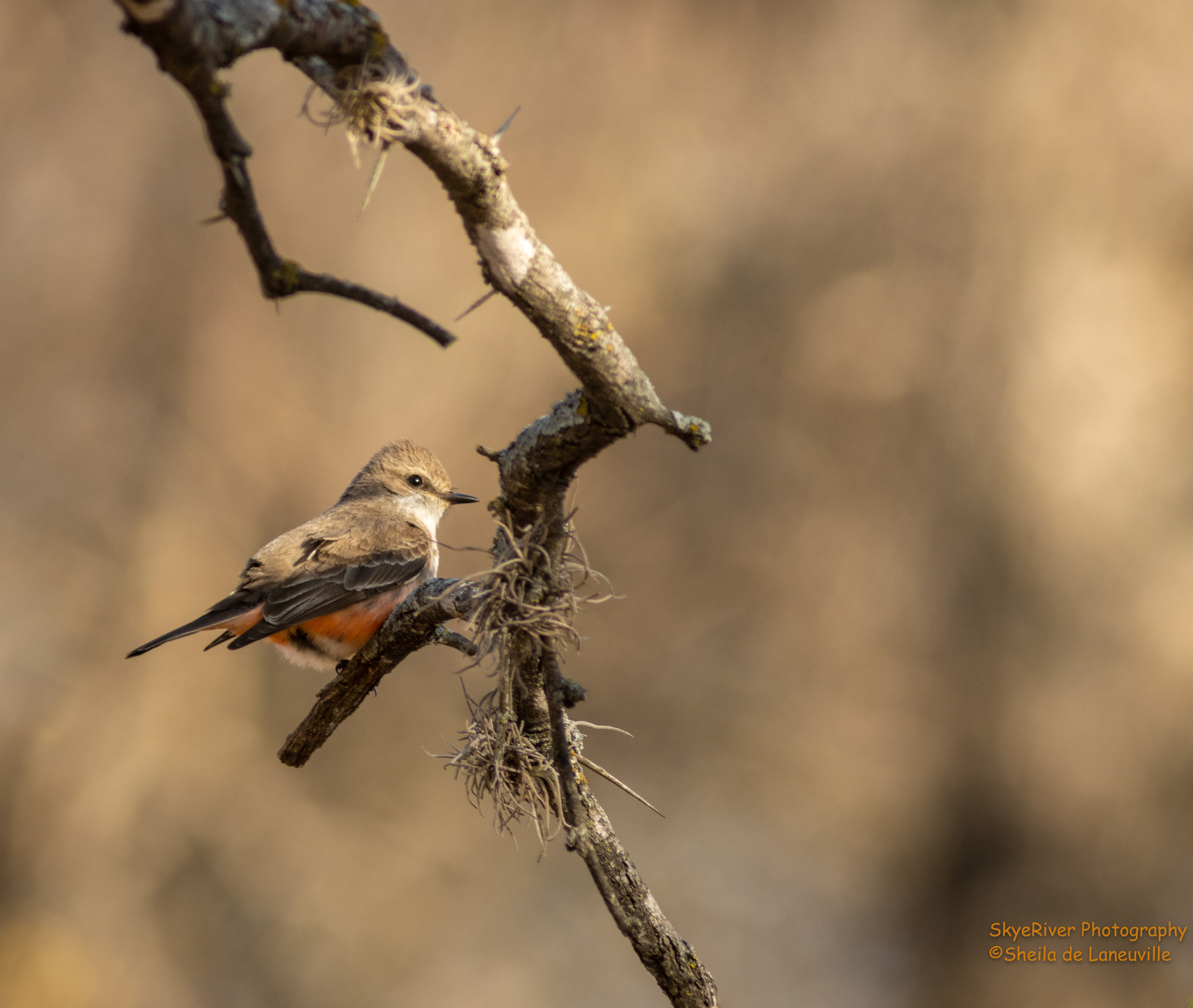
Females are delightful in their own way, subtle gray-brown birds with a warm salmon-red blush to the underparts. Though they barely reach the southwestern U.S., this species is common all the way through Central America and much of South America.
Female
I did see a male Vermillion Flycatcher at Torrey Island Campground near Belle Glade, FL. It is listed as rare for this area.
~South Llano River State Park, Junction, TX, November, 2017
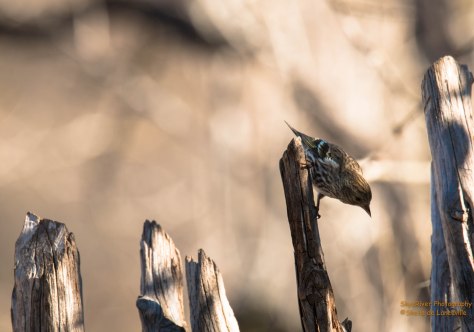
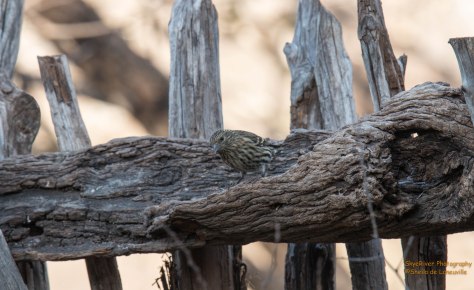
Pine Siskin
Although it is patterned like a sparrow, its shape, actions, and song all reveal that this bird is really a goldfinch in disguise.
Note the shape of the bill.
~
~
It was fun to observe 30+ Pine Siskin up close. In Colorado I would see them while hiking; however they tended to flit high in the trees out of photo range.
~
Cammouflage
~
To learn more about the Pine Siskin go to: Pine Siskin.
~South Llano River State Park, Junction, TX, November, 2017
Hermit Thrush
I believe this is the first photo of a Hermit Thrush I have taken. Generally, I don’t get an opportunity to observe one. This one was hanging around one of the bird blinds at South Llano River State Park when we were there over Thanksgiving, and I am thankful I got its photograph.
~
A few facts about the Hermit Thrush – taken from WhatBird.Com….
Hermit Thrush: Small thrush, with olive-brown to red- or gray-brown upperparts, black-spotted white underparts and rufous tail. Distinct white eye-ring. Pink legs, feet. Swift direct flight, may hover briefly over prey. Considered to have one of the most beautiful songs of all North American birds. The state bird of Vermont.
In the Appalachian Mountains the Hermit Thrush is displaced at lower elevations by the Veery and at higher elevations by Swainson’s Thrush.
East of the Rocky Mountains it usually nests on the ground. In the West, it is more likely to nest in trees.
Walt Whitman construes this bird as a symbol of the American voice, poetic and otherwise, in his elegy for Abraham Lincoln, ‘When Lilacs Last in the Dooryard Bloom’.
A group of thrushes are collectively known as a “hermitage” and a “mutation” of thrushes.
Range and Habitat
Hermit Thrush: Breeds from central Alaska east to Newfoundland and south to southern California, northern New Mexico, Wisconsin, and Virginia. Spends winters from Washington and southern New England southward. Preferred habitats include coniferous and mixed forests; deciduous woodlands and thickets are favored during migration and winter.





 ~
~


 Wolf Song Blog