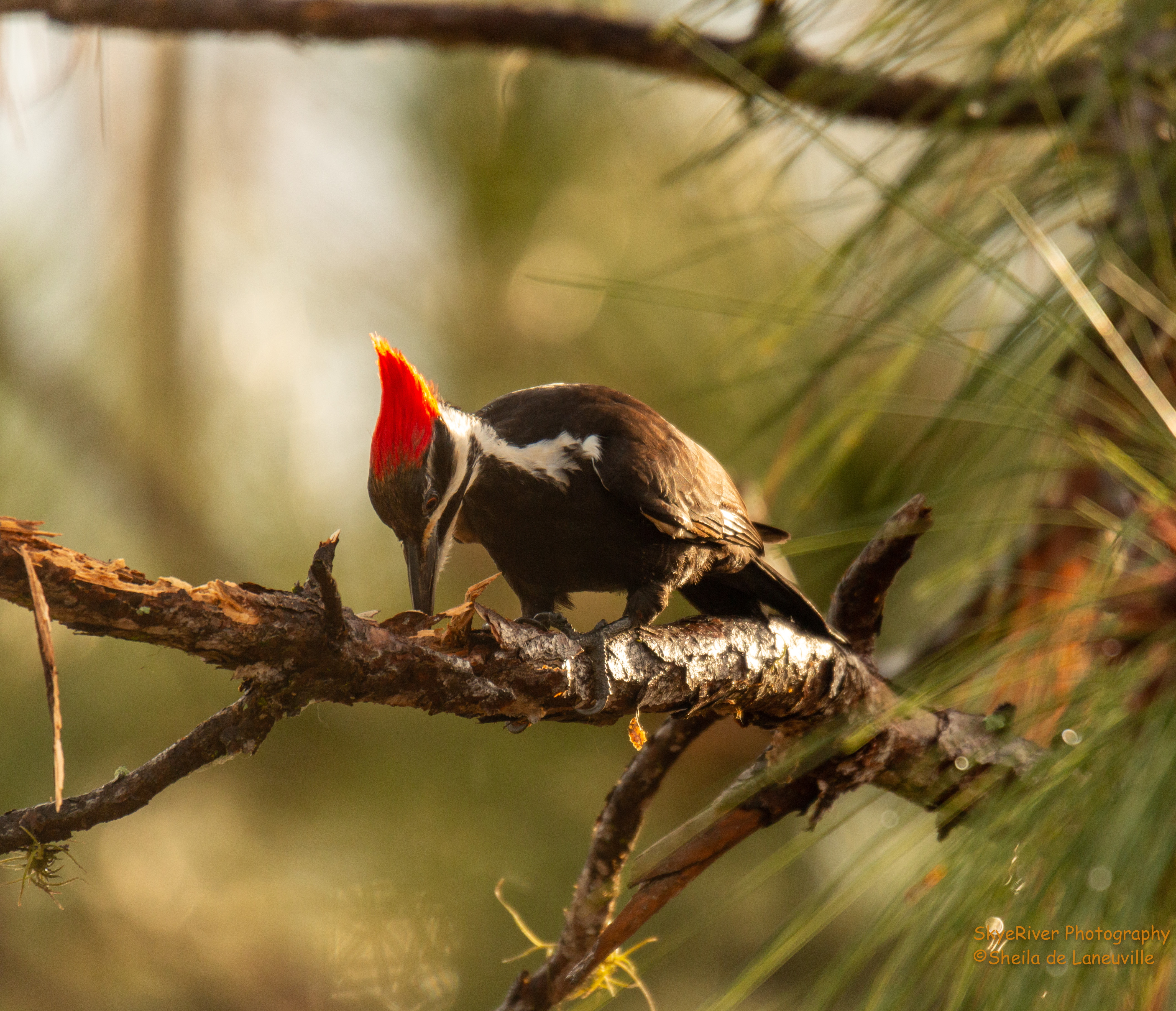
Pileated Woodpecker – Lake Louisa State Park in Clermont, FL – March 2022
 Wood chips were falling from the air. I looked up and noticed the reason why. This beautiful woodpecker was, I presume, hunting for bugs in this Pine tree.

Taken from the Web…
“Pileated” refers to the bird’s prominent red crest, from the Latin pileatus meaning “capped”.
 The pileated woodpecker’s breeding habitat is forested areas across Canada, the eastern United States, and parts of the Pacific Coast. This bird favors mature forests and heavily wooded parks. They specifically prefer mesic habitats with large, mature hardwood trees, often being found in large tracts of forest. However, they also inhabit smaller woodlots as long as they have a scattering of tall trees.
Pileated woodpeckers mainly eat insects, especially carpenter ants and wood-boring beetle larvae. They also eat fruits, nuts, and berries, including poison ivy berries.[15] Pileated woodpeckers often chip out large and roughly rectangular holes in trees while searching out insects, especially ant colonies.[12] They also lap up ants by reaching with their long tongues into crevices. They are self-assured on the vertical surfaces of large trees, but can seem awkward while feeding on small branches and vines. They may also forage on or near the ground, especially around fallen, dead trees, which can contain a variety of insect life. They may forage around the sides of human homes or even cars, and can be observed feeding at suet-type feeders. Although they are less likely feeder visitors than smaller woodpeckers, pileateds may regularly be attracted to them in areas experiencing harsh winter conditions.
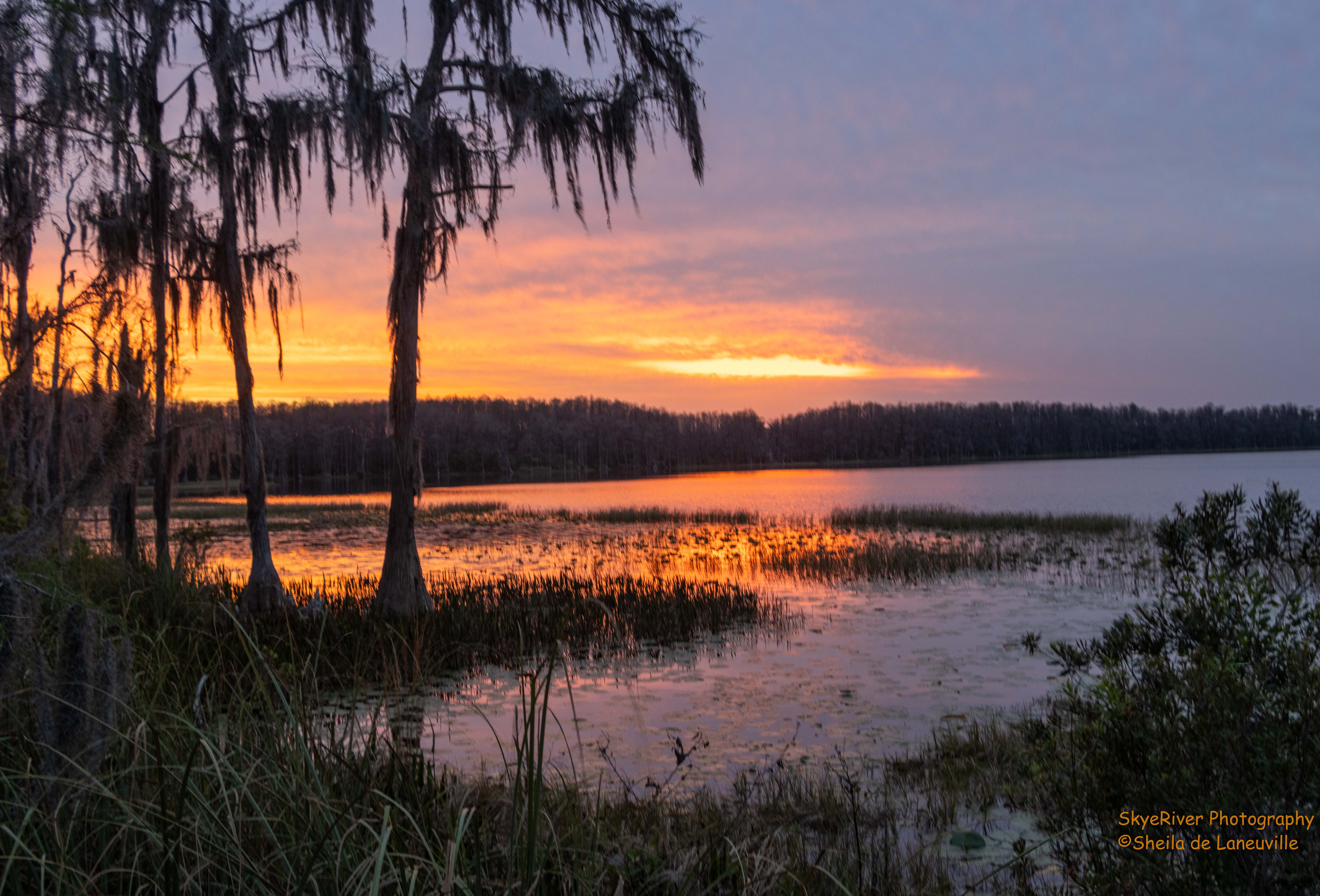
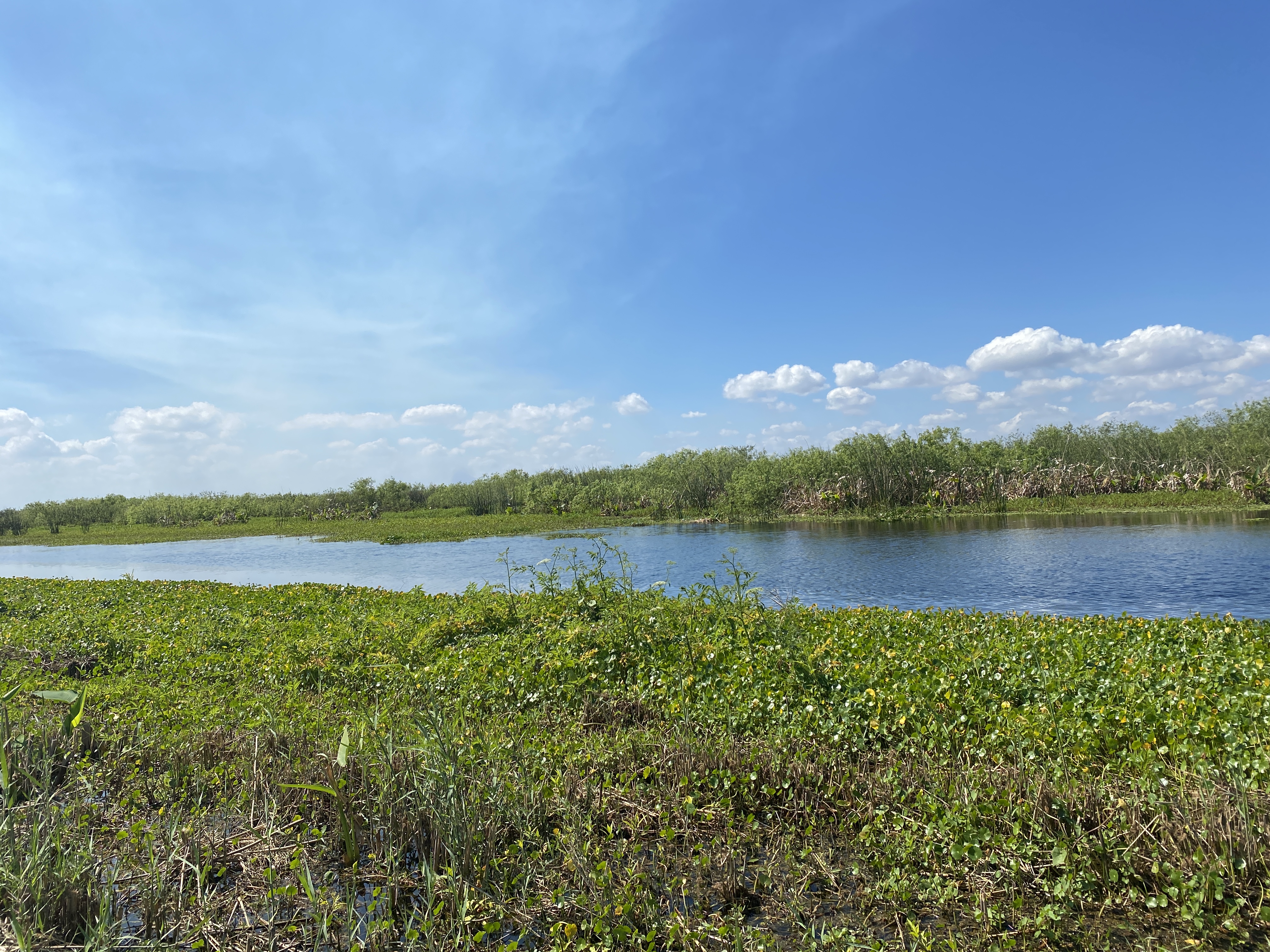
Dixie Lake, Lake Louisa State Park
~~ Happy Birding~~







 Wolf Song Blog