We camped at Patagonia Lake State Park for two weeks recently. This wasn’t our first stay, in fact we have camped in this beautiful, arid area many times. If you enjoying being in a dry desert environment then you would like Patagonia Lake.
The park is well known for its birding trails, and the number of different species that are attracted to the area. Birders from all over the world are attracted to this area in hopes of sighting a new bird to add to their birding list. Patagonia Lake is also a big attraction for people, that love fishing and boating. Patagonia Lake State Park is located between Patagonia and Nogales, AZ.
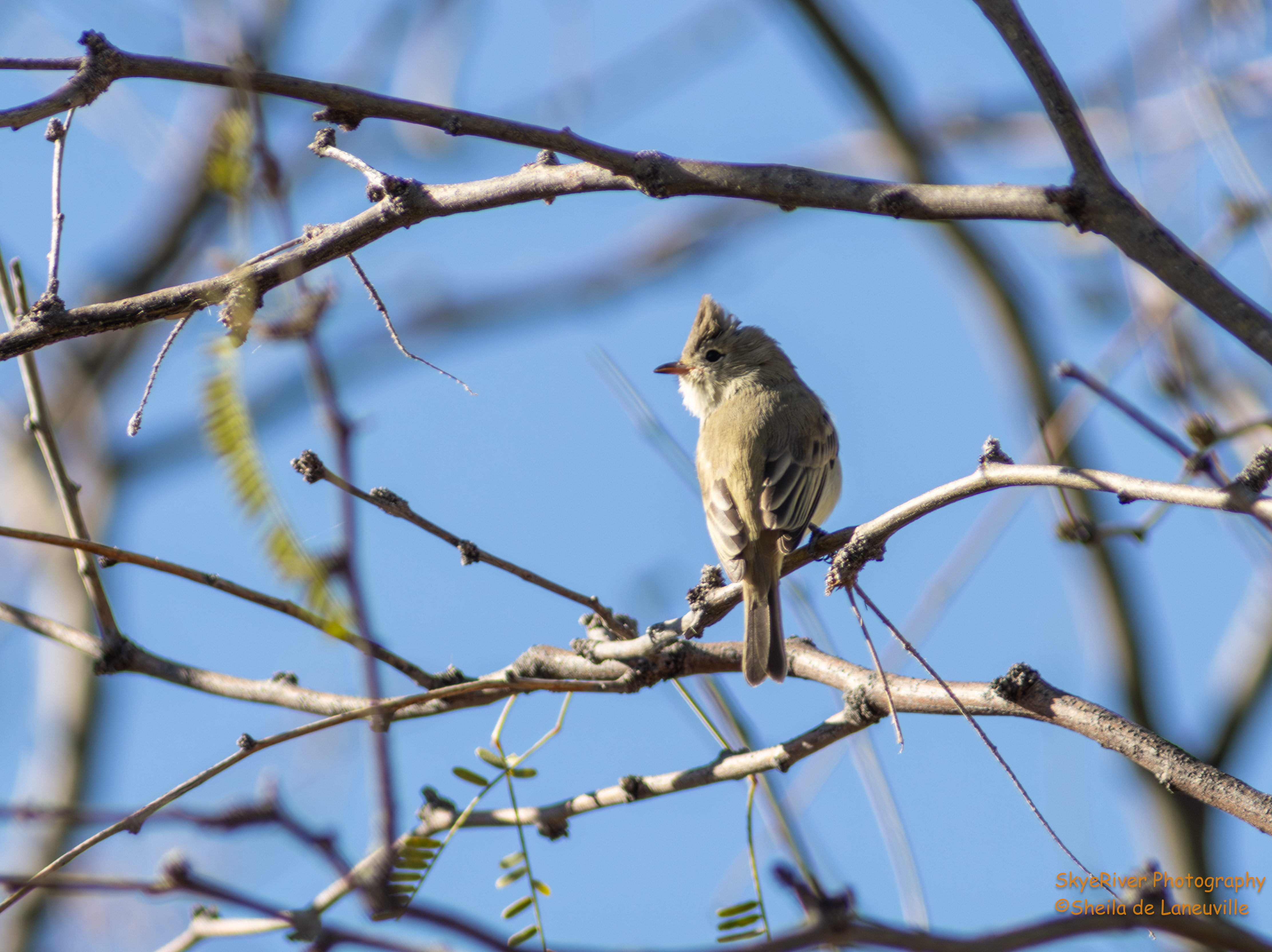
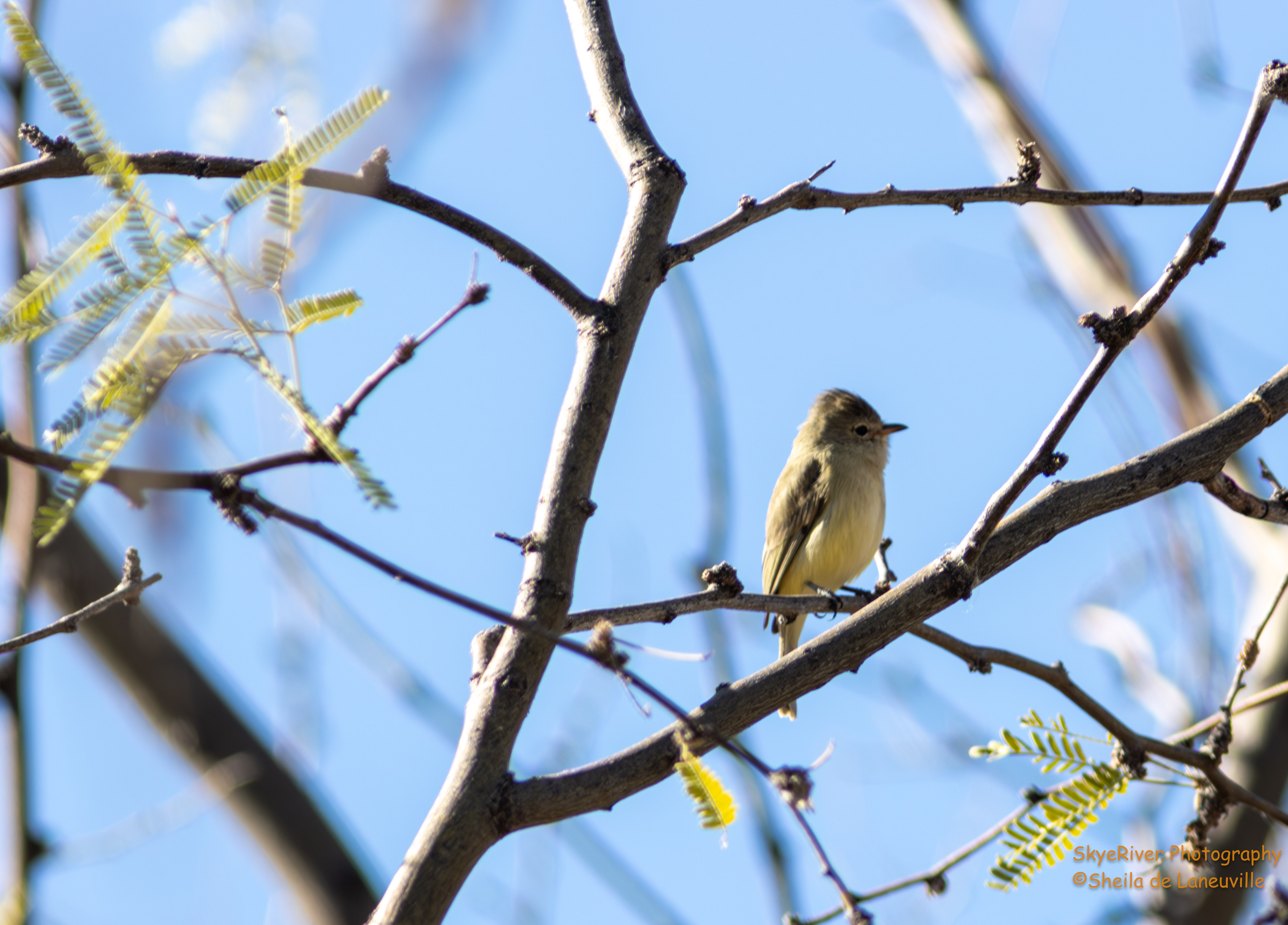
Of all places to see a new bird. It was flitting around the mesquite trees near the Gift Shop in the RV campground. This tiny flycatcher is known to hang out in riparian stands of mesquite trees mixed with cottonwoods, sycamores or oats. I was truly lucky to see this tiny bird, because its range is Mexico and the lower south western areas of Arizona and Texas.
I’am happy to add number 430 to my Birding Life List.
I wanted to share some photos I took of baby Black-headed Grosbeak’s. I have had adults many times in my yard in Colorado, but never babies. It has been fun watching these babies grow. I first noticed just one male, then both the male and female. Now their babies are very active. Given their current size you would think that the babies would’n flutter their winds for food, but I still see them begging.
The showy male puts in equal time on the domestic front: both sexes sit on the eggs, feed the young, and feistily defend their nesting territory.
The male Black-headed Grosbeak does not get its adult breeding plumage until it is two years old. First-year males can vary from looking like a female to looking nearly like an adult male. Only yearling males that most closely resemble adult males are able to defend a territory and attempt to breed.
The Black-headed Grosbeak’s scientific names are both well-suited. Its species name, melanocephalus, means “black-headed.” And its genus name, Pheucticus, refers either to the Greek pheuticus for “shy” or phycticus meaning “painted with cosmetics,” fitting for a showy bird that forages in dense foliage.
In central Mexico, where monarch butterflies and Black-headed Grosbeaks both spend the winter, the grosbeaks are one of the butterflies’ few predators. Toxins in the monarch make them poisonous to most birds, but Black-headed Grosbeaks and a few others can eat them. They feed on monarchs in roughly 8-day cycles, apparently to give themselves time to eliminate the toxins.
Both male and female Black-headed Grosbeaks are loud songsters. The female’s song is generally a simplified version of the male song. Occasionally, the female sings a full “male” song, possibly to deceive its mate about the presence of intruders and get him to spend more time at the nest.
The oldest known Black-headed Grosbeak was a male, at least 11 years, 11 months old, when it was recaptured and rereleased during banding operations in Montana.
WOW, I can hardly believe it is already August. The summer is passing fast. Get outside and enjoy the sunny, warm days.
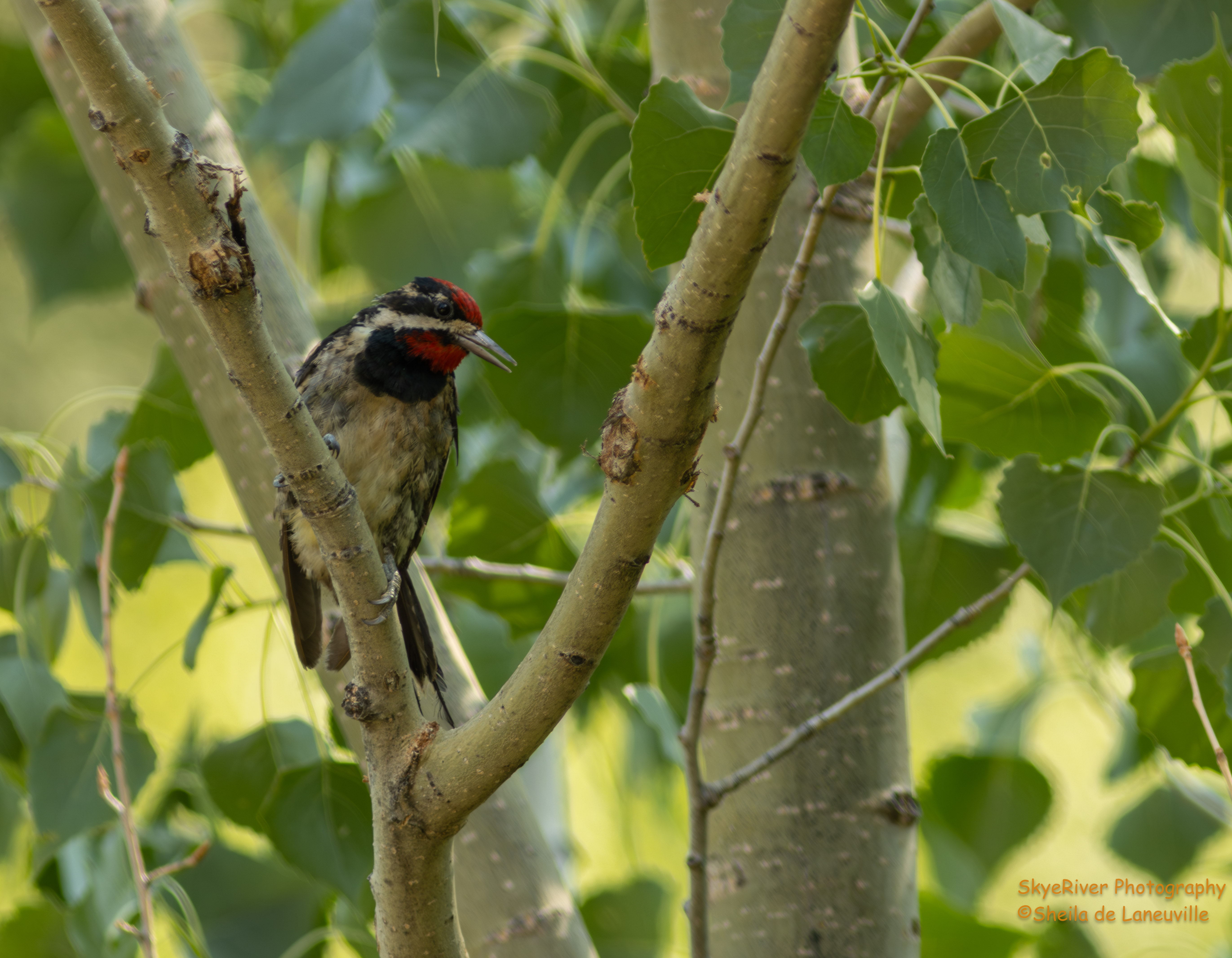
I have been enjoying seeing Red-naped Sapsuckers flitting around in my back yard. We have numerous Aspen, Birch and Pine trees on our property, which they seem to love.
Female. Look at her pretty yellow belly.
Red-naped Sapsuckers: Are industrious woodpeckers with a taste for sugar. They drill neat little rows of holes in aspen, birch, and willow to lap up the sugary sap that flows out. The presence of sap wells is a good indication that they are around, but so are their harsh wailing cries and stuttered drumming. The red patch on the back of their head helps separate these sharply dressed black-and-white sapsuckers from Yellow-bellied Sapsuckers in the East and Red-breasted Sapsuckers along the western coastal states. (taken from the web).
Male. A handsome guy dressed in shades of Red, Black and Yellow.
Cool facts: (taken from the web)
If you think 3 of the 4 species of sapsucker look remarkably similar, you’re not imagining it. The Red-naped Sapsucker is closely related to Yellow-bellied and Red-breasted Sapsuckers. All 3 were considered the same species and called Yellow-bellied Sapsucker until 1983 when researchers found that they were distinct species. The red-naped hybridizes where it comes in contact with the other two species, and birds intermediate in plumage are sometimes found.
Sapsuckers, despite what their name implies, do not suck sap, but are specialized for sipping it. Their tongues are shorter than those of other woodpeckers, and do not extend as far out. They lap sap up with the tip of the tongue, which has small hairlike projections that help hold the sap, much like a paintbrush holds paint.
Sugary sap is a hot commodity and some species, such as the Rufous, Calliope, and Broad-tailed Hummingbirds, follow Red-naped Sapsuckers around, stealing a sweet drink when they can. These hummingbirds can also get an easy meal by picking out insects stuck in the sap.
Sapsuckers drill hundreds of tiny holes in trees. Surprisingly, most trees survive this quite easily, in the same way that maple trees survive humans tapping them for maple syrup.
The oldest recorded Red-naped Sapsucker was at least 4 years, 11 months old when she was found in Wyoming in 2011, the same state where she had been banded in 2008.
Red-naped Sapsucker nest holes make good homes for other species. Many species that nest in holes don’t have a specialized bill needed to carve out their own home, including Mountain Bluebirds, nuthatches, and chickadees. The small holes excavated by sapsuckers provide safe places for smaller hole-nesting birds to nest.
A fun hobby that keeps you active while learning new interesting facts about nature!
I took these photos back in 01/2024 at Patagonia Lake State Park. I don’t believe I have shared them.
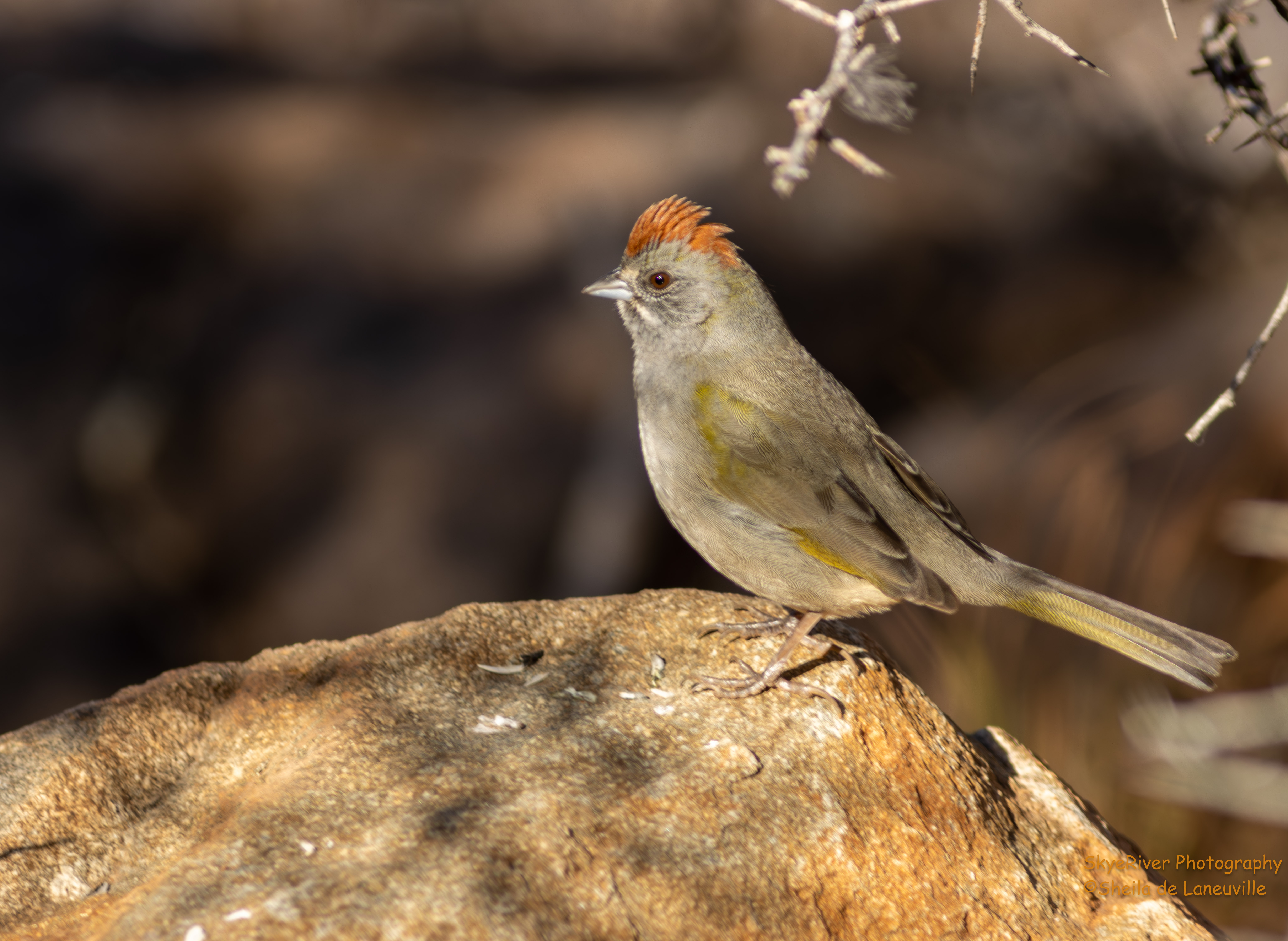
I love Towhees. This Green-tailed Towhee is such a beautiful bird with its white throat, distinct rufous head to its olive green wings, back and tail. It’s one of the smallest Towhees with a huge personality.
They are very secretive, so when this one popped up on this rock I was thrilled. Like most Towhees you find them hidden under scrubs while scratching for food on the ground. They prefer shrubby habitats like sagebrush, mountain mahogany and mixed shrublands. They eat seeds, berries and insects.
This photo shows its rufous colored head.
The Pyrrhuloxia is a red and grayish bird that looks similar to the Northern Cardinal. Sometimes it is referred to as the “desert cardinal”. The Pyrrhuloxia has a beauty all its own with its red face, chest and tail. It prefers arid environments like deserts, mesquite thickets and scrublands. They like to eat seeds, fruit and insects. What a fun word to learn how to pronounce!
Pyrrhuloxia- male
Patagonia Lake State Park has a huge variety of birds and is a fun place to camp.
I hope you have enjoyed seeing these two colorful birds!
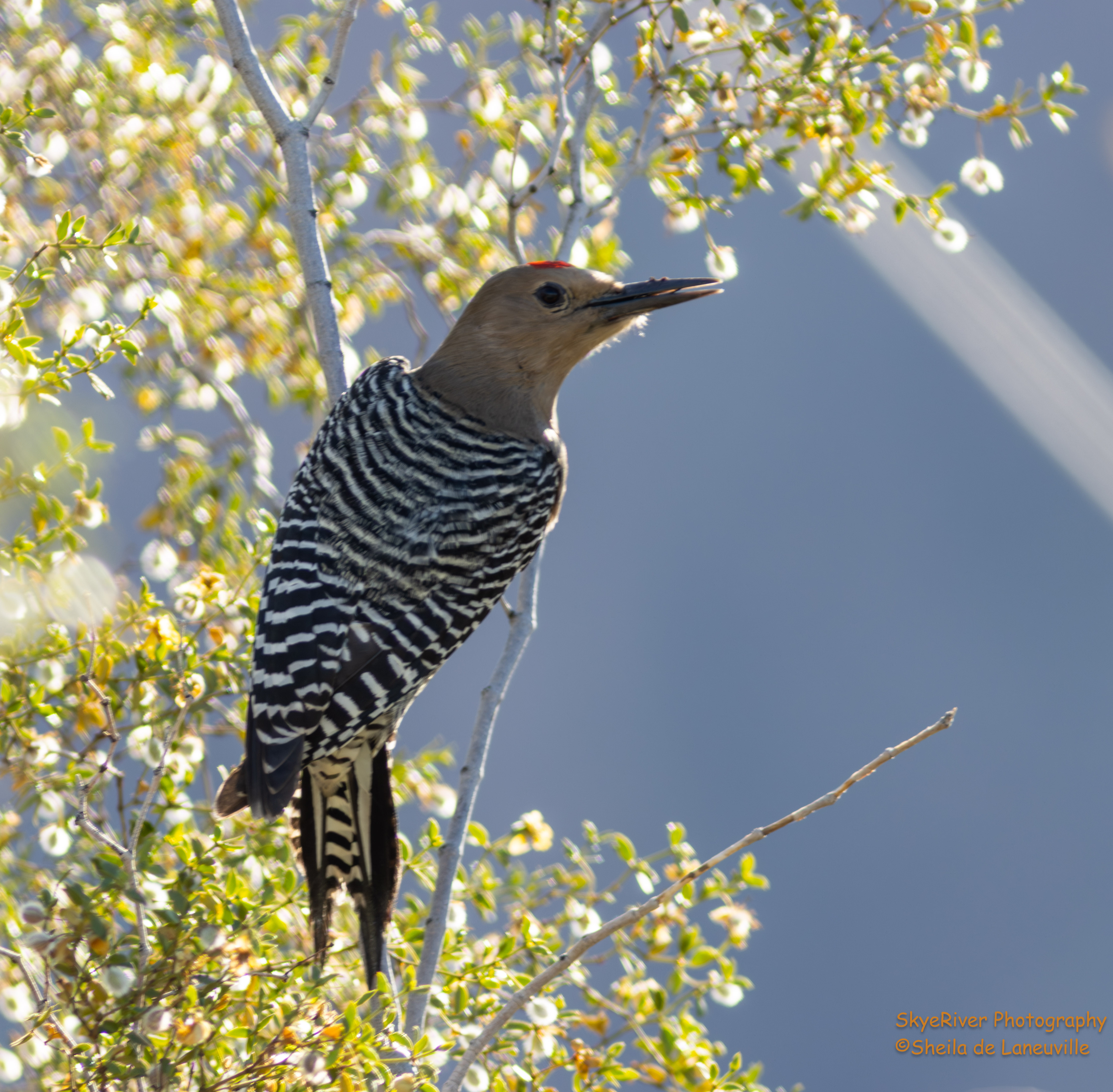 Gila Woodpecker.
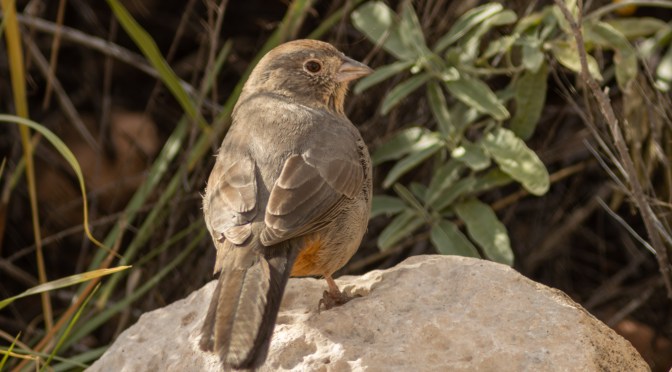
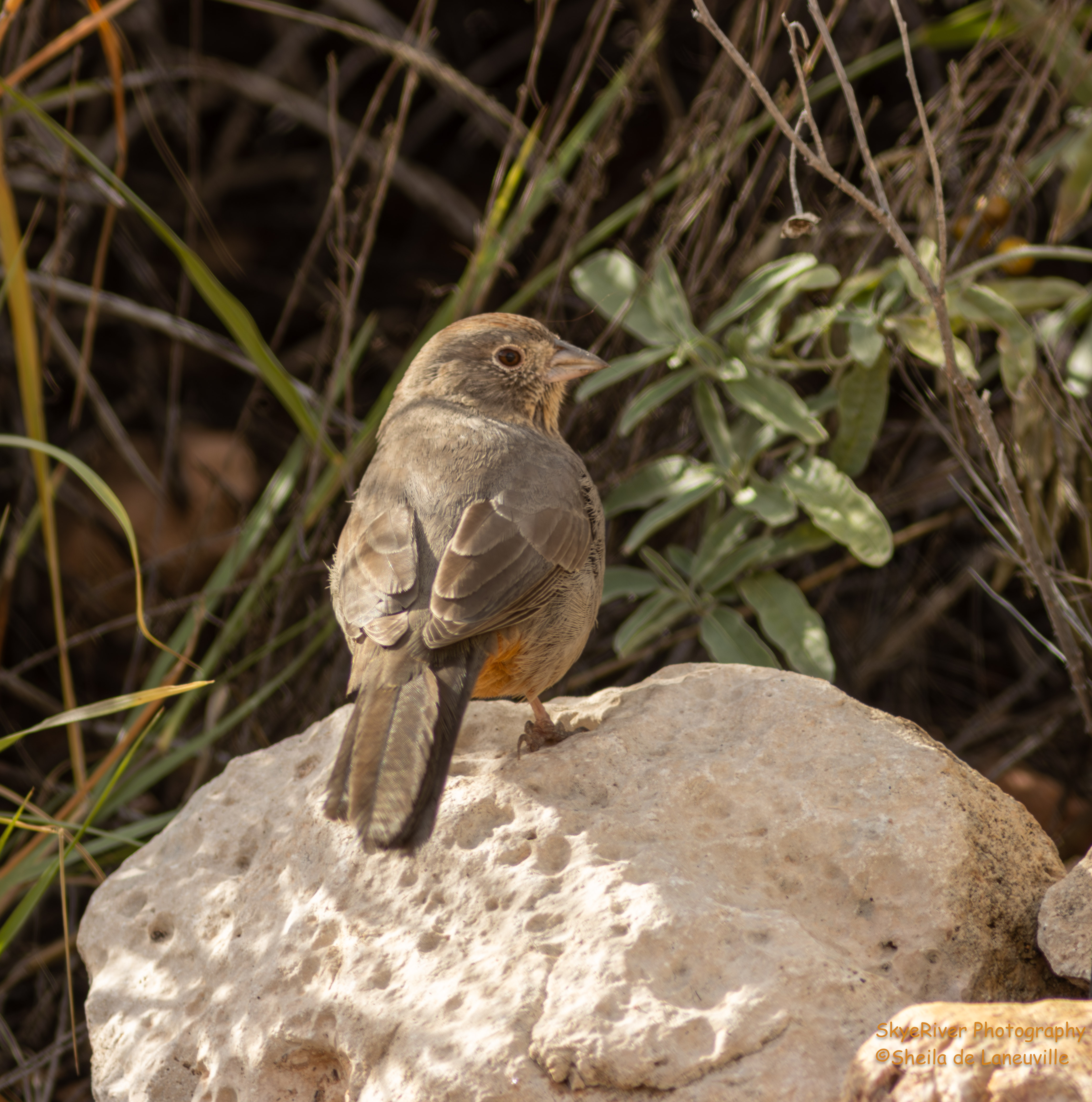 Abert’s Towhee.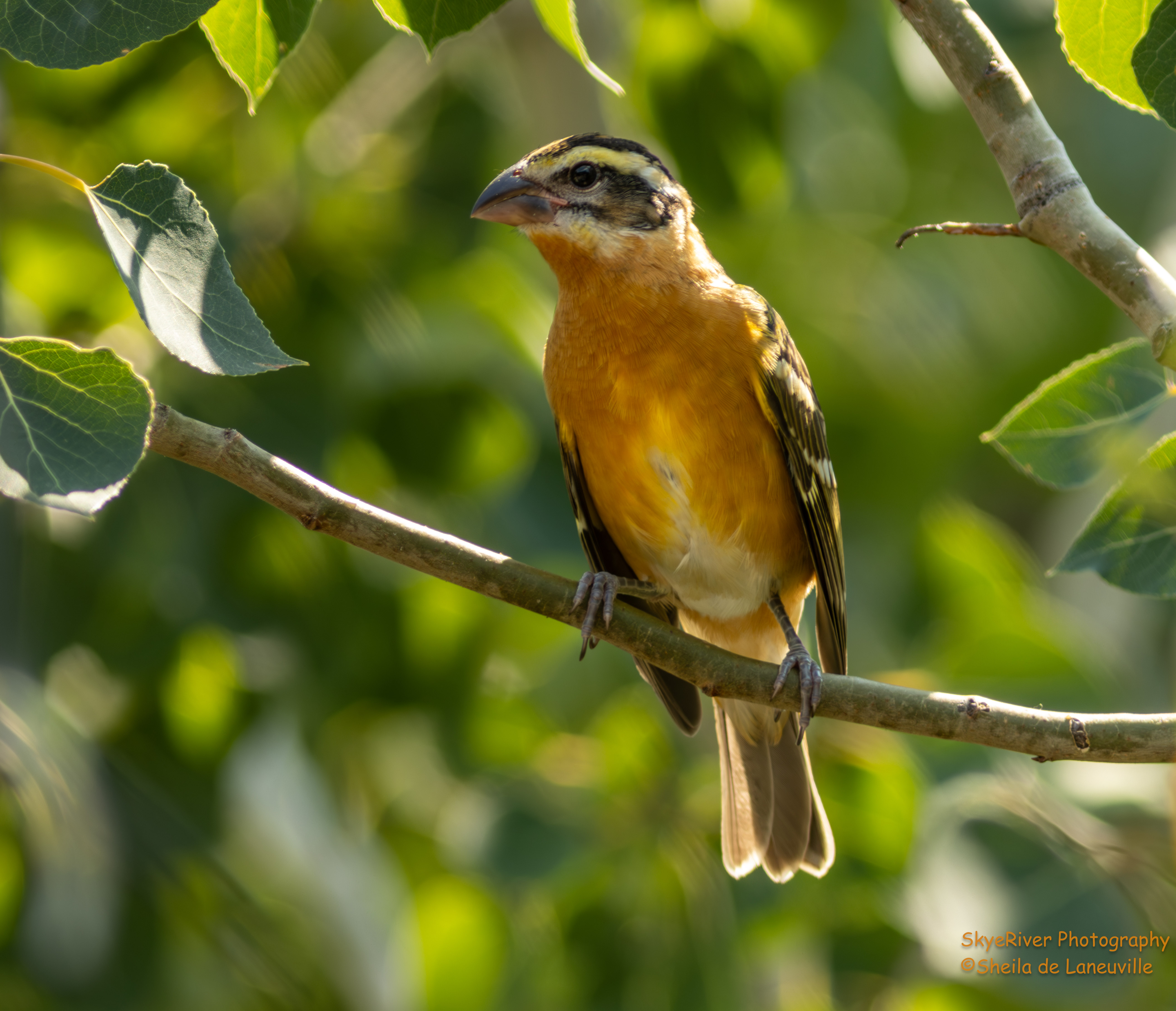




 Wolf Song Blog