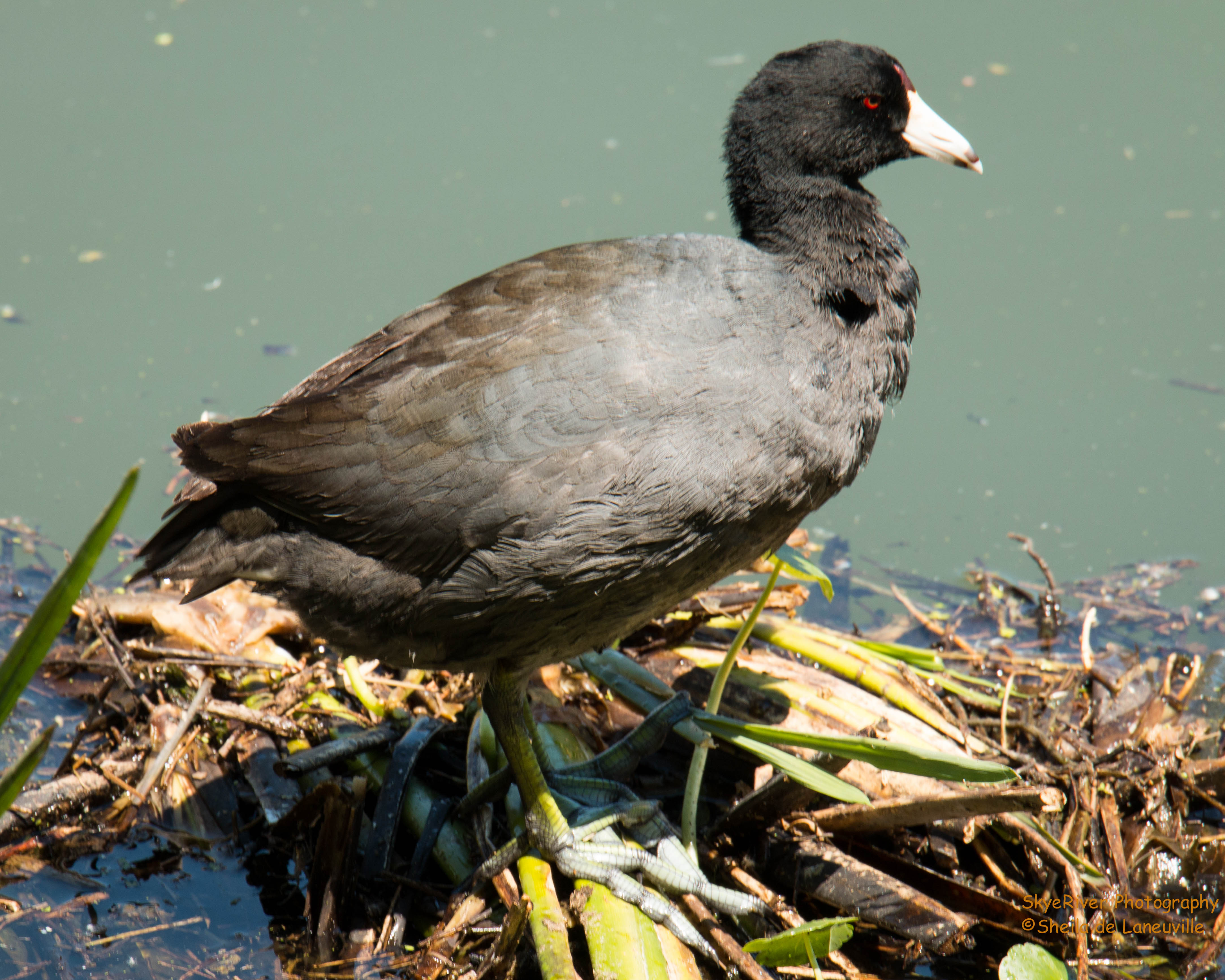
The American Coot isn’t a duck. It has webbed toes instead of webbed feet. They are noisy, gregarious members of the rail family. The coot is a medium-sized diving bird with a white bill, yellow legs, and lobed toes. The feet look oversized for this bird. The body is dark gray to black with a blackish head and neck. The male is a little larger than the female, but otherwise look alike.
Can you believe that the oldest American Coot, recorded in the wild, was 22 years and 4 months old. That’s kind of amazing given they are prime prey of Bald Eagles and Osprey. I think they are an attractive chubby little birds with their red eyes and white bill.
I took this photo a few years ago. I wanted to show you their unique feet.
The Vermilion Flycatcher, what a beautiful, feisty little bundle of color.
The vermilion flycatcher is a small bird native to Central and South America. They capture insects on the wing by flying suddenly out from an exposed perch. These foraging flights are often short and direct, and often involve a swift swoop that takes them in a looping circle out and back to the same perch. I so enjoy watching them hunt for food and enjoy the challenge of taking their photo.
I found this description of this bird on the web and it certainly fits its personality.
In Aztec mythology, the bird is associated with the god of the sun. It is seen as a symbol of strength and vitality.
Male
I think this juvenile felt very handsome and just wanted his photo taken.
What a beautiful juvenile!
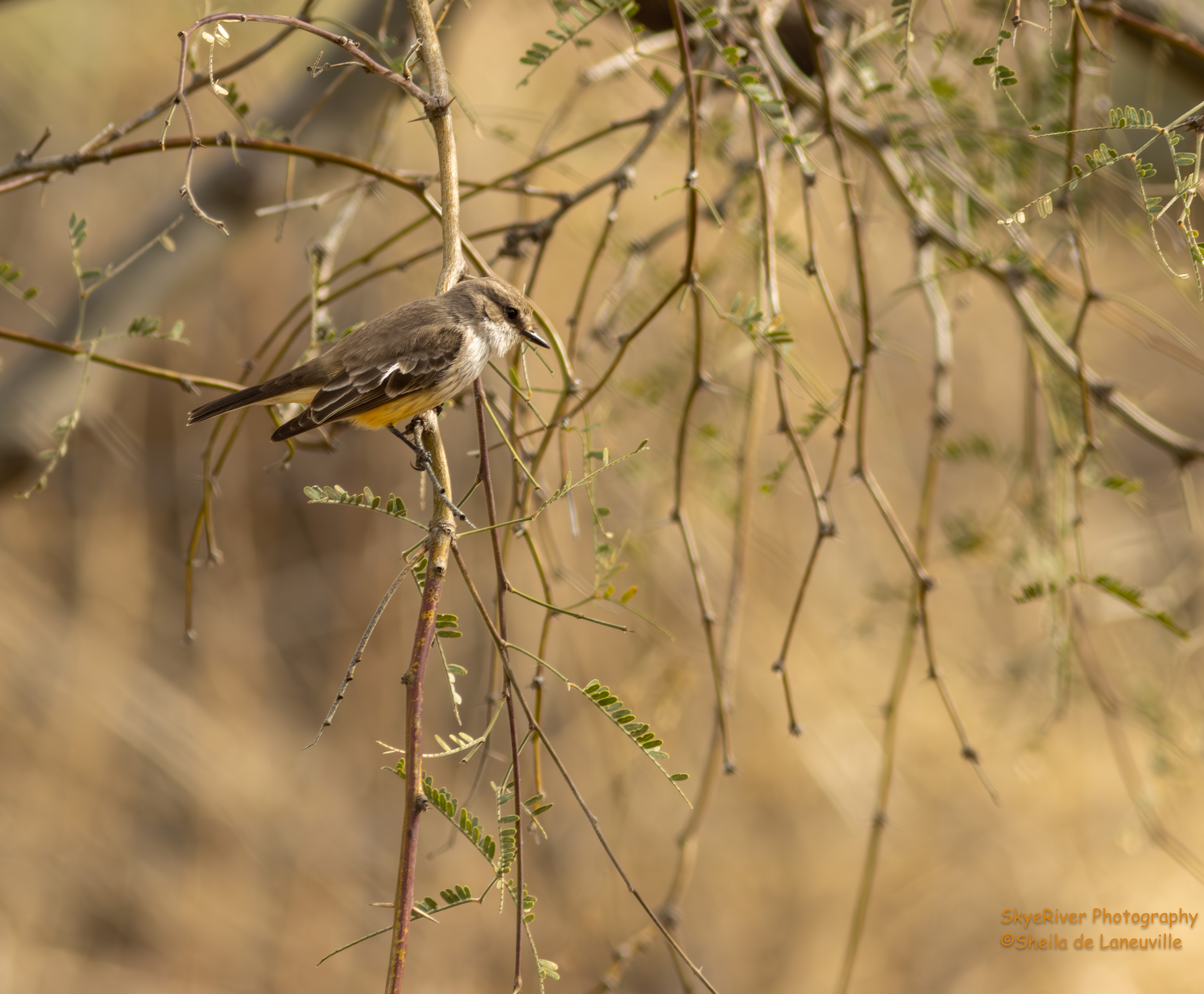
And, last but not least the gorgeous female with her tinge of salmon color.
I hope you enjoyed seeing these colorful Vermilions!
~Photos of the American Wigeon taken at Canoa Ranch near Green Valley AZ – January 2023
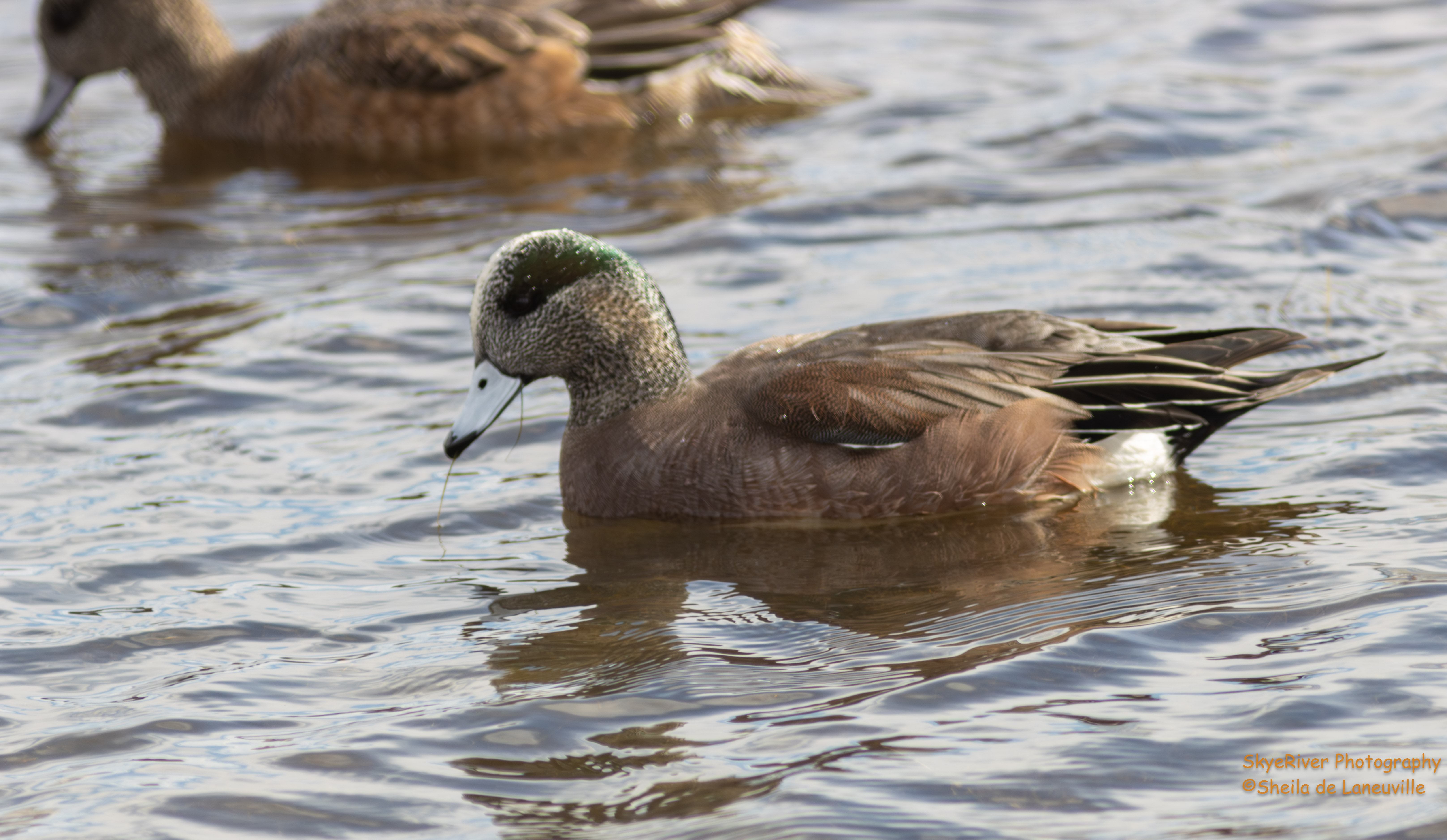
Male
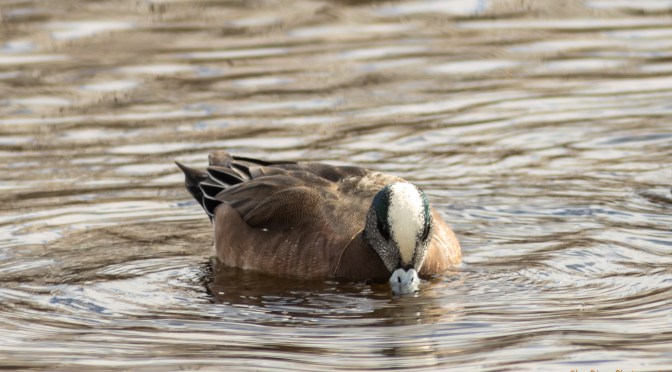
The drake’s are commonly called “baldpates” because of the white on their crown and forehead.
The American wigeon is a bird of open wetlands, such as wet grassland or marshes with some taller vegetation, and usually feeds by dabbling for plant food or grazing, which it does very readily.
While on the water, wigeons (dabblers) often gather with feeding coots, redheads, canvasbacks and other divers, and are known to grab pieces of vegetation brought to the surface by diving water birds, so are sometimes called “poacher” or “robber” ducks. They are fond of wild celery, a deepwater plant, that they poach from divers.
Pair
American wigeons are serially monogamous; they form pairs that remain together during a single breeding season and after the second week of incubation, males usually leave to molt. They nest on dry land.
Wigeons also commonly feed on dry land, eating waste grain in harvested fields and grazing on pasture grasses, winter wheat, clover, and lettuce.
Having a largely vegetarian diet, most wigeons migrate in the fall well before northern marshes begin to freeze. The American wigeon is highly gregarious outside of the breeding season and forms large flocks.
A pretty female.
So, if you are out and about near open fields, ponds and marshes look for this beautiful duck with the white forehead and bright green on the side of their face.
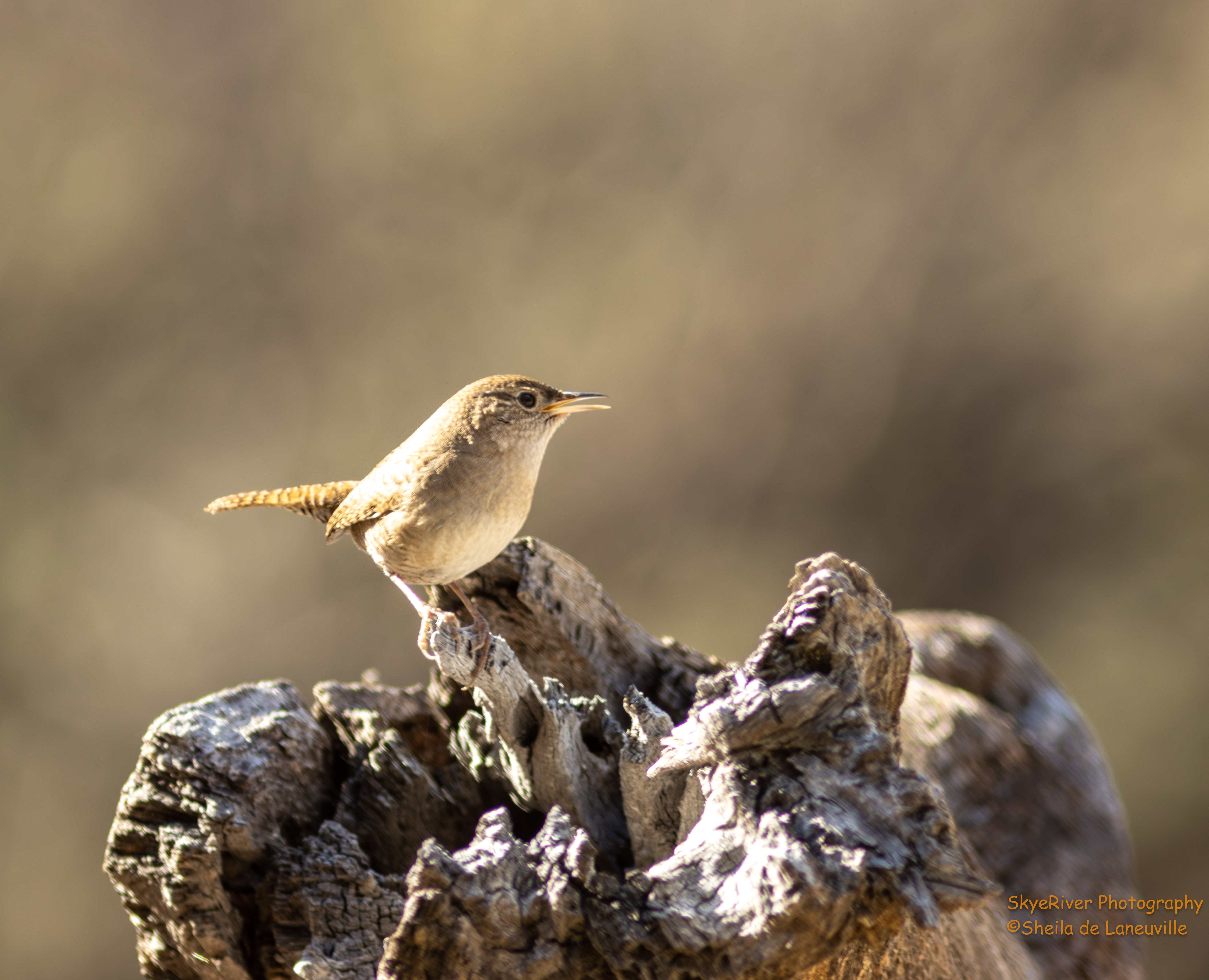
~Back in January 23, while visiting Madera Canyon, we were walking along a trail near Santa Rita Lodge and spotted this beautiful House Wren sitting on a tree stump.
They are small and compact, with a flat head and fairly long, curved beak. Short-winged, often keeping its longish tail either cocked above the line of the body or slightly drooped.
I haven’t thought about it before, and it makes perfect sense that there are regional differences between House Wrens.
A “brown-throated” subspecies of the House Wren occurs in mountains of extreme southeastern Arizona. It has a distinct buffy eyebrow and cinnamon-buff throat and chest. House Wrens occur all the way through the Americas to southern Argentina. Individuals in the Caribbean and South America tend to be warmer colored and have somewhat different voices.
In summer, House Wrens are at home in open forests, forest edges, and areas with scattered grass and trees. Backyards, farmyards, and city parks are perfect for them. In winter they become more secretive, preferring brushy tangles, thickets, and hedgerows.









 Wolf Song Blog