Leaving Catalina State Park in Oro Valley, AZ last January we traveled to Amado, AZ and stayed at a private RV park called DeAnza RV Resort. The reason we stayed in Amado was to travel to Madera Canyon.
Madera Canyon is a birders paradise. Here is a quick link if you might be interested in traveling to this gorgeous area. https://friendsofmaderacanyon.org
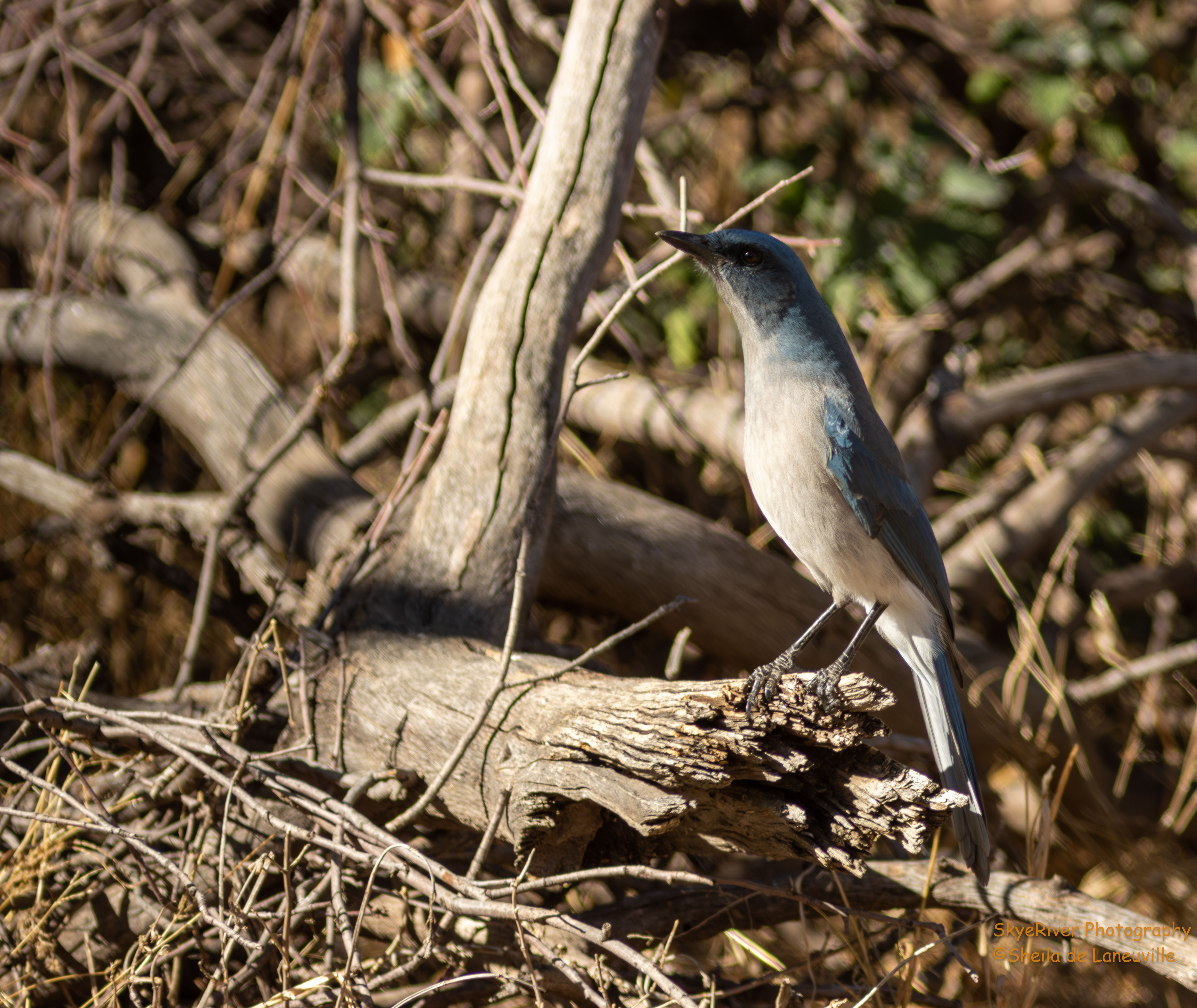
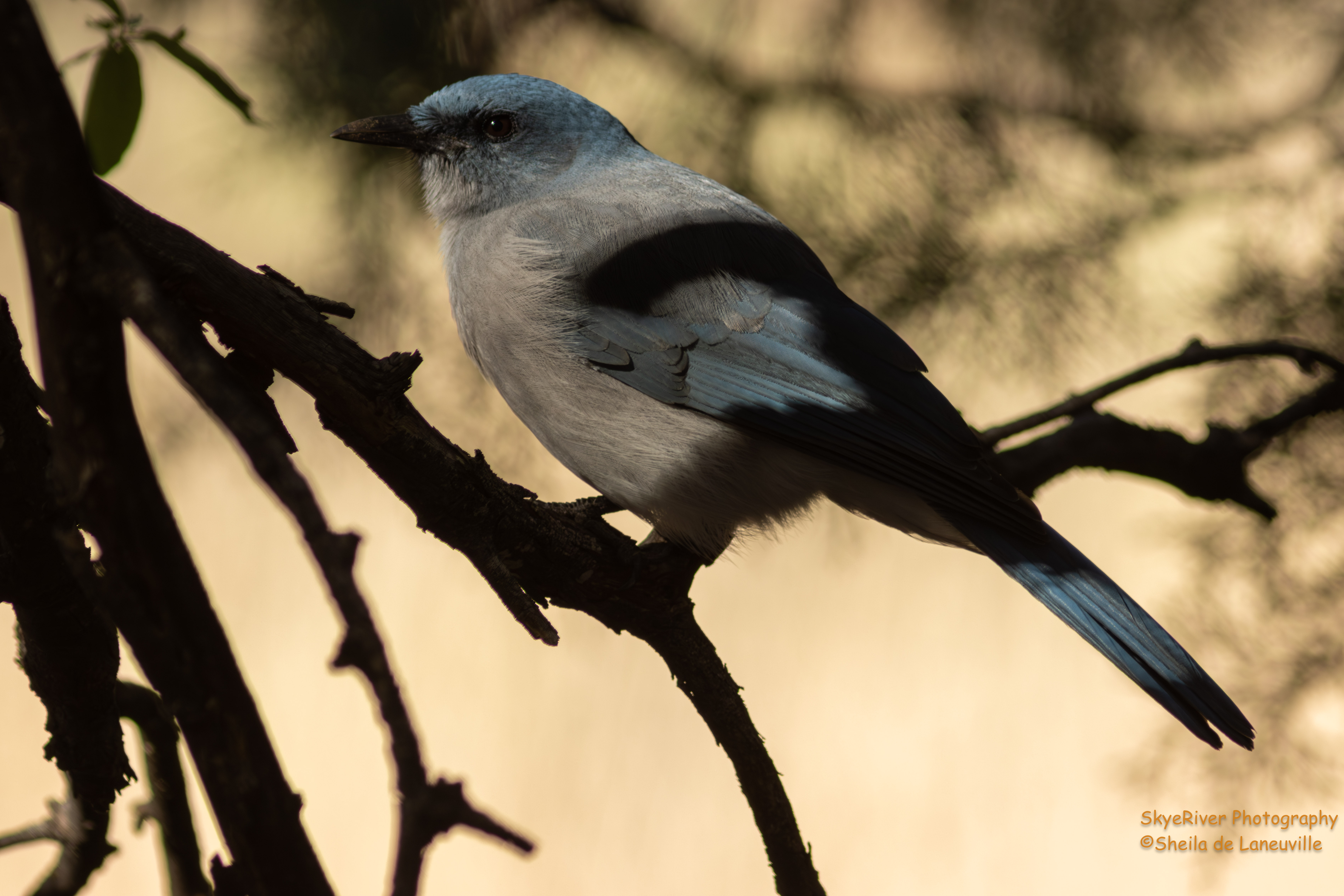
One of the common birds seen in this area is the Mexican Jay. I first saw this Jay on December 29, 2020 and was number 398 on my birding list. They are fun to photograph and it is fun to just sit and watch their interactions with each other.
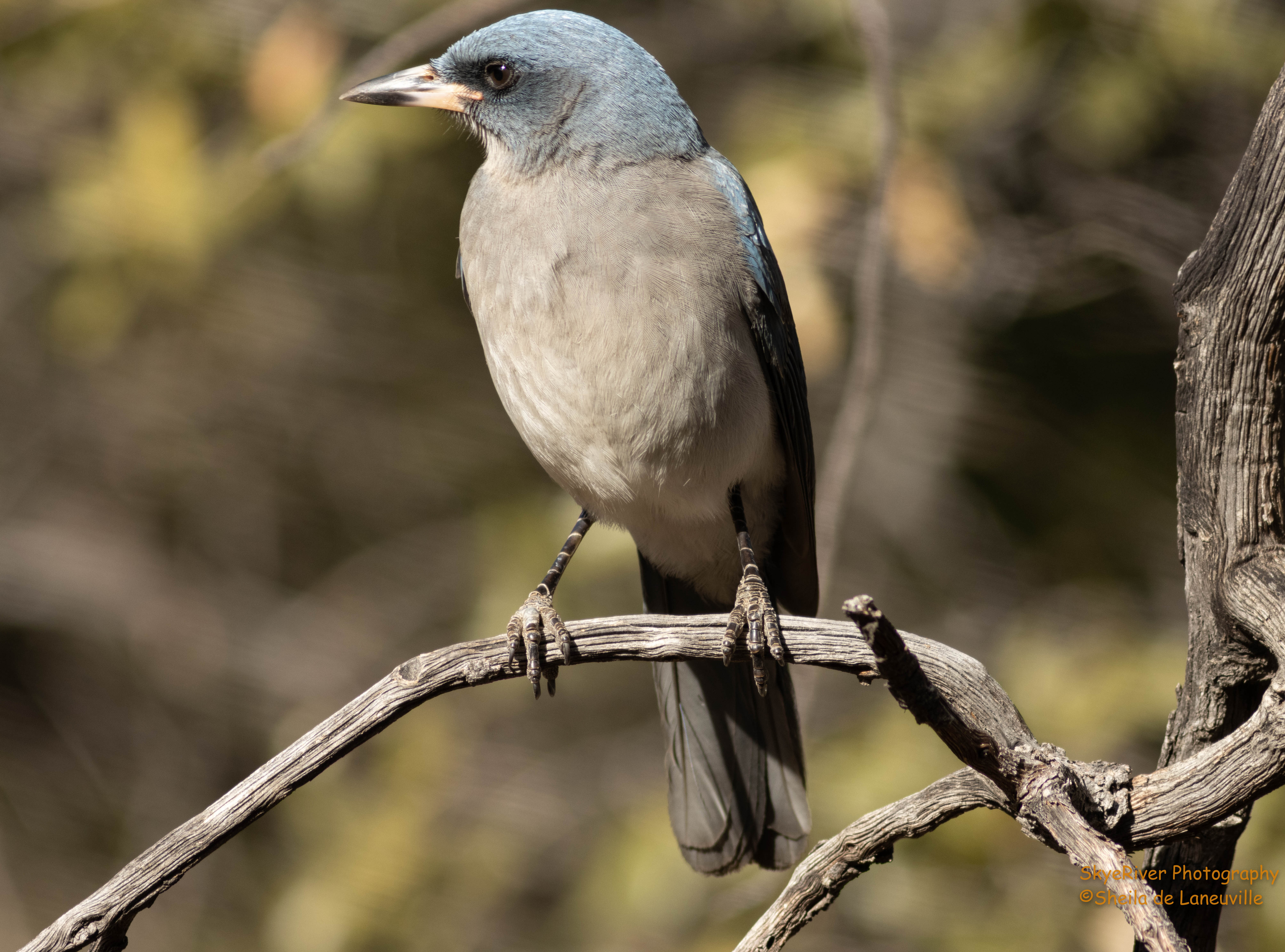
The soft-blue and gray Mexican Jay looks like a duskier version of other scrub-jays (whose genus they share) but has a smaller black bill and lacks a blue necklace. Its range extends from Mexico into pine-oak-juniper woodlands of the southwestern U.S.
Notice how much white the Mexican Jay has compared to other species of Scrub Jays.
Mexican Jays live in family groups of up to 25 individuals and may have several active nests in one territory. All group members share the responsibility of feeding young. They rarely disperse and stay with their groups throughout their lives.
The Mexican jay formerly known as the gray-breasted jay is a New World jay native to the Sierra Madre Oriental, Sierra Madre Occidental, and Central Plateau of Mexico and parts of the southwestern United States.
In May 2011, the American Ornithologists’ Union voted to split the Mexican jay into two species, one retaining the common name Mexican jay and one called the Transvolcanic jay. The Mexican jay is a medium-sized jay with blue upperparts and pale gray underparts.
It resembles the Woodhouse’s scrub-jay but has an unstreaked throat and breast.
Western Scrub-Jay. Loveland, CO
The Mexican Jay feeds largely on acorns and pine nuts but includes many other plant and animal foods in its diet. It has a cooperative breeding system where the parents are assisted by other birds to raise their young. This is a common species with a wide range and the International Union for Conservation of Nature has rated its conservation status as being of “least concern”.
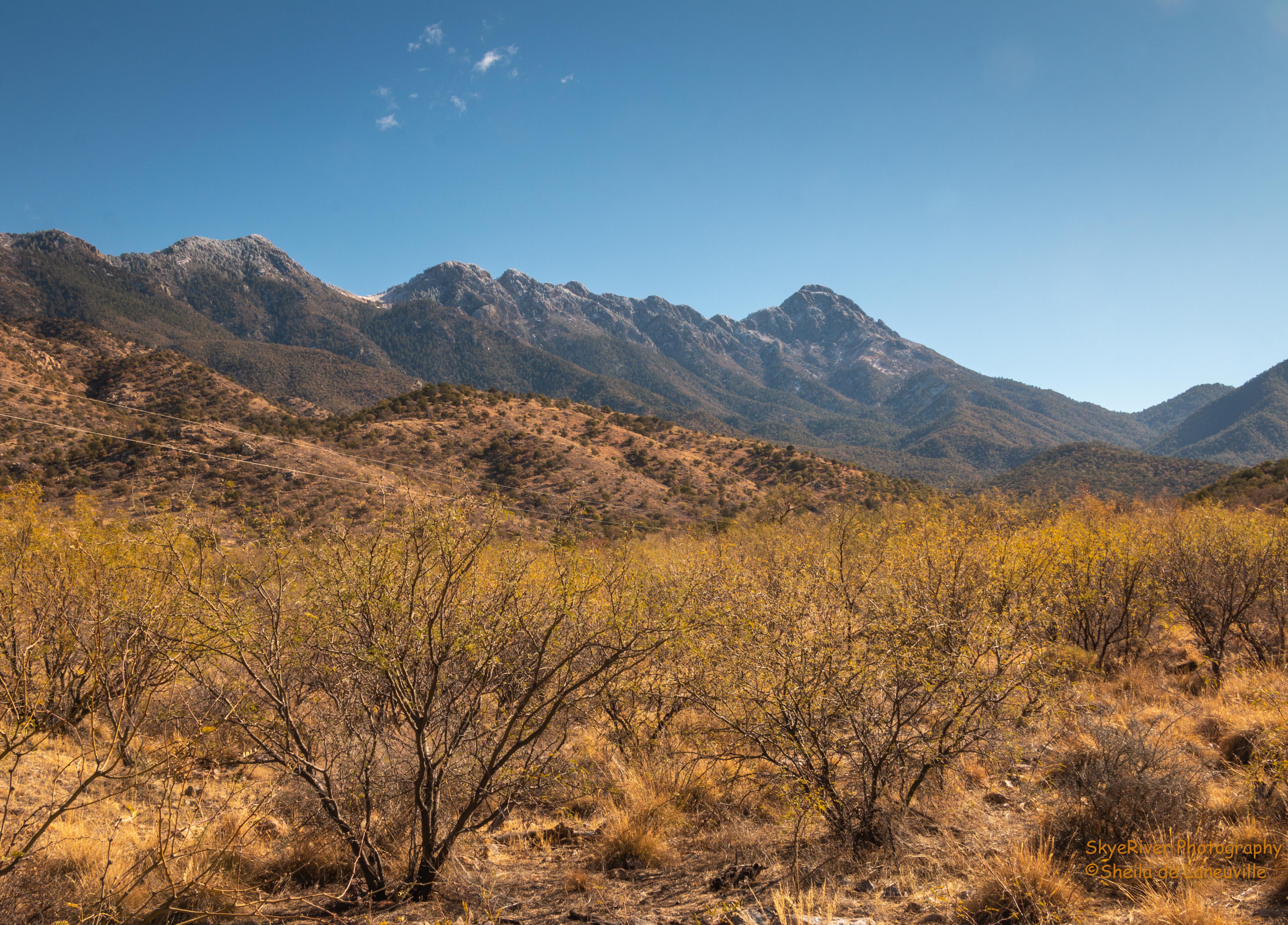
This photo was taken in Madera Canyon. Looking toward the canyon.




 Wolf Song Blog