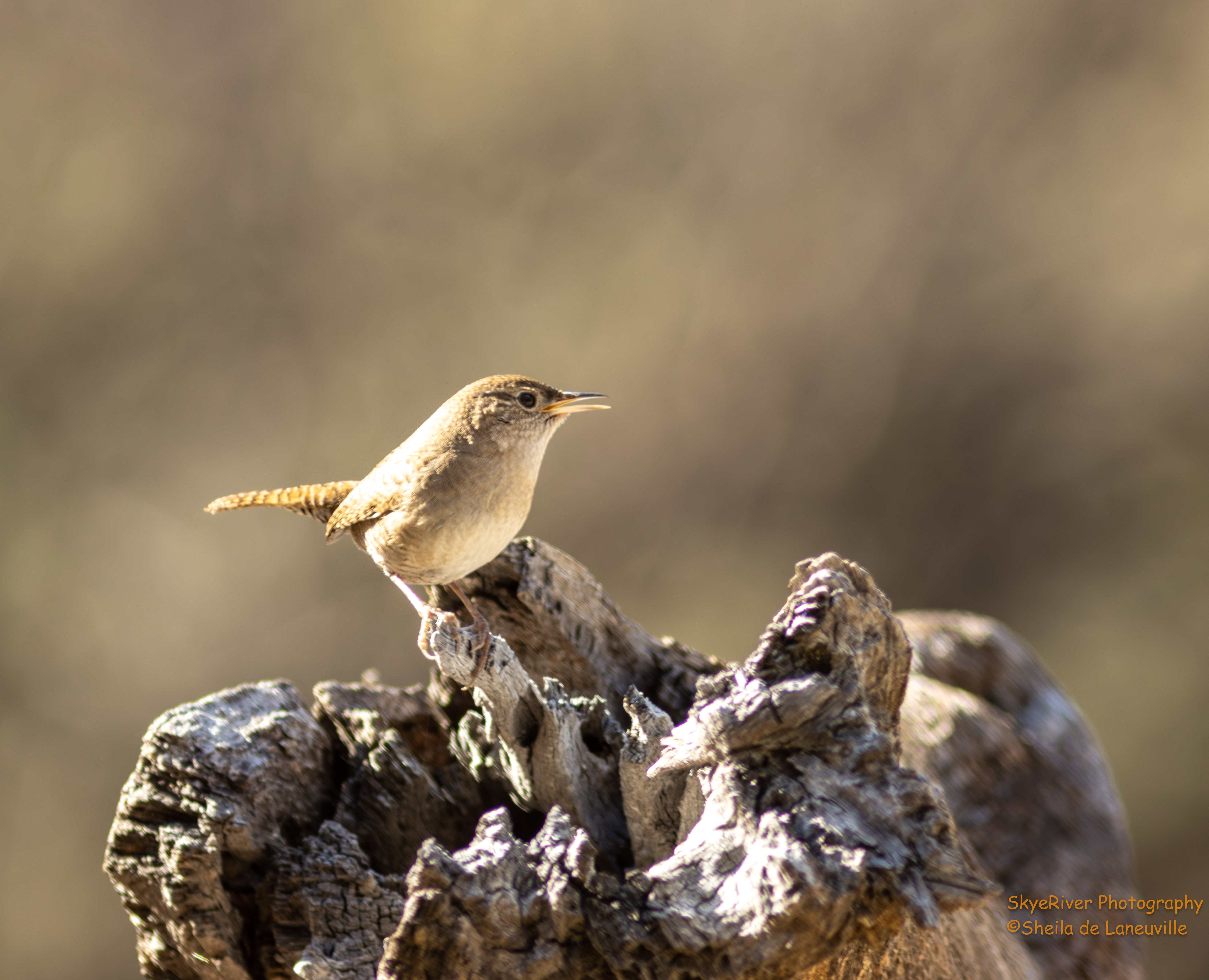
~Back in January 23, while visiting Madera Canyon, we were walking along a trail near Santa Rita Lodge and spotted this beautiful House Wren sitting on a tree stump.
They are small and compact, with a flat head and fairly long, curved beak. Short-winged, often keeping its longish tail either cocked above the line of the body or slightly drooped.
I haven’t thought about it before, and it makes perfect sense that there are regional differences between House Wrens.
A “brown-throated” subspecies of the House Wren occurs in mountains of extreme southeastern Arizona. It has a distinct buffy eyebrow and cinnamon-buff throat and chest. House Wrens occur all the way through the Americas to southern Argentina. Individuals in the Caribbean and South America tend to be warmer colored and have somewhat different voices.
In summer, House Wrens are at home in open forests, forest edges, and areas with scattered grass and trees. Backyards, farmyards, and city parks are perfect for them. In winter they become more secretive, preferring brushy tangles, thickets, and hedgerows.
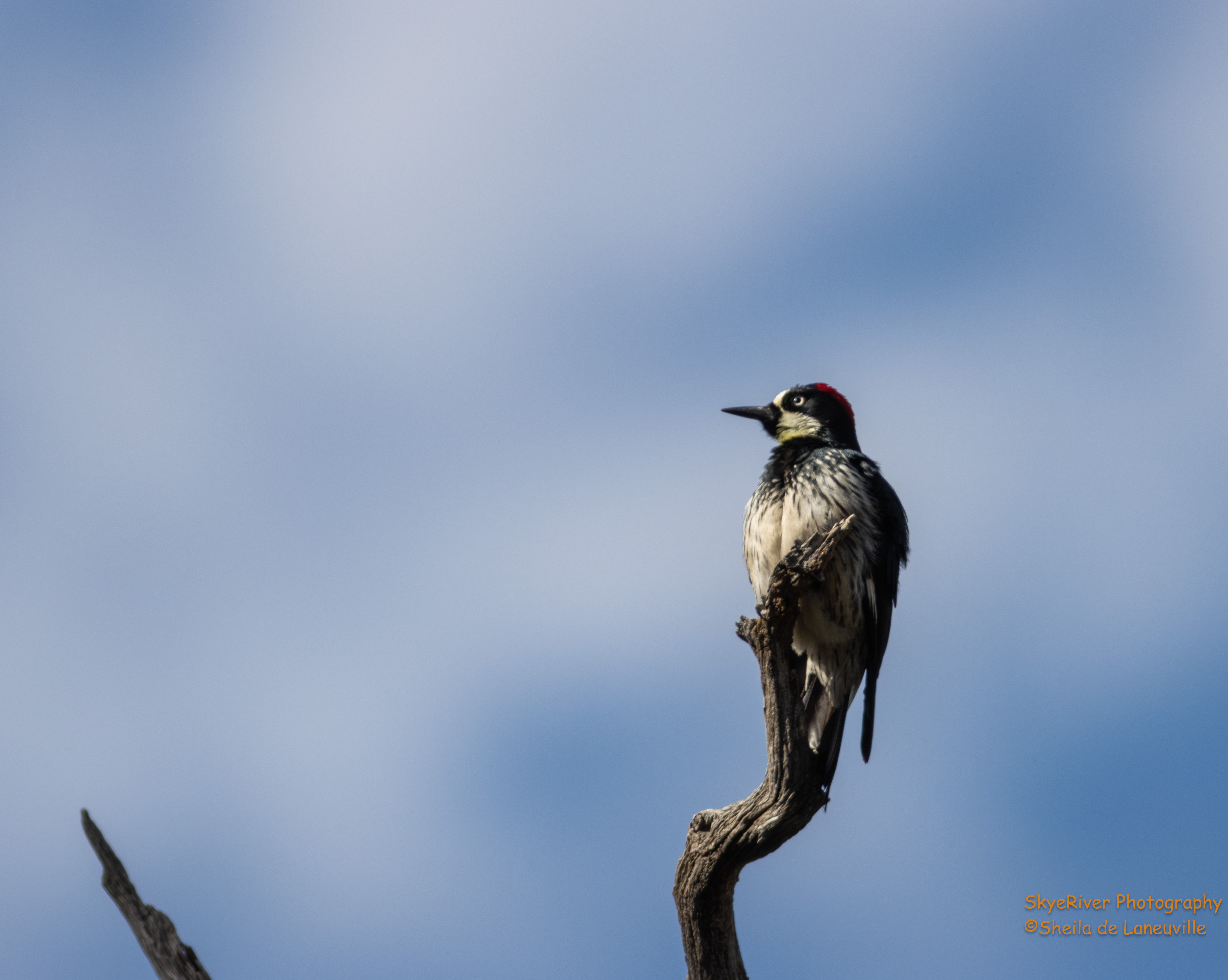
Acorn Woodpeckers are medium-sized woodpeckers with straight, spike-like bills and stiff, wedge-shaped tails used for support as the birds cling to tree trunks.
These woodpeckers live in oak and mixed oak-evergreen forests on slopes and mountains in the Southwest and West Coast. They’re tolerant of humans, and you can find them in towns where there are acorns and suitable places to store them.
Males have a red cap and whitish forehead. In flight you can see their white rump and with patches.
Male
Females have a black back and black cap. Their red feathers on the head is restricted to the back of the head unlike males.
Female
They are very unusual woodpeckers that live in large groups, hoard acorns, and breed cooperatively. Group members gather acorns by the hundreds and wedge them into holes they’ve made in a tree trunk or telephone pole. Acorn Woodpeckers also spend considerable time catching insects on the wing. They give raucous, scratchy waka-waka calls frequently.
I found a youtube vid of Acorn Woodpeckers storing acorns in tree trucks. See link below. Very interesting to watch them.
Leaving Catalina State Park in Oro Valley, AZ last January we traveled to Amado, AZ and stayed at a private RV park called DeAnza RV Resort. The reason we stayed in Amado was to travel to Madera Canyon.
Madera Canyon is a birders paradise. Here is a quick link if you might be interested in traveling to this gorgeous area. https://friendsofmaderacanyon.org
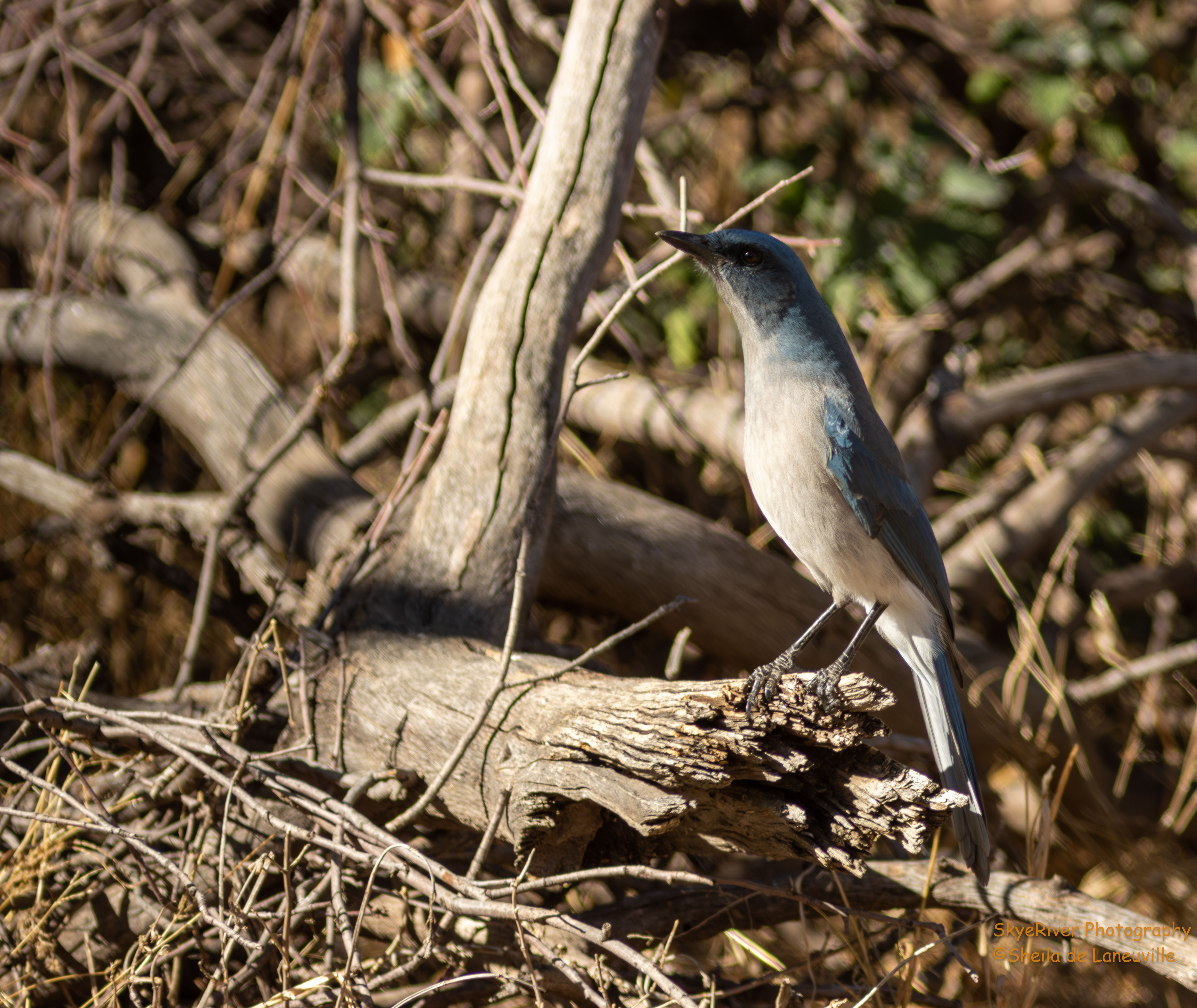
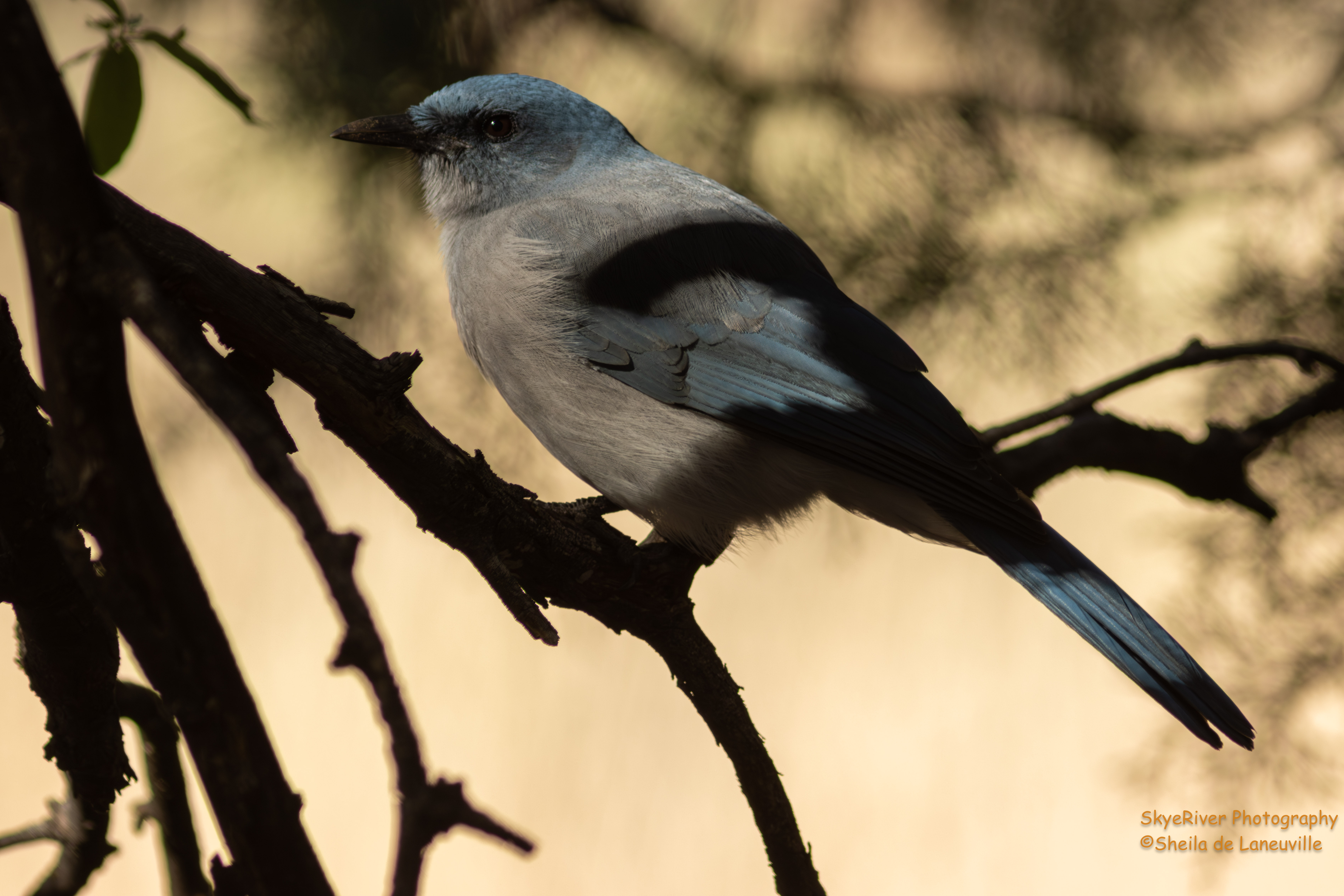
One of the common birds seen in this area is the Mexican Jay. I first saw this Jay on December 29, 2020 and was number 398 on my birding list. They are fun to photograph and it is fun to just sit and watch their interactions with each other.
The soft-blue and gray Mexican Jay looks like a duskier version of other scrub-jays (whose genus they share) but has a smaller black bill and lacks a blue necklace. Its range extends from Mexico into pine-oak-juniper woodlands of the southwestern U.S.
Notice how much white the Mexican Jay has compared to other species of Scrub Jays.
Mexican Jays live in family groups of up to 25 individuals and may have several active nests in one territory. All group members share the responsibility of feeding young. They rarely disperse and stay with their groups throughout their lives.
~Arizona has the most beautiful subsets, I believe, of all the states we have camped. These were taken last December while we were camping at Picacho Peak and Catalina State parks.
Catalina State ParkCatalina State ParkCatalina State ParkCatalina State ParkPicacho Peak State Park. I waited a little too late to capture this one, but it sure was dramatic.
Wishing everyone a happy Friday. Go outside and admire a gorgeous sunset wherever you are.
~December, 2022 Catalina State Park, Oro Valley, AZ
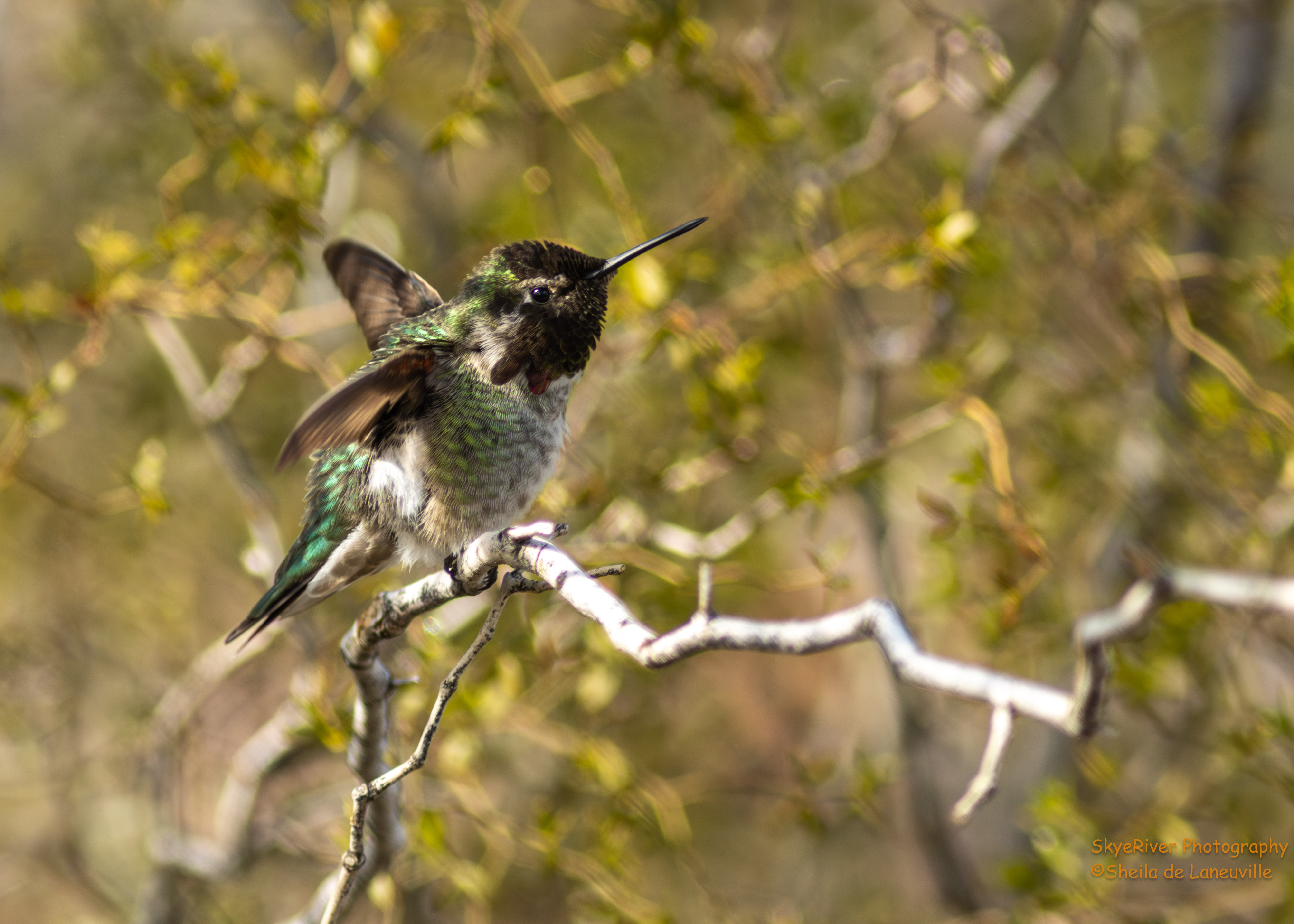
They are so fun to watch, postering to defend they territory.Looking tough!
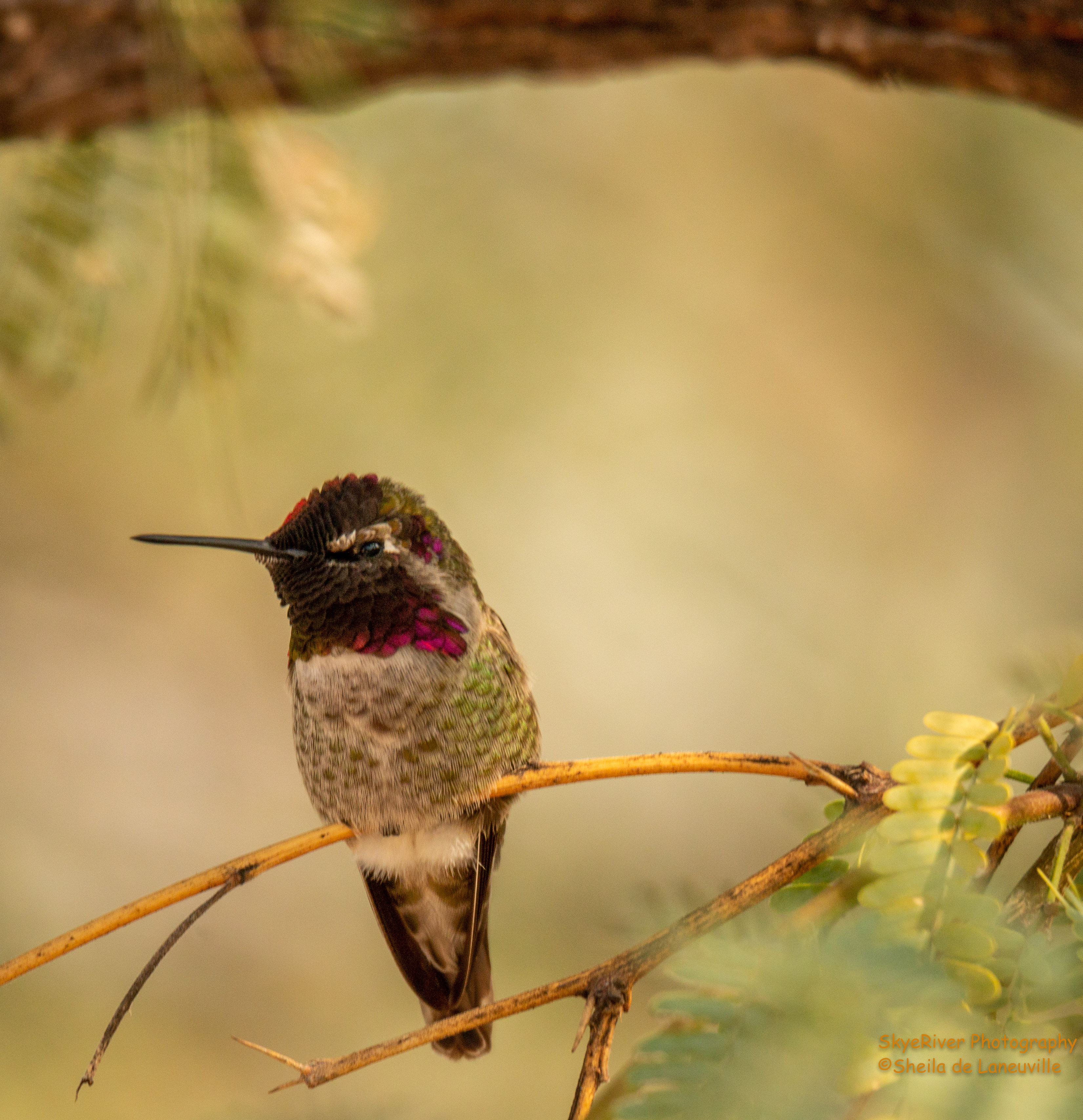
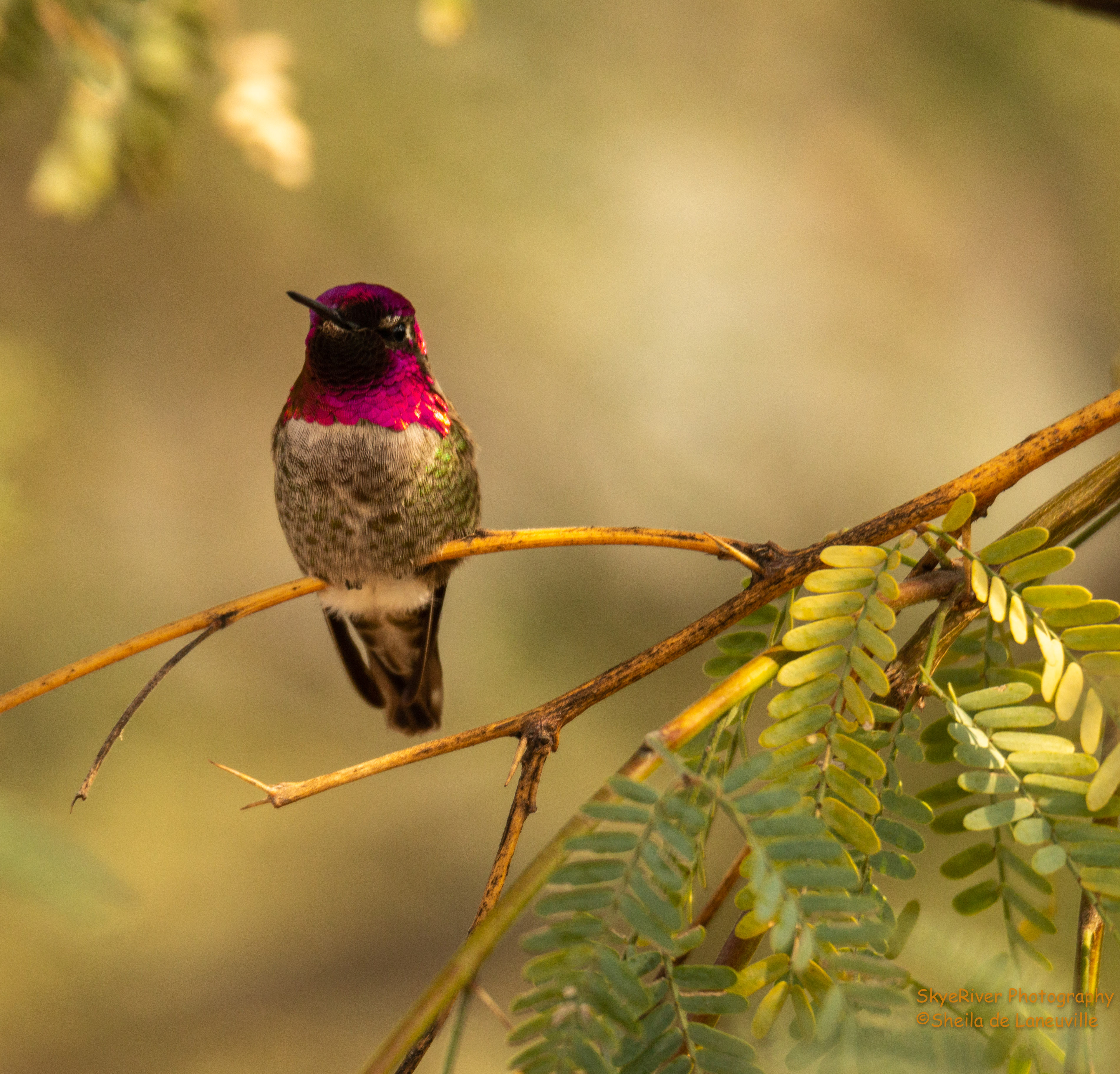
When the light hits their head and throat it is a gorgeous sight. I saw my first Anna’s on January 3, 2009 at Catalina State Park.
Like the Rufous Hummingbird, Anna’s are pugnacious and well known for its territorial behavior. Males fiercely defend feeding areas and chase away other male hummingbirds and even large insects such as bumblebees and hawk moths that try to feed there. They are known to eat more insects than any other hummingbird. They can live up to eight and half years.
From the flowers and insects they feed on, to the trees and bushes they rest and nest in, to their brilliant colors and strengths – all astonishing examples of nature’s creations.












 Wolf Song Blog