I have a passion for the outdoors and I am most happy enjoying what nature has to offer. Hobbies include photography, birding, Pickleball, astronomy, biking, and hiking. I have been happily married, for 50 years, to an amazing person.
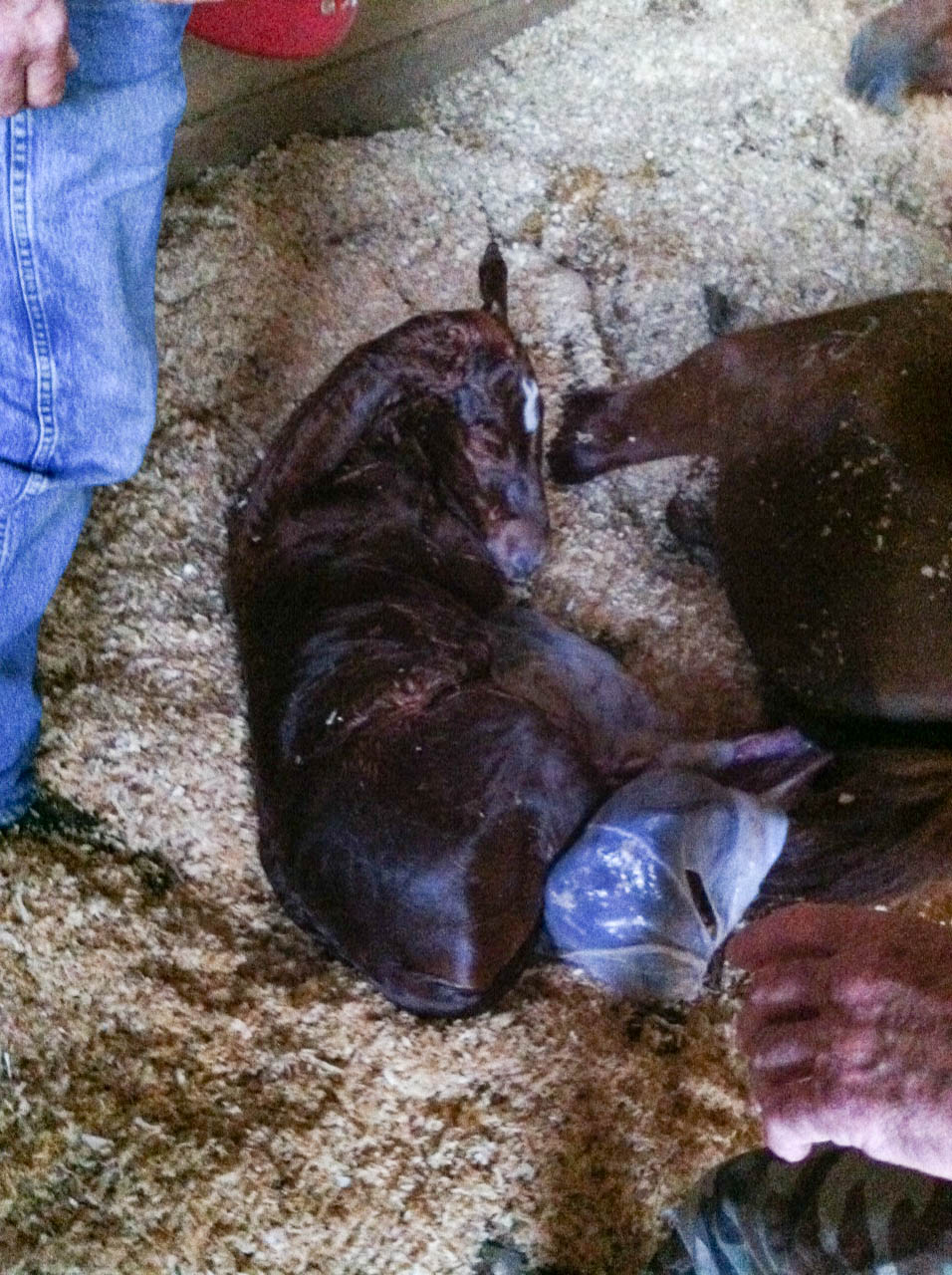
The little colt and his Mama were turned out today, for about thirty minutes, to get a little sun and to run around. It was too cold and windy so they could not stay out long. I am hearing that Lena is an excellent Mom!
To catch a glimpse of you running through the green grass
I waited
Little foal, where are you
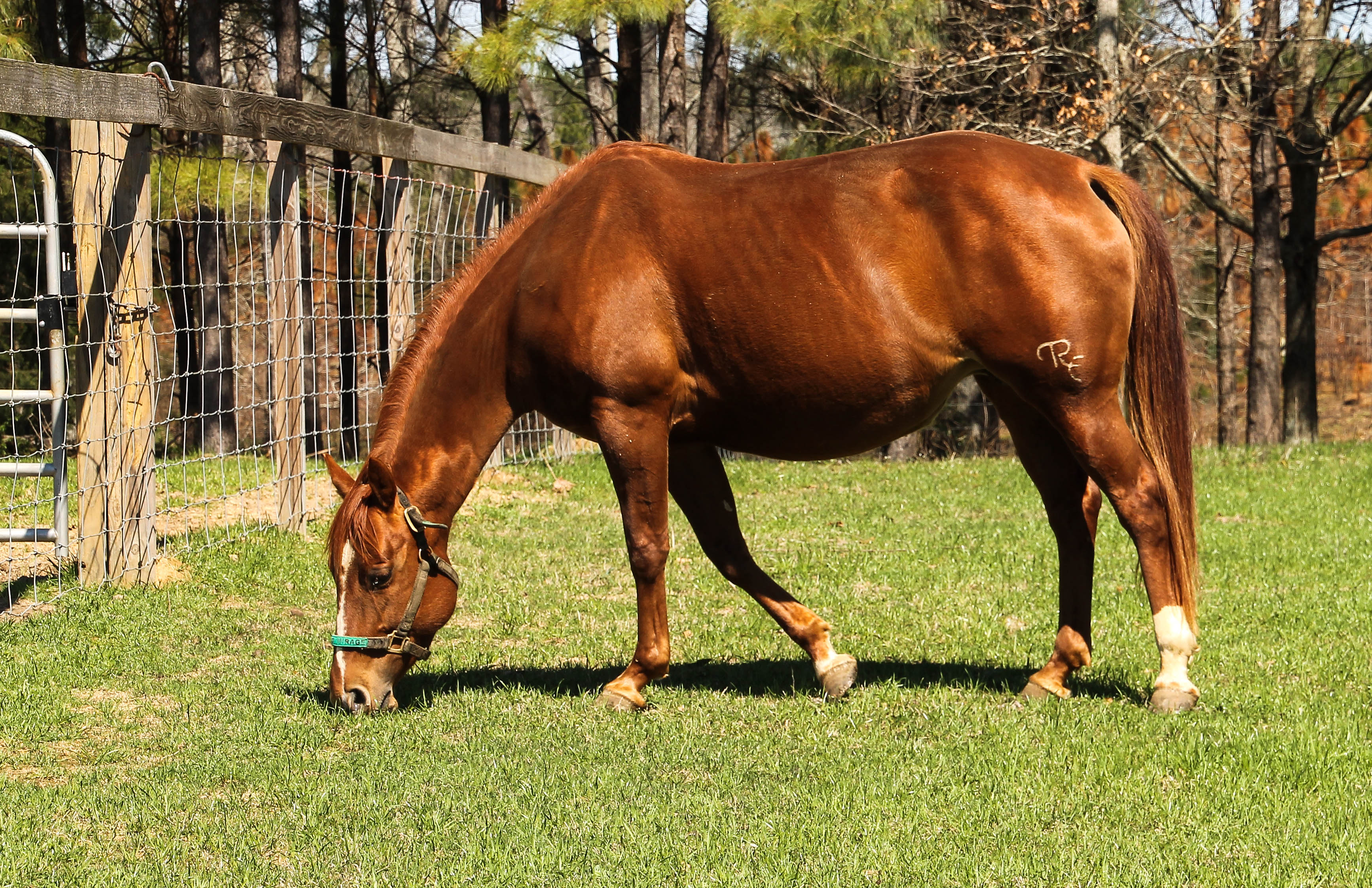
Fat Mama
We spent ten days at my brother’s house waiting for Fat Mama (Lena) to have her foal. Well, we left there Sunday mourning and guess what? This afternoon, around six o’clock, she had her baby, after 356 days!
It’s a boy!!
I was so disappointed that I didn’t get to witness his birth! It would have been a first! Baby is doing find, found his milk after a few tries. Photos were captured using a cell photo and sent to me. Earlier today, before she had her baby, I wrote this poem and planed to post it tonight with pictures of Lena and now I get to include photos of her new baby boy.
It’s a colt!Look at Mom’s face. AdorableFirst Nuzzle
These are a few photos of their other horses! Hot Rod and Big Red. There is also Lace, a one year old filly and I will post photos of her and more of Big Red later. I bet I receive more photos of the new baby!
“This feels so good”“I’am just an old cow horse”“What”Twenty-Seven year old Hot Rod
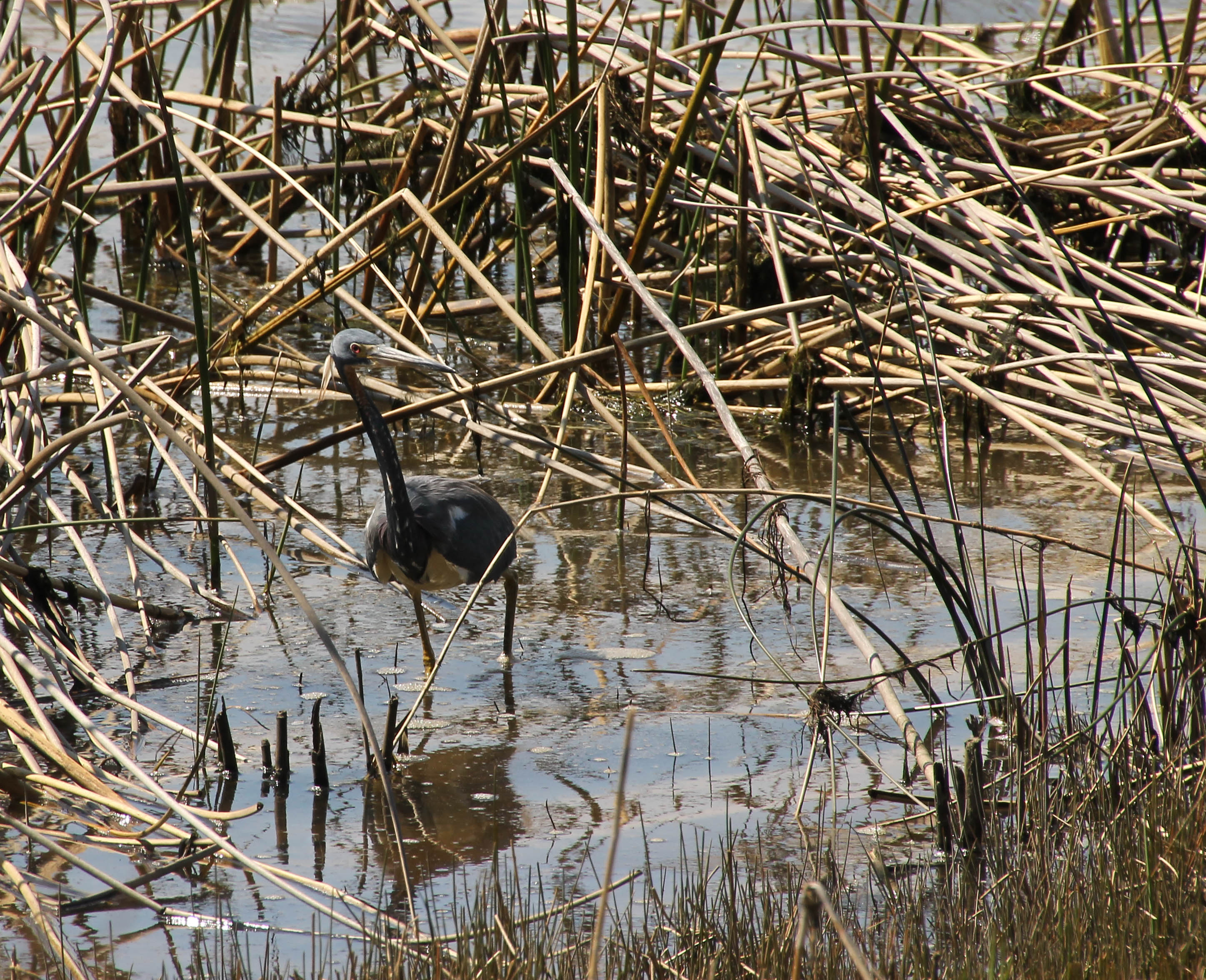
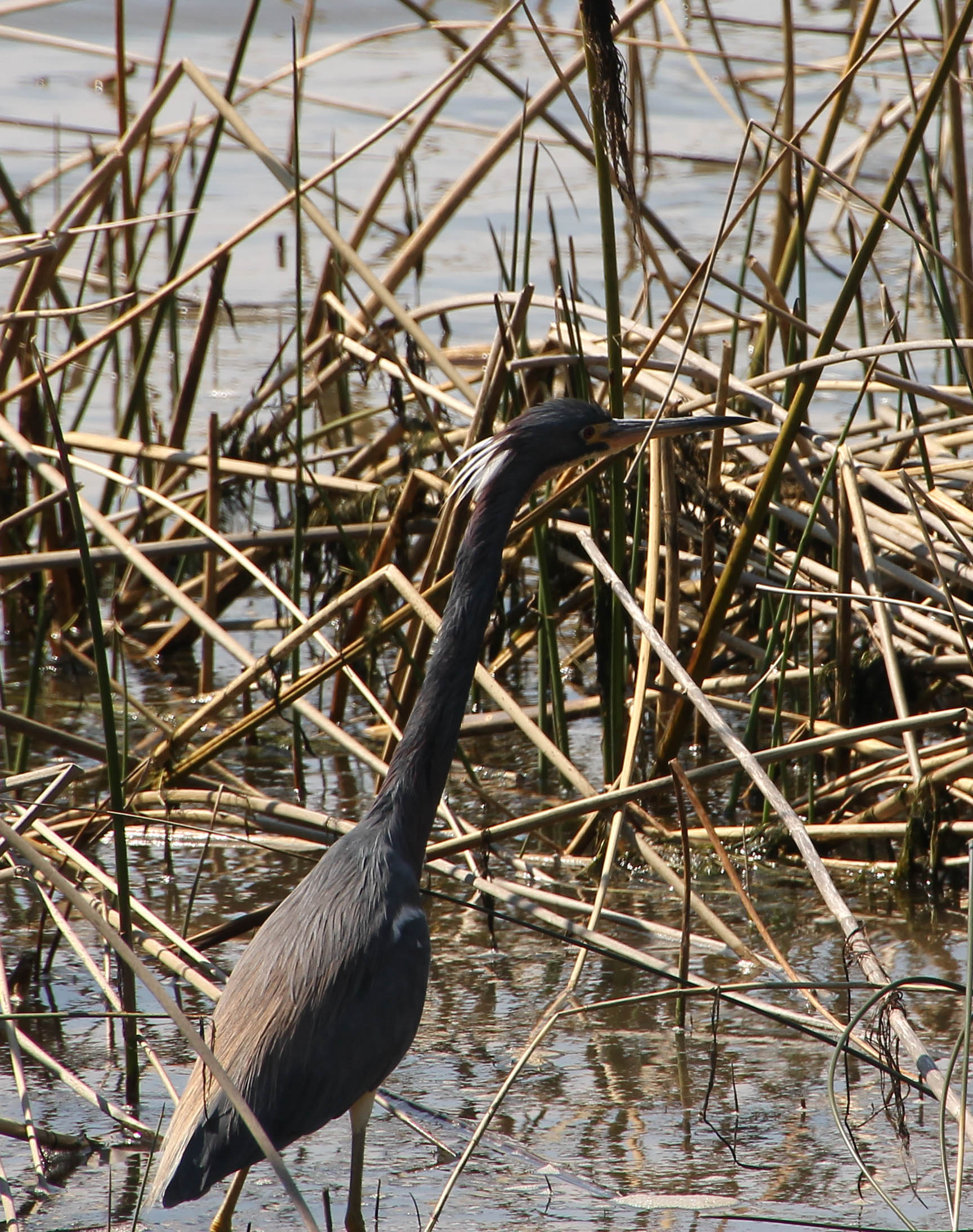
~Tricolored Heron – slate-gray upper parts, white underparts, long yellowish bill with dark tip, reddish brown streaks on fore neck, dull yellow long legs
Added to my Birding Life List on April 14, 1993
Slate-gray upper parts, white belly, reddish brown streaks on foreneck
Interesting Facts:
~Tricolored refers to the dark upper parts, white underparts and the reddish brown strips on the fore neck
~The Tricolored Heron measures about 26 inches long and weighs 13 ounces, with a 36-inch wingspan
~The only heron with a dark body and white belly
~One of the most abundant herons found in the Deep South
~Formerly called the Louisiana Heron
~In breeding plumage there are white plumes on the back of the lower neck, crown and back
~Stalks its prey in shallow or deeper water, goes deeper out in the water than other herons
“Do you see my white plumes?”
Breeding and Nesting: Three or four light blue green eggs are laid on a platform nest made of stems and twigs, occasionally lined with grass; nests in mixed-species rookeries on coastal islands, although some may nest in swamp forests. Both parents incubate eggs for about 21 days.
Long yellowish legs, long dagger bill with black tip
Range and Habitat: Breeds in southeastern New Mexico and Texas, on the Gulf Coast, and along the Atlantic coast north to southern Maine (rarely). Spends winters along the coast from Texas and New Jersey south to northern South America and West Indies. Preferred habitats include swamps, bayous, coastal ponds, salt marshes, mangrove islands, mudflats, and lagoons.
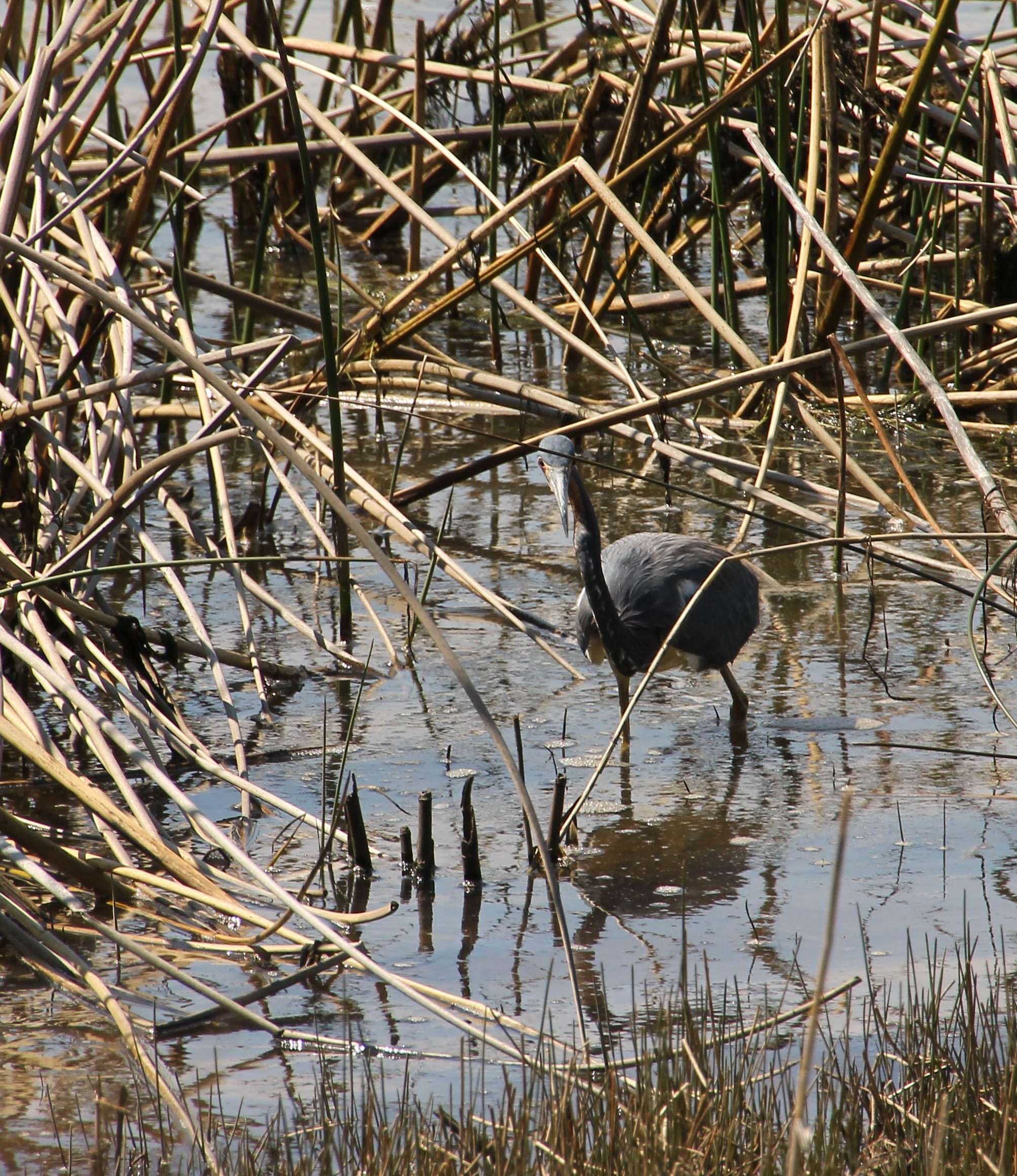
Peek-A-Boo
I captured these photos on March 9, 2014 while staying at Meaher State Park in Spanish Fort, Alabama. He was hunting along the shore of the Bay. The entire time he was searching for food one of the two resident alligators was slowly swimming toward him. I don’t know what I would have done if the alligator got close enough to strike – scare the heron away or let nature take its course.
~
Just as I am! Every Friday you may participate in Feathers on Friday at Prairie Birder.
Note:Some of my information for this post was taken from Field Guide to Birds of North America, Smithsonian Handbook, Birds of North America and Cornell Lad of Ornithology and their website All About Birds.
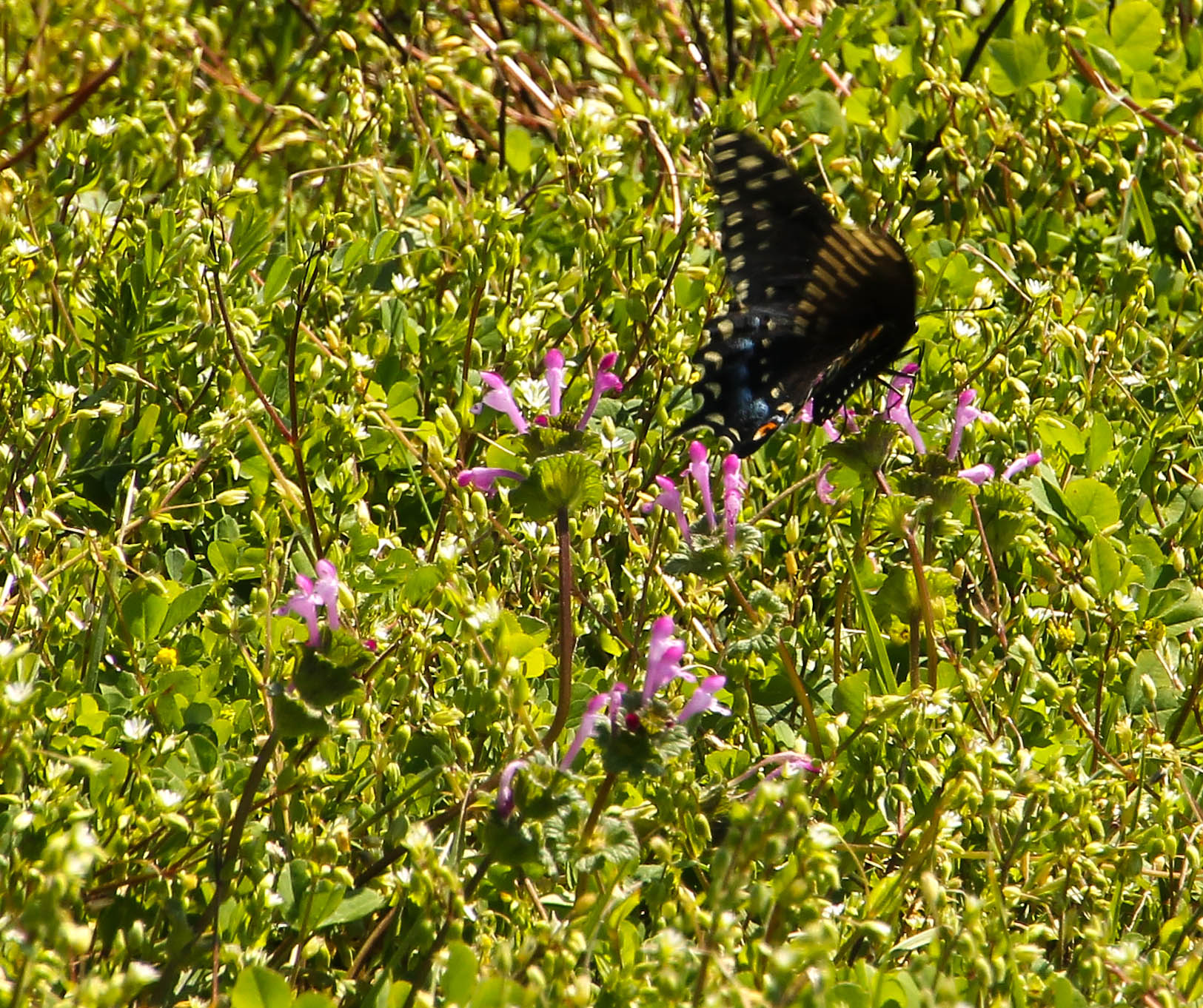
Black Swallowtail Butterfly (I played around with the vibrance on this photo
This gorgeous Butterfly flitted around our camp site feeding on these lovely pick flowers. She didn’t stay long, perhaps a few seconds and away she flew.
I never did get a sharp photo, but that doesn’t matter. I love the beauty of this delicate butterfly, the colors of the tiny flowers and lush grasses, and the image it suggest….
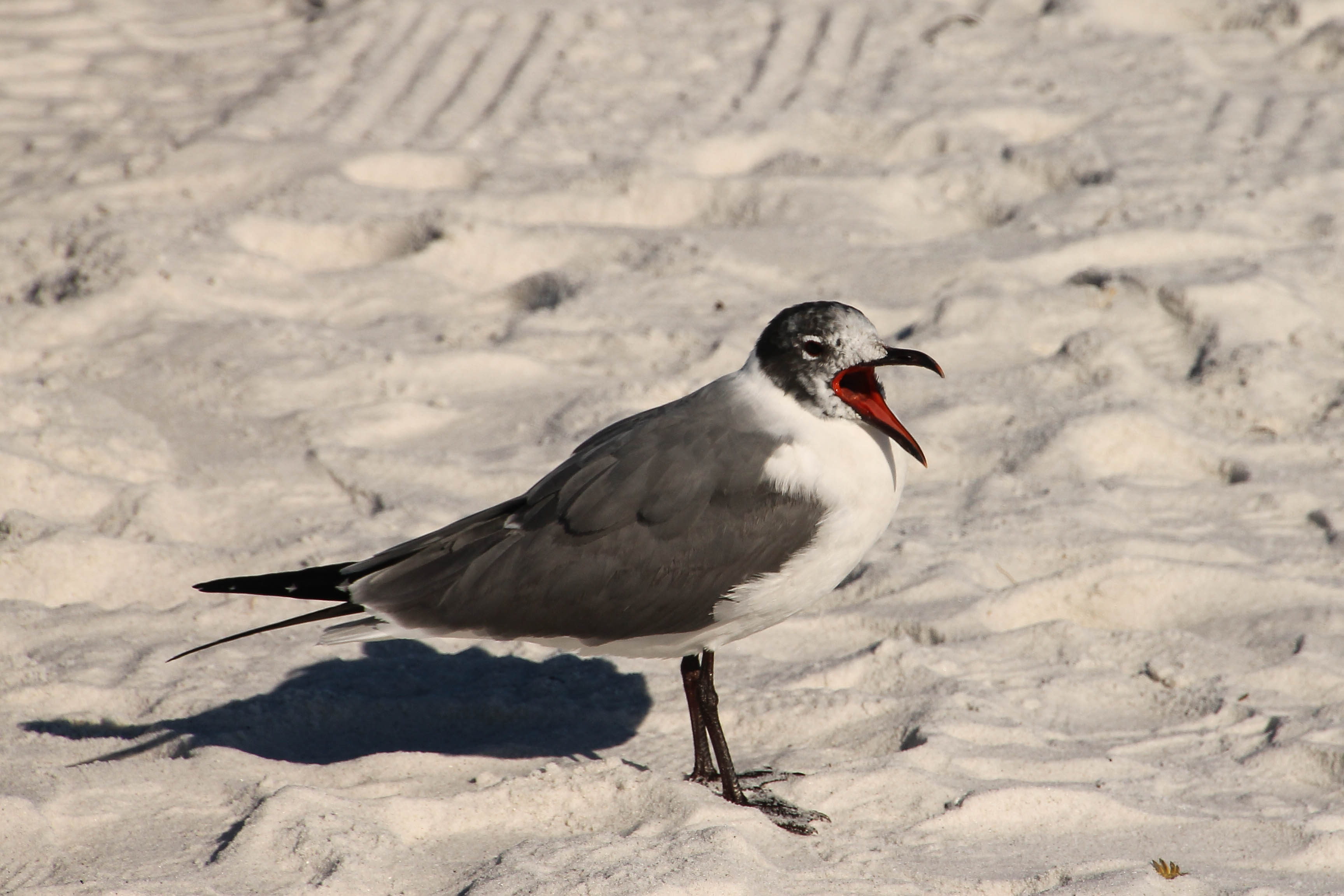
~Laughing Gull~ (adult) Black hood, black legs, white underparts, white crescent marks above and below eyes, reddish beak, broad white collar.
Added to my Birding Life List in April 10, 1993~
Laughing Gull“Go Away”“I’am getting bored”
Laughing Gulls were named, because they have a laughter like call! They are medium-sized gulls with fairly long wings and long legs that impart a graceful look when they are flying or walking. They have stout, fairly long bills. Adult Laughing Gulls are medium gray above and white below.
Summer adults have a crisp black hood, white arcs around the eye, and a reddish bill. In winter, the hood becomes a blurry gray mask on a white head.
The legs are reddish black to black. Immatures are much browner and more subtly patterned than adults; they take 2-3 years to gain adult plumage.
In the early 20th century, the Laughing Gull was threatened by the feather trade. Today they are common, stable over much of their range and numbers have been increasing in the northeastern US in recent years.
If you are interested in learning more about the Laughing Gull, please visit this web-site or any other birding web-site:
I found the fact that they take 2-3 years to gain adult plumage very interesting. I took these photos on a beach near Destin, Florida about a week ago. Notice the white tail, therefore I think it is an adult in winter plumage. Some people don’t like gulls; however I enjoy watching and photographing them. I believe they serve a purpose along our shorelines.
This gull was standing about 10 feet from the edge of the Gulf, looking out over the waves, perhaps waiting for a Pelican to drop a morsel of food at its feet.
~
Just as I am! Every Friday you may participate in Feathers on Friday at Prairie Birder.
Some of my information for this post was taken from Field Guide to Birds of North America, Smithsonian Handbook, Birds of North America and Cornell Lad of Ornithology and their website All About Birds.








 Wolf Song Blog