The Pileated Woodpecker – red crest extending from forehead to nape, large black bill, scarlet mustache, white chin, white line from base of bill crosses face to back of neck and extends down neck to side and has a solid black back.
~
Added to my Birding Life List on 09/21/98
(Beach Number Four, Washington)
~
Pileated Woodpecker (listening to me as I try to get closer to him)
Pileated Woodpeckers:
drum on trees and logs to claim territory and attract a mate
the male roosts in the nesting cavity before the eggs are laid and afterward, incubates them there at night
bore deep into trees, dig on the ground and on fallen logs for food
eat ants, beetles and a variety of other insects, acorns, beechnuts, seeds of tree cones, other nuts and various fruits
are common to fairly common in the Southeast
vulnerable to habitat loss and forest fragmentation
have adapted to habitat changes
compete for excavated nesting cavities with European Starlings
**information above taken from Smithsonian handbooks, Birds of North America**
“Now you see me, now you don’t!” (This is how I saw him most of the time.)
He stopped pounding on the log for a second.
Stephen F. Austin State Park
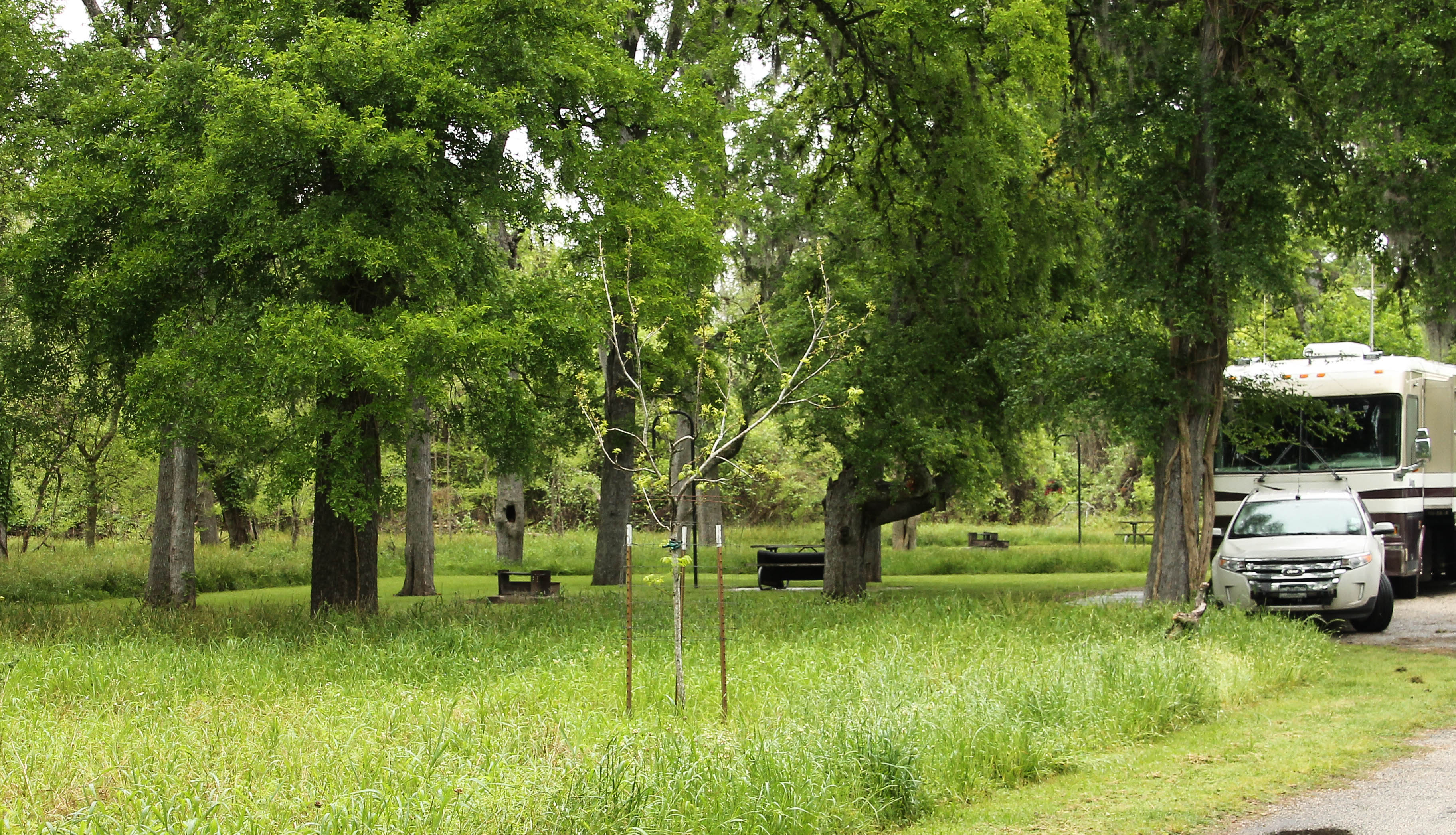
The photo above shows our backyard from April 6th to April 10th. This is a beautiful Texas State Park located in San Felipe, which is about 20 miles west of Katy, Texas and it is a terrific place to see birds.
While there we saw the Tufted Titmouse, Northern Mockingbird, Eastern Bluebird, Carolina Chickadee, Black Vulture, Red-bellied Woodpecker, Common Ground Dove, Wood Duck, Red-winged Blackbird, Chipping Sparrow, Carolina Wren, Mourning Dove, American Crow, Northern Cardinal and Indigo Bunting.
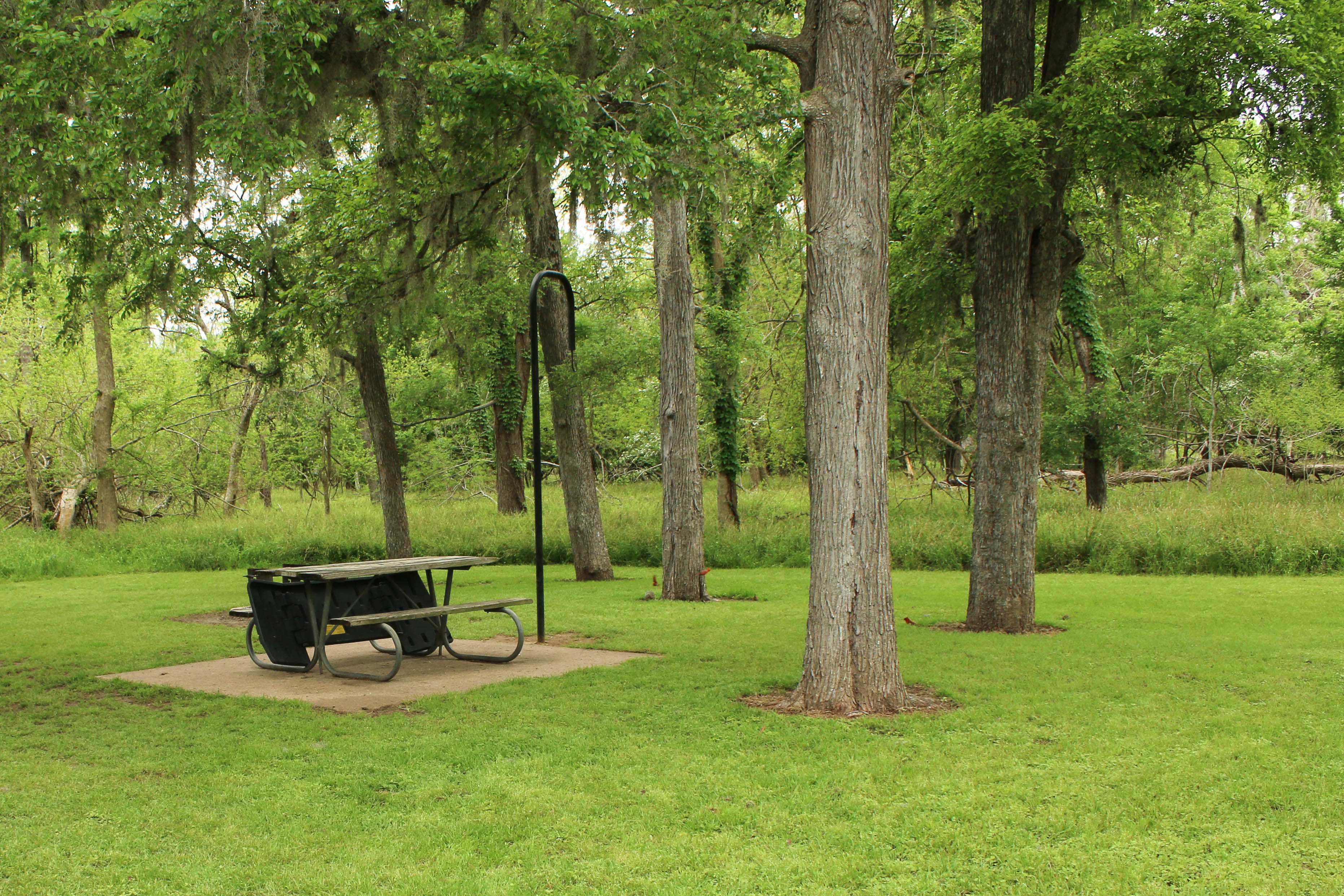
Our lovely and very green backyard for a few days. (Look close and you can see a few Northern Cardinals.)
Notice the felled trees in the background on the right of the photo above; this is where the Pileated was when we pulled into our site. It was a nice welcome!
Just as I am! Every Friday you may participate in Feathers on Friday at Prairie Birder.
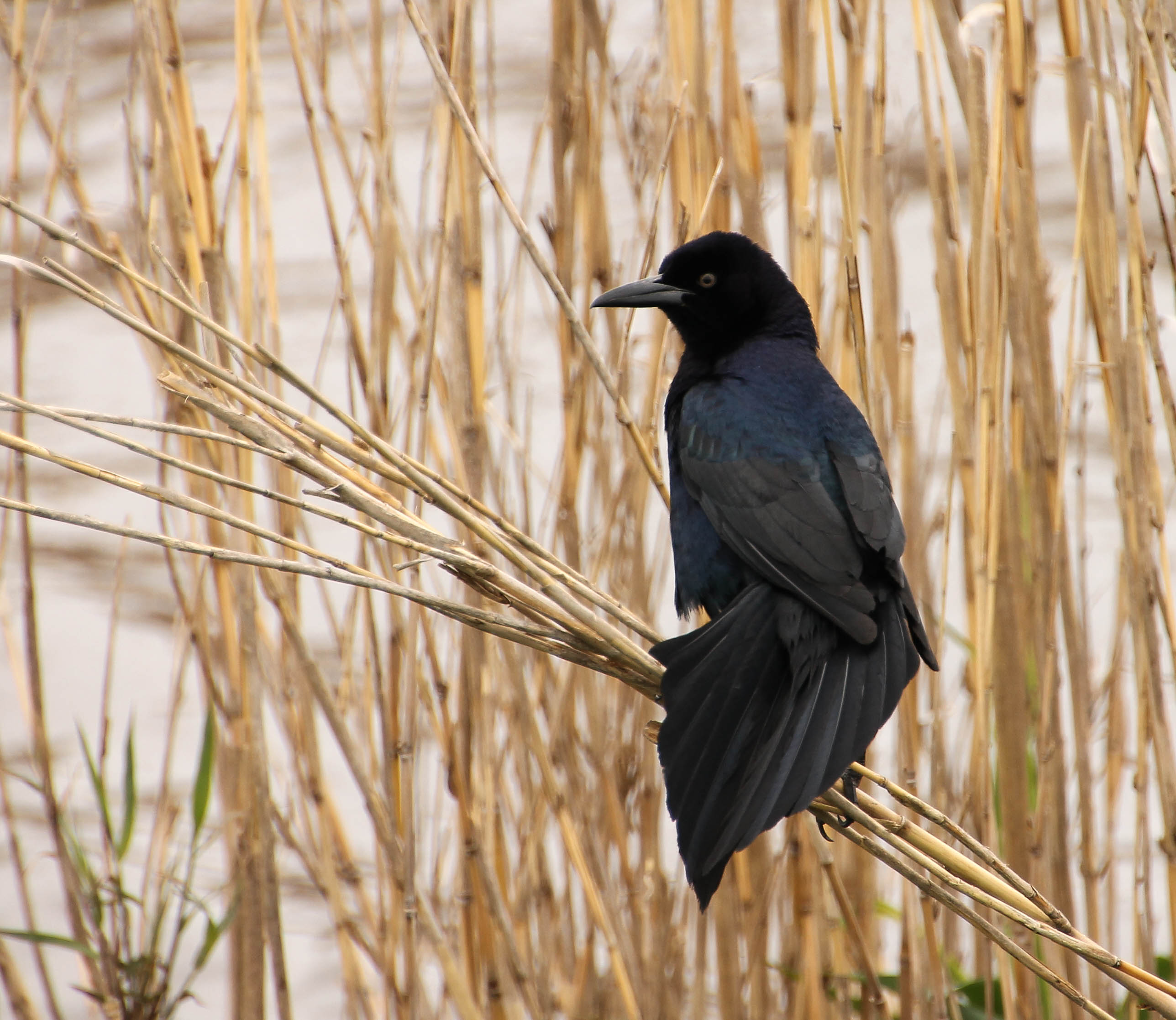
The Boat-tailed Grackle – brown or dull yellow eyes, long keel-shaped tail, black overall, iridescent purple on head and back, black legs and black bill.
~
Added to my Birding Life List on 04/10/93
(West Palm Beach, Florida)
~
The Boat-tailed Grackle is a very large, glossy black bird.
The Boat-tailed Grackle’s common name refers to its long tail, often held in a V-shape to form a “keel.”
Found along the coast from Texas to Long Island, this songbird prefers salt and brackish marshes, where it breeds in colonies and socializes in noisy flocks.
The Boat-tailed Grackle has been expanding its range northward since the 1940’s, probably due to milder winters north of the Carolinas.
The female is a light, warm brown with dark brown wings and tail. The female’s “ear” is darker brown under a pale eyebrow. The eyes of both sexes are yellowish.
Boat-tailed Grackle
I photographed this beautiful bird while visiting the Anahuac National Wildlife Refuge this past week.
What a beautiful black bird
Just as I am! Every Friday you may participate in Feathers on Friday at Prairie Birder.
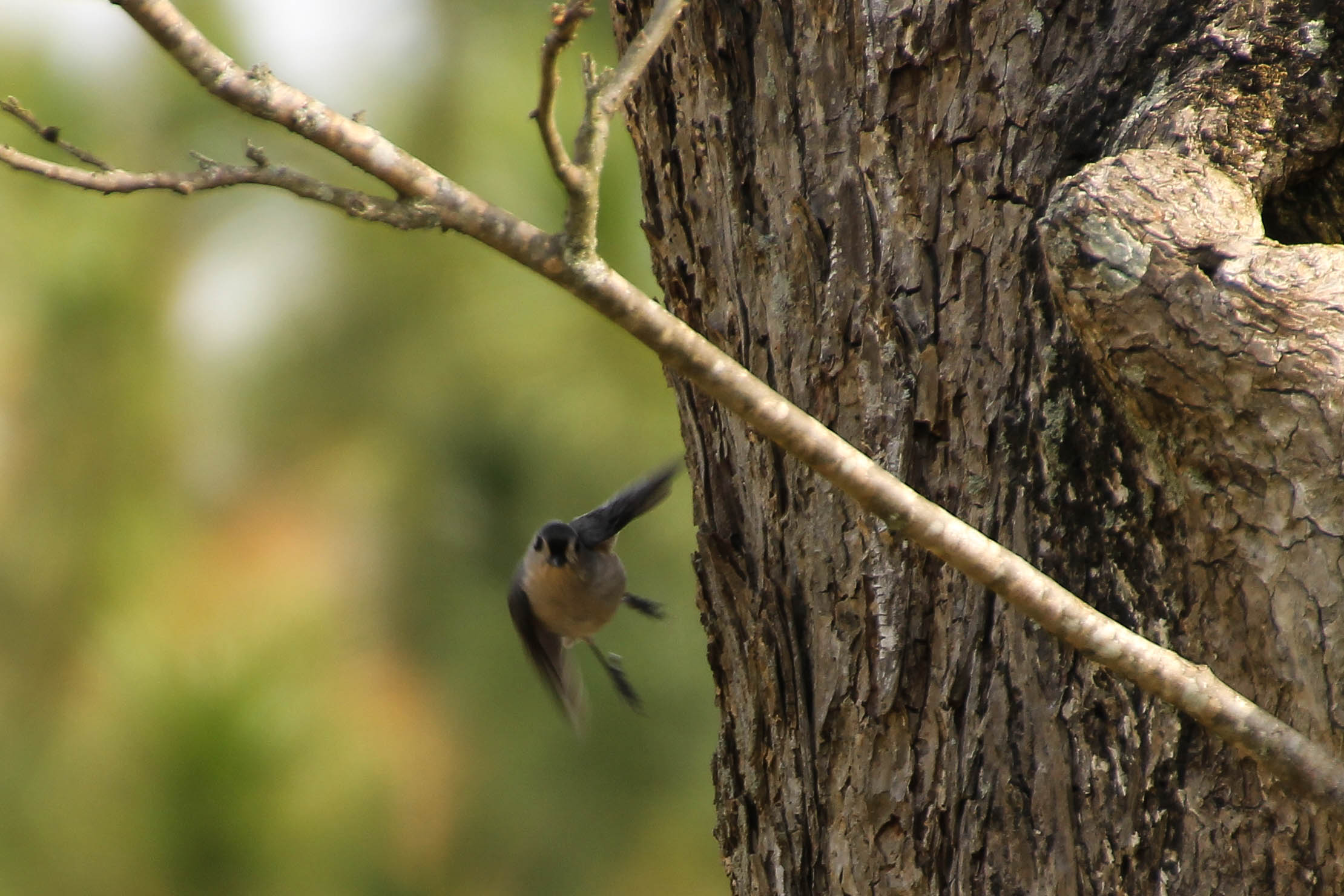
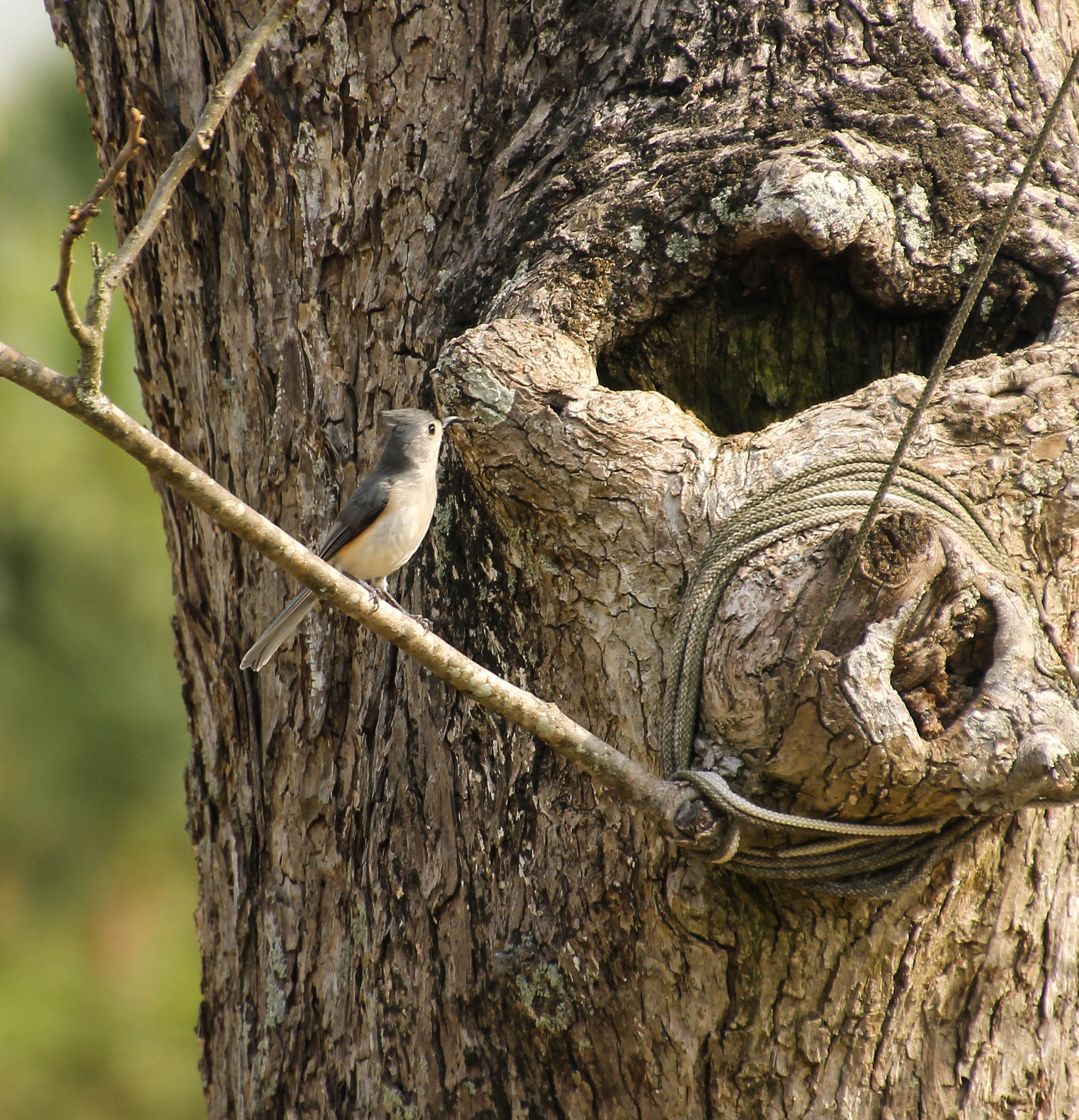
~Tufted Titmouse – tufted dark gray head, straight black bill, whitish gray underparts, gray upper parts, rusty sides and flanks, gray tail.
~
Added to my Birding Life List on 04/15/98
(Jefferson, LA)
~
Coming in for a landing
Interesting facts about the Tufted Titmouse:
Very intelligent
The largest Titmouse
Not afraid of people
Will scoop down and pluck out a human hair to use for its nest
Will learn to eat out of your hand
Very social
Eats insects and their larvae, spiders, snails berries, acorns, nuts and seeds
Feeds its mate during courtship
Tufted Titmouse waiting its turn for a bath
As I sat on my coach sofa looking out the window on The Farm, I observed many species of birds flying in and out of a cavity in a large, old Pecan tree with this Tufted Titmouse being one of them. Notice the cavity in the Pecan tree above.
At first I didn’t realize what they were doing, but when a bigger bird landed in there and I saw water flying up into the air I knew. Ahh, a refreshing bath. I think the Titmouse was waiting for its turn.
When Howard asked my brother if he could put this rope in the tree to assist him in setting up some amateur radio antennas, my brother should have said NO. It kinda takes away from the photo.
Tufted Titmouse
Just as I am! Every Friday you may participate in Feathers on Friday at Prairie Birder.
Note:Some of my information for this post was taken from Field Guide to Birds of North America, Smithsonian Handbook, Birds of North America and Cornell Lad of Ornithology and their website All About Birds.
~Canada Goose – black head and neck, white chin strap, blackish bill, brownish gray upper parts, white under tail coverts.
~
Added to my Birding Life List in July of 1984
(while on vacation in Yellowstone National Park, WY)
~
A Canada Goose drinking a sip of water
The Canada Goose is the most common, familiar and widespread goose in North America.
They are native to North America and breed in Canada and the northern United States in a variety of habitats. The Great Lakes region maintains a very large population of Canada Geese.
Canada Geese occur year-round in the southern part of their breeding range, including most of the eastern seaboard and the Pacific coast. Between California and South Carolina in the southern United States and northern Mexico, Canada Geese are primarily present as migrants from further north during the winter.
Mini and Moe (they mate for life and are monogamous
Canada Geese will mate for life. Like most other geese, family units remain together through winter and until they return to breeding grounds. Incubation is 25-30 days by the female, young leave nest at 2-2 days, young feed themselves with the help of their parents.
Black head and neck, white shin strap, black bill, white under tail coverts
These geese are called dabblers and grazers, feeding on a variety of aquatic and terrestrial plants.
I am sure you have been treated to the familiar honk-a-lonk song of these geese and have seen them flying over in their distinctive V formation!
I had a wonderful time photographing these geese while staying at Meaher State Park in Spanish Fort, Alabama.
If you are interested in learning more about the Canada Goose, please visit this web-site or any other birding web-site:
Information on the Canada Goose was taken from several birding books and web-sites to include: DK Smithsonian Handbook on Birds of North America, National Geographic Society and Wikipedia.
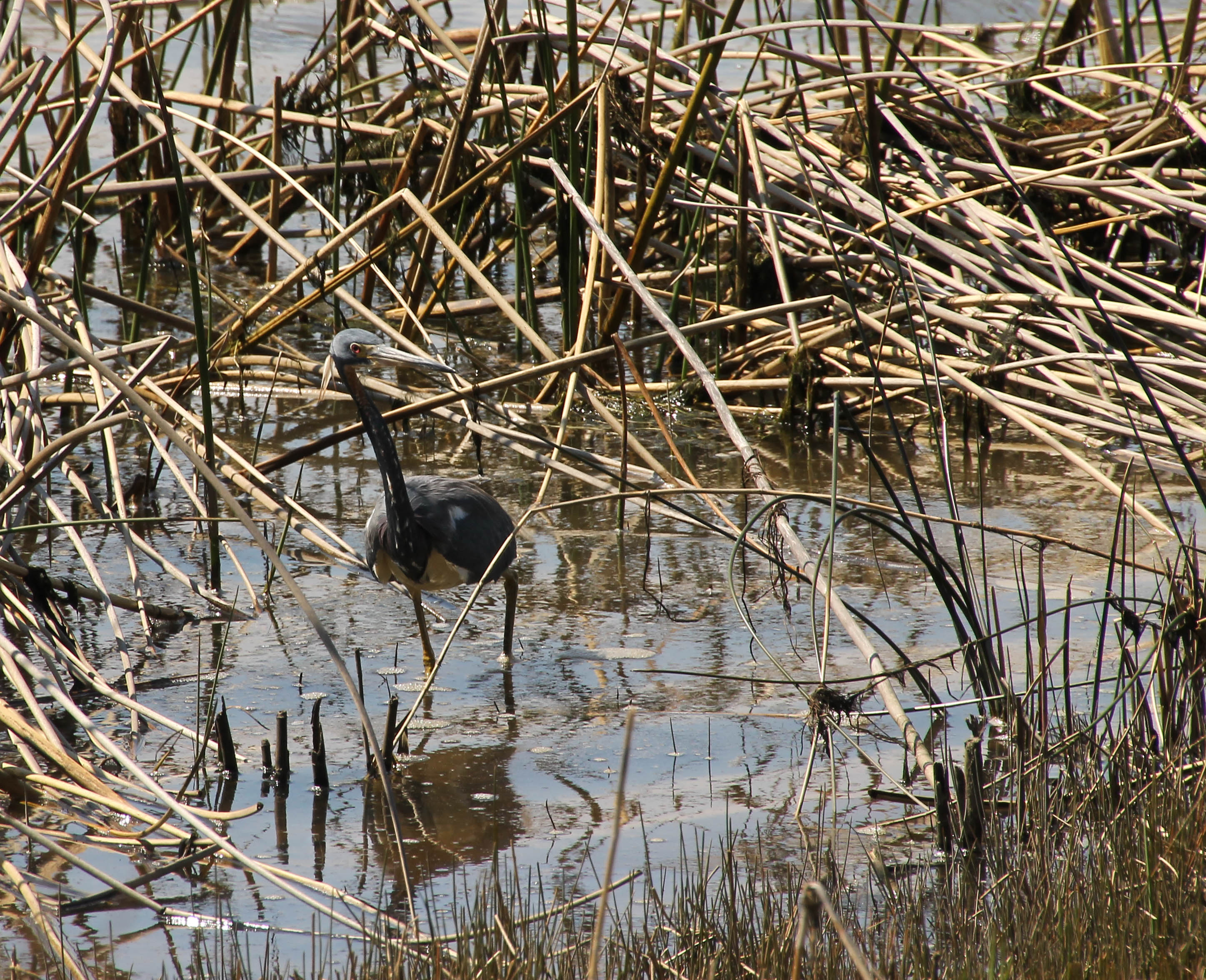
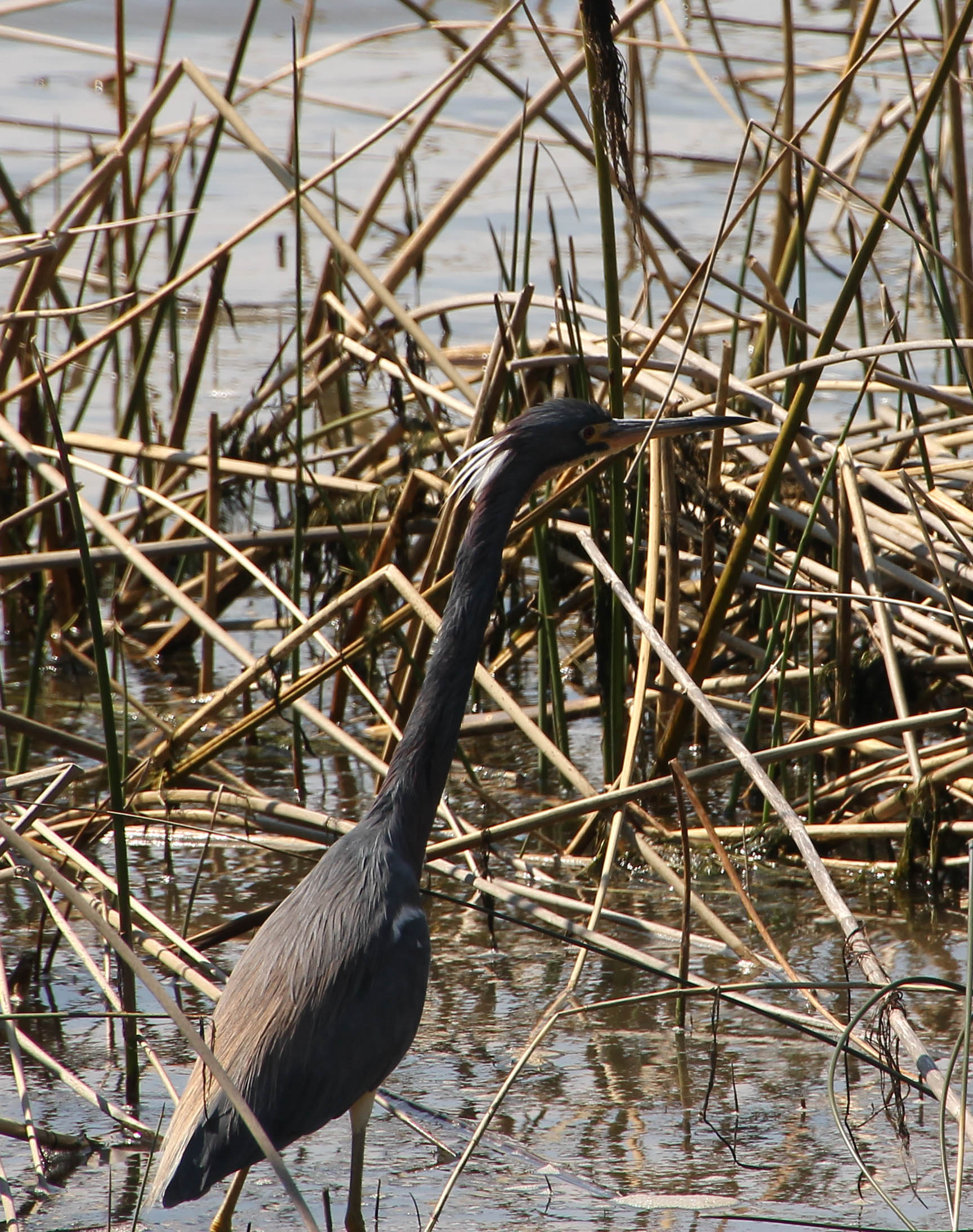
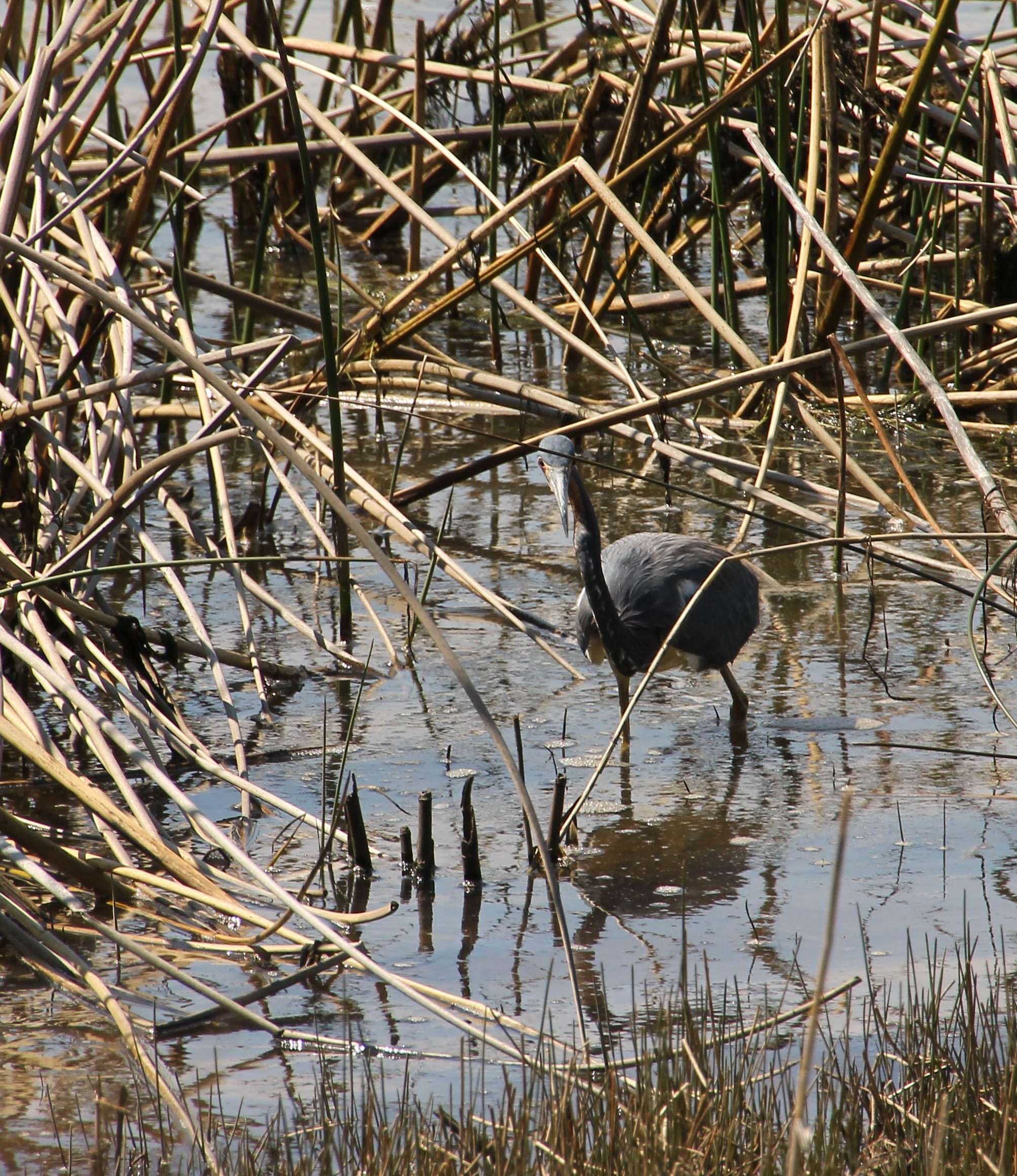
~Tricolored Heron – slate-gray upper parts, white underparts, long yellowish bill with dark tip, reddish brown streaks on fore neck, dull yellow long legs
Added to my Birding Life List on April 14, 1993
Slate-gray upper parts, white belly, reddish brown streaks on foreneck
Interesting Facts:
~Tricolored refers to the dark upper parts, white underparts and the reddish brown strips on the fore neck
~The Tricolored Heron measures about 26 inches long and weighs 13 ounces, with a 36-inch wingspan
~The only heron with a dark body and white belly
~One of the most abundant herons found in the Deep South
~Formerly called the Louisiana Heron
~In breeding plumage there are white plumes on the back of the lower neck, crown and back
~Stalks its prey in shallow or deeper water, goes deeper out in the water than other herons
“Do you see my white plumes?”
Breeding and Nesting: Three or four light blue green eggs are laid on a platform nest made of stems and twigs, occasionally lined with grass; nests in mixed-species rookeries on coastal islands, although some may nest in swamp forests. Both parents incubate eggs for about 21 days.
Long yellowish legs, long dagger bill with black tip
Range and Habitat: Breeds in southeastern New Mexico and Texas, on the Gulf Coast, and along the Atlantic coast north to southern Maine (rarely). Spends winters along the coast from Texas and New Jersey south to northern South America and West Indies. Preferred habitats include swamps, bayous, coastal ponds, salt marshes, mangrove islands, mudflats, and lagoons.
Peek-A-Boo
I captured these photos on March 9, 2014 while staying at Meaher State Park in Spanish Fort, Alabama. He was hunting along the shore of the Bay. The entire time he was searching for food one of the two resident alligators was slowly swimming toward him. I don’t know what I would have done if the alligator got close enough to strike – scare the heron away or let nature take its course.
~
Just as I am! Every Friday you may participate in Feathers on Friday at Prairie Birder.
Note:Some of my information for this post was taken from Field Guide to Birds of North America, Smithsonian Handbook, Birds of North America and Cornell Lad of Ornithology and their website All About Birds.