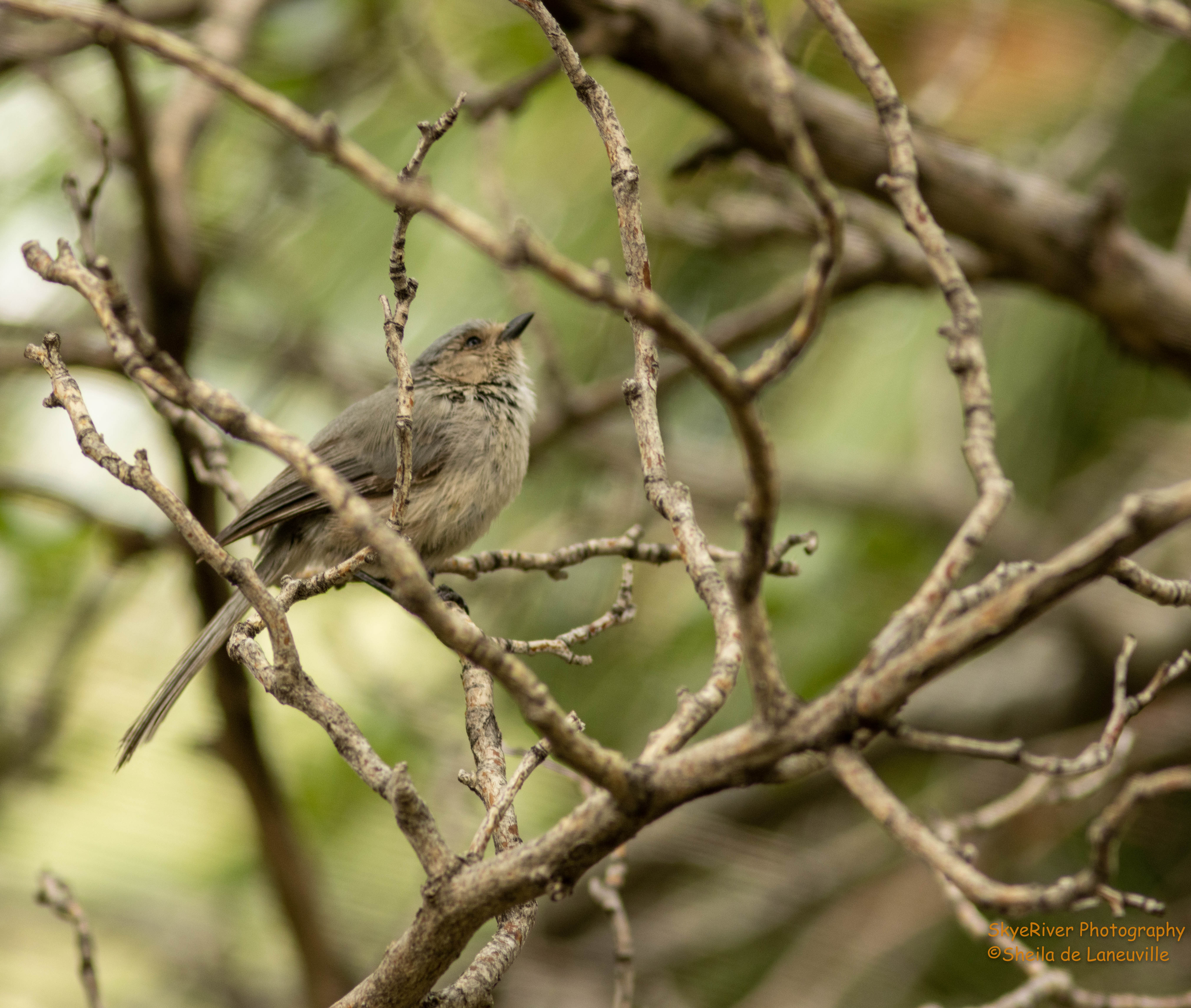
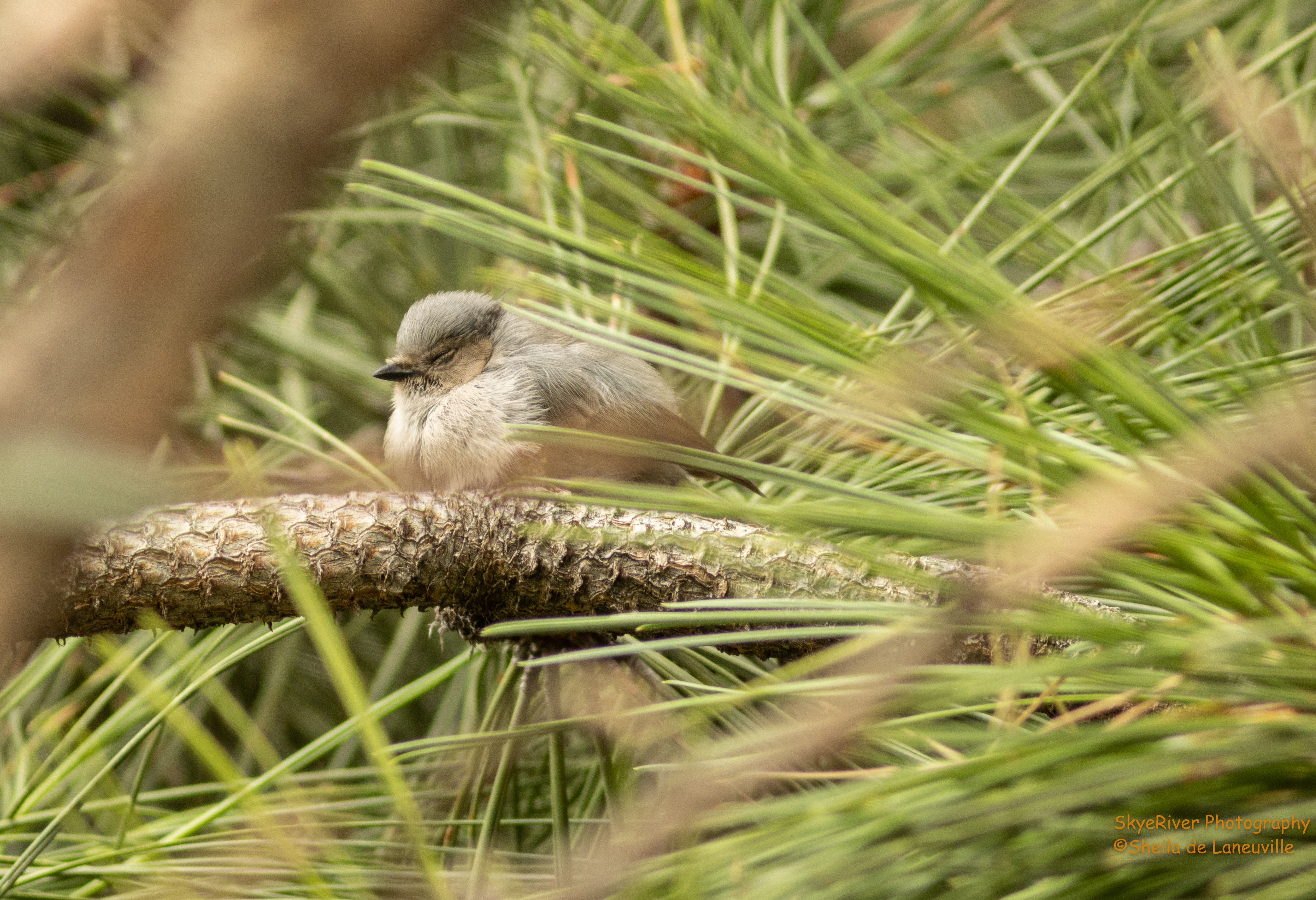
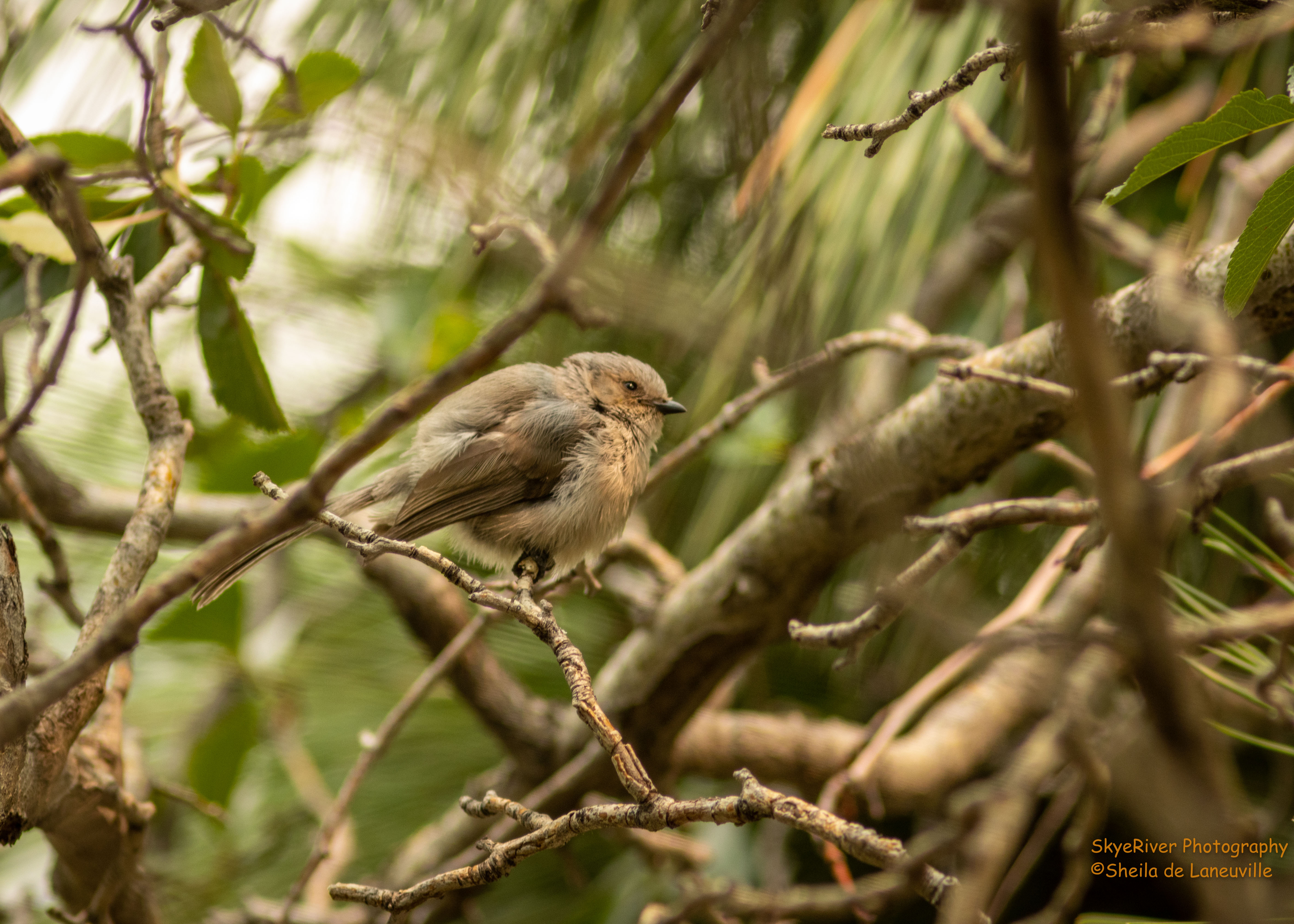
On occasion a small flock of these tiny birds grace my yard. They flit around seemingly never resting, always active. This past week about ten or so flew in searching through the pine trees for aphids and other insects. They also enjoy suet cakes. It was fun seeing one resting. Perhaps it is a juvenile.
~An unusual fact:
The Bushtit is the only member of its family in the Americas; seven other species are found in Eurasia. All have similar complex hanging nests. A breeding Bushtit pair often has helpers at the nest that aid in raising the nestlings. This already rare behavior is made more unusual by the fact that the helpers are typically adult males.
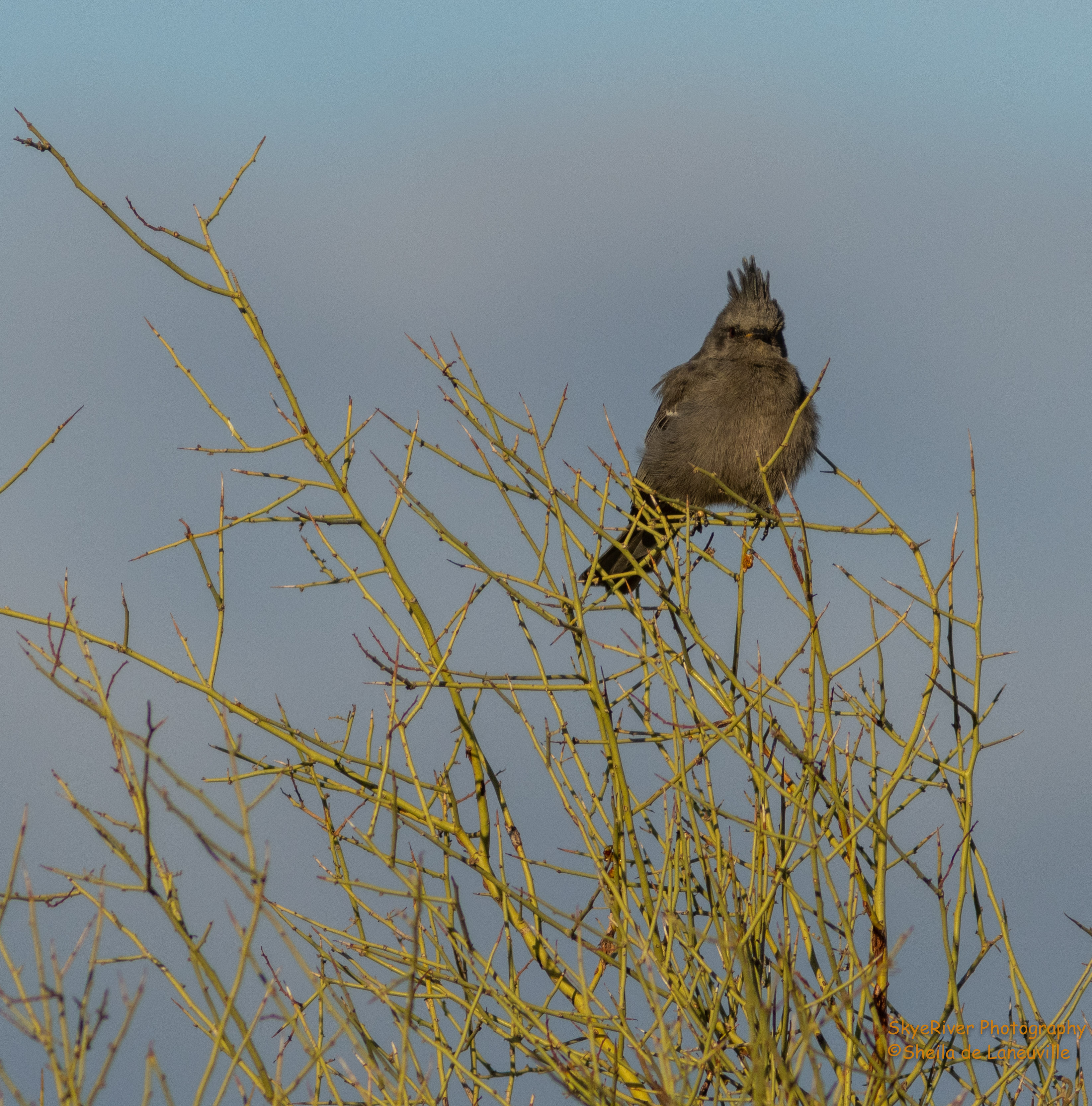
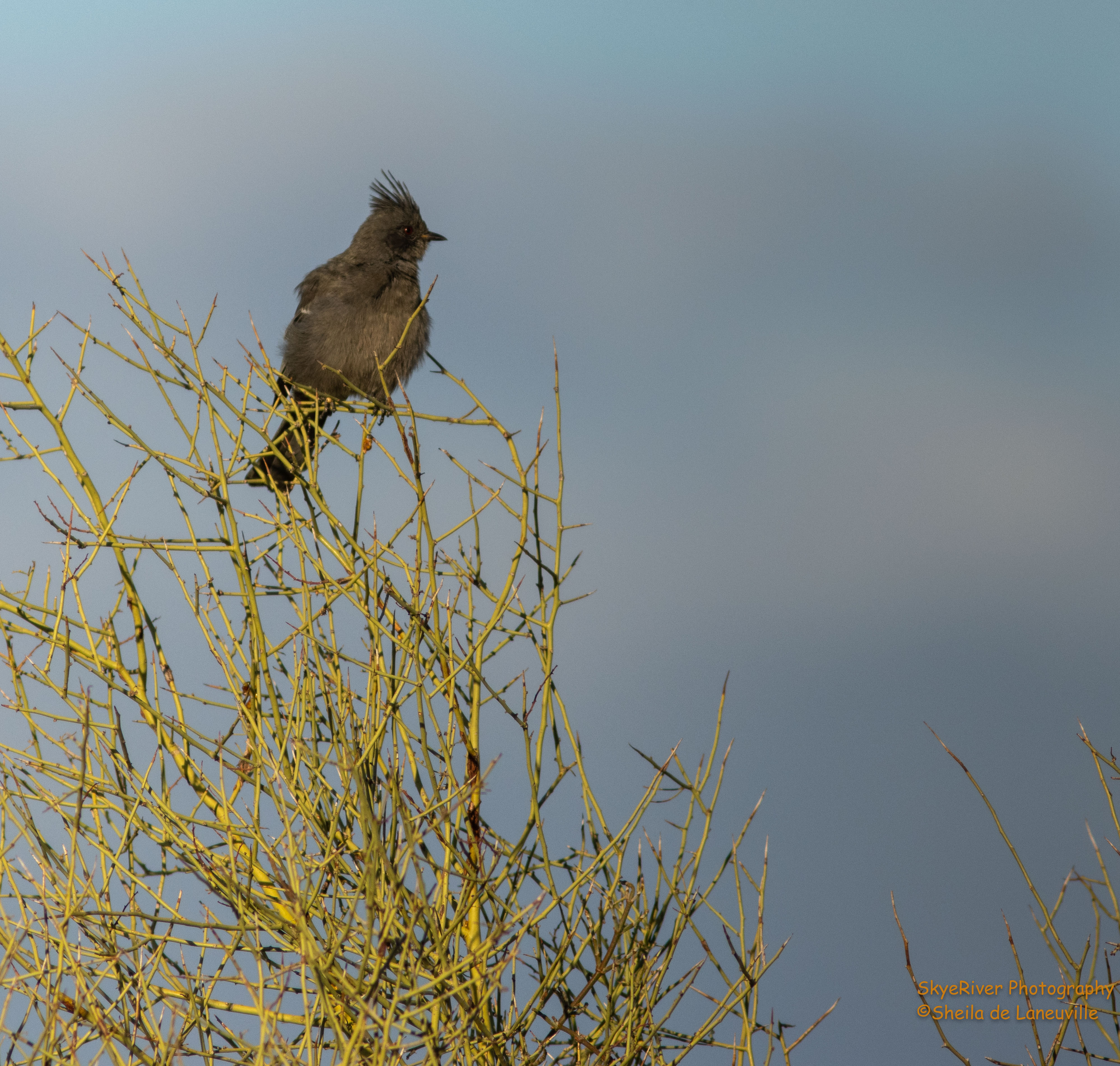
So how in the heck do you pronounce the name of this red-eyed beauty? fey i no pep la
Notice the red eye.
The phainopepla or northern phainopepla is the most northerly representative of the mainly tropical Central American family Ptiliogonatidae, the silky flycatchers. Its name is from the Greek phain pepla meaning “shining robe” in reference to the male’s plumage.
INTERESTING FACTS
The Phainopepla is particularly notable for its pattern of breeding twice each year, in two different habitats.
An individual eats at least 1,100 mistletoe berries per day, when they are available.
When pursued by predators or handled by humans, it mimics the calls of other birds; imitations of at least 13 species have been recorded.
The other day I was trying to take a photograph of this bird when an elderly man stopped and asked me “what kind of bird is that”. I told him it was a fey i no pep la and he said: “a what”.
It made me smile! Of course, I had to say to myself – fey i no pep la before I told him!
Enjoy the outdoors, enjoy nature, enjoy birding, and enjoy learning how to pronounce new words!





 Wolf Song Blog