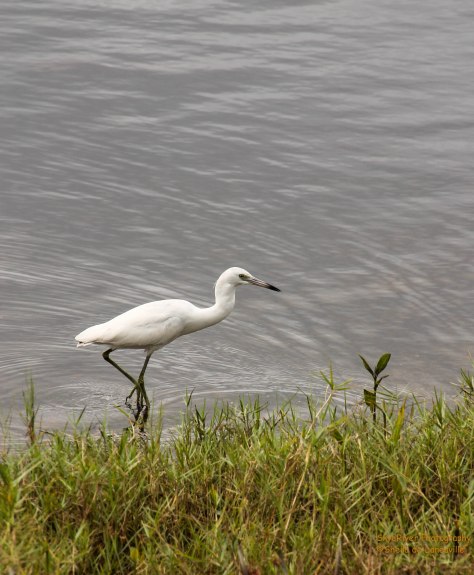
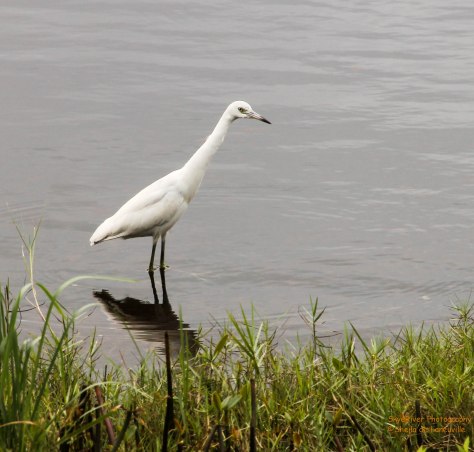
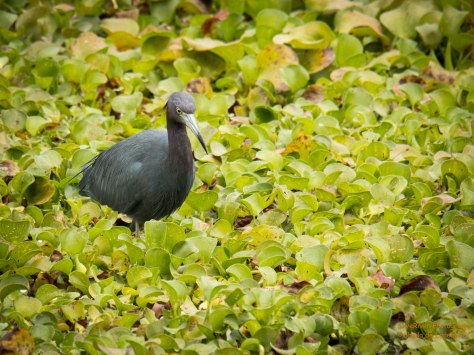
A small heron, adults dark blue-gray with purple-maroon neck, immatures are unique among all herons in that they are white. Prefers to feed in fresh water and edges of grassy pools. Eats fish, frogs, lizards, snakes, turtles, shrimp and crabs. When water disappears they will eat grasshoppers, crickets, beetles, and other insects of the grasslands. Flight is graceful and strong, wing strokes quicker than that of larger herons.Flies with head drawn in on shoulders.
Little Blue Heron (Juvenile)Jonathan Dickinson State Park, FloridaLittle Blue Heron (Myakka River State Park)
December, 2015, – Visiting family in Hobe Sound, Florida
A boat ride along the intra-coastal canal with Bob, Howard’s brother.
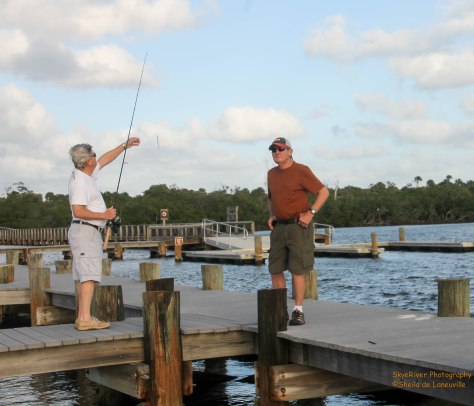
A stop for fuelDoes hubby look like a sailor?A stop at Saint Lucie Inlet. We docked the boat and took a two mile hike.Looking east. Know what is over there?DockingNo luck fishing off the pier. Can you tell they are related?Looking West, the sun is getting low.At the end of our two mile hike.A Ring-billed Gull fly over.
Playing with poetry: Two Worders(again from Jane at Just Another Nature Enthusiast)
Each line in the poem can contain only two words. A separate thought about the chosen topic is expressed in each line. From- For the Love of Language; by Nancy Lee Cecil
Similar words that I used in Japanese Lantern Poem:
Photos from Myakka River State Park, Florida – January, 2016
In many cultures, storks represent fertility, springtime and good luck.
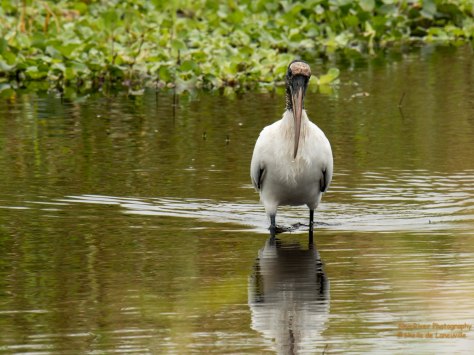
Wood Stork
Beauty I have none,
grace in flight I have plenty,
perseverance, I am proof.
Interesting Fact:
This species seems to have evolved in tropical regions; its North American presence probably postdates the last ice age. A fossil fragment found might be of the living species; it is at most from the Late Pleistocene age, a few 10,000s of years ago.
Here is my Japanese Lantern poem. Inspired by Jane at Just Another Nature Enthusiast (see link below).
~
Yes
Smile
Positive
Simple pleasures
Yea
~
Yes
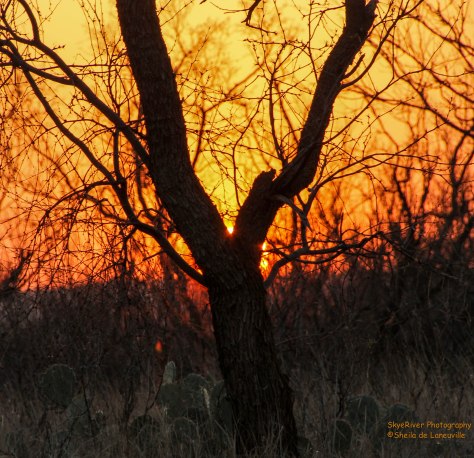
One evening last week, I captured the sun setting behind this tree. The branches form the letter Y. So as it usually goes, I wake up with words in my head. I remembered reading Jane’s post about Japanese Lantern poetry form.
~Here are the rules as posted by Jane on her blog ` Jane
A five-line, eleven-syllable shape poem take the form of a Japanese lantern.
Line 1: one syllable (usually the topic and a noun)
Line 2: two syllables about the topic
Line 3: three syllables about the topic
Line 4: four syllables about the topic
Line 5: one syllable (synonym of or related to the first line)
Say yes instead of no when you can, always offer a smile, be positive, enjoy simple pleasures and all things in nature.










 Wolf Song Blog