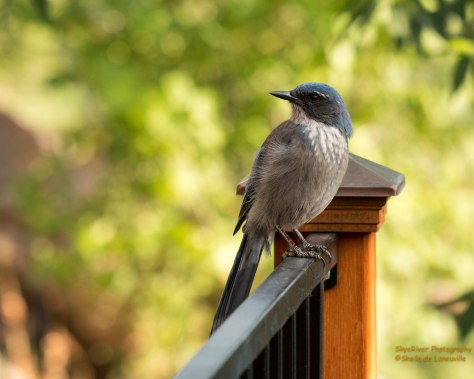
We named her Scratch. She visits Howard and I several times a day when we sit outside. In the morning we have coffee and in the evening we enjoy a glass of wine out on our deck. Sometimes, during the day, I will sit outside and read, she has been keeping me company. I have never experienced a Western Scrub Jay being so friendly.
Scratch likes when we are out on the deck. She comes flying down and perches on the deck railing not more than two feet away. Sometimes, she will sit there and sing. Her song is a very soft, pretty twitter. Of course we sing along, chirping the best we can!
We were surprised the first time she begin singing, because her voice was so soft. If you have ever heard a Scrub Jay you know they have a powerful, loud voice.
A few weeks ago she looked horrible, we thought something was wrong with her. We started calling her Scratch, because she was always grooming and preening her feathers. The feathers around her neck and upper chest were sparse. We now believe she was just molting; her feathers are looking very nice now.
What a cutie she is!
I would like to take this opportunity to thank all of you who follow my blog. To all new followers – Hello!
I hope you are enjoying seeing the birds I love to capture with my camera. Hopefully, once we begin traveling again, I will have more nature photos to share.
To those who comment, thank you very much. I don’t always answer as quickly as I should, but know each and every comment is enjoyed! I love learning bits and pieces of who you are and what you enjoy doing. Take care and happy blogging!
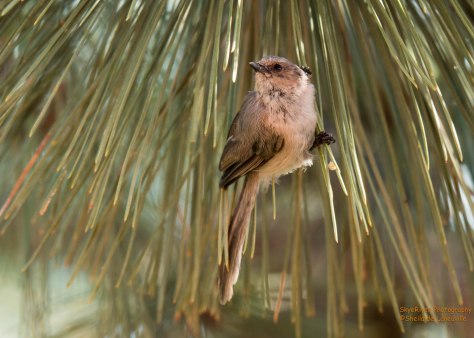
These tiny birds travel in flocks. This summer we have enjoyed seeing them in our yard, but I haven’t seen them for the last several days. They swoop down into the trees, moving rapidly, hunting aphids and other tiny insects; constantly chattering to each other.
They are attracted to the suet feeders I have around the yard, but not the other feeders.
Happy Birding!
Note: If you would like to learn more about these pretty, tiny birds click here: Bushtits
Current temperature, five degrees. Low tonight -14. It snowed all day yesterday leaving us with about five inches of new snow.
While out shoveling the driveway, Howard spotted this beautiful Red-tailed Hawk sitting on his ham antenna.
I had just walked under the Hawk while clearing spots, in the back yard, to place bird seed. I didn’t see this beauty until Howard said, “Look at my antenna!”. I thought I was going to see broken wires when I looked up.
No wonder I didn’t see any birds anywhere in the yard, and haven’t for the last hour or so.
I think he is watching me.Didn’t really seem to be bothered with me taking his photo from the driveway.
What does one do to keep busy when it is cold and raining? If you are a birder, enjoy feeding, watching and photographing them, then that is how you spend your time.
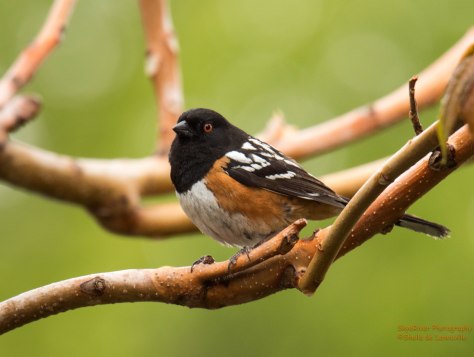
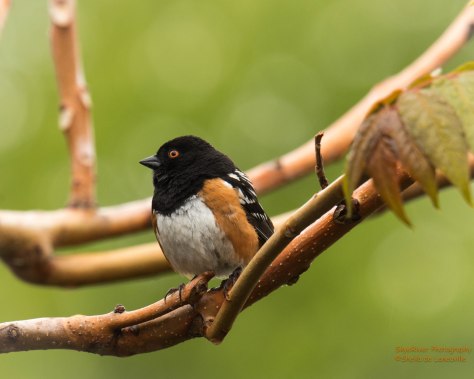
Rufous-sided Towhee:
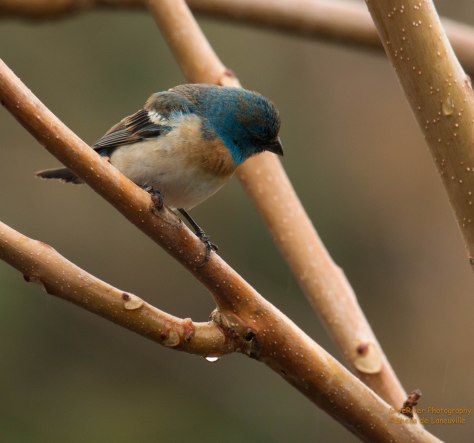
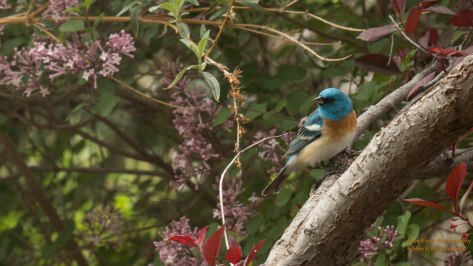
Lazuli Bunting:
These guys are hard to capture, always moving and wary. Didn’t capture the eye well, but he is showing off his gorgeous breeding plumage.Lazuli Bunting (photo taken through glass a few days ago).
Cold and rainy weather, especially this time of year, can cause birds to temporarily interrupt their migration to their northern breeding ranges, laying over in areas until they can continue on their journey. Storms can also cause birds to move to lower elevations.
We have had quite the variety of birds visiting our yard over the last two days. It will be interesting to see how soon they continue on their way. Some, such as the Juncos, Chipping and White-crowned Sparrows left before this last spell of wet, cold weather. Our rainy weather should be over tomorrow. It will be nice to see the sun, but sad to see some of these birds leave.
In past years, I would have been lucky to see one male Western Tanager. This past week I have had three males, two females and several younger adults. They have stayed during this weather system to enjoy the suet, oranges and jelly I put out for the Bullock’s Orioles. Today, for the first time in two days, I have seen them hunting in the trees, bushes and scrubs, which is a good sign.
Western Tanagers:
Western Tanager
A shy Western Tanager
Three
Guess, I got carried away! They are giving me a lot of opportunity to photograph them.
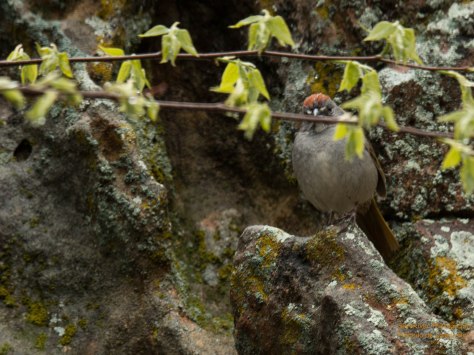
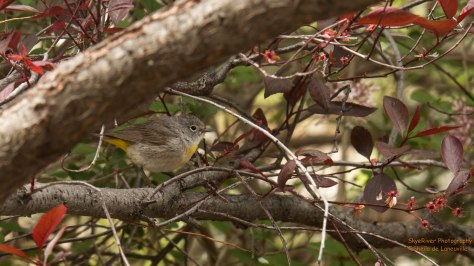
Also, we have Green-tailed Towhees, Lazuli Bunting, Pine Siskin’s, Cedar Waxwings, Virginia’s Warblers along with the usual suspects. I am on my second sack of oranges, which not only the Orioles and Tanagers enjoy, but also the House Finches.
A very shy, elusive, Green-tailed Towhee (photo taken through my kitchen window).Virginia’s Warbler (this one was a nice surprise)
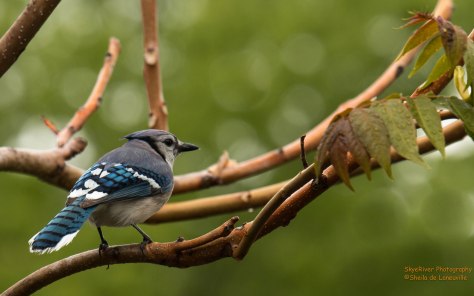
Blue Jay
Pine Siskin
I believe, during these past few days, Howard and I have helped some of these birds survive. They have been cold and wet, pretty drenched. You should see the feeding frenzy this weather has caused, it has been quite the show and is still going on.
I put out peanuts for the Jays, mixed seed with corn for the Doves and others, suet for the Woodpeckers, oranges and jelly for the Orioles, sugar water for the Hummingbirds, which the Orioles drink. I have noticed, as an example, the Scrub Jay’s, eating from the suet feeders, which I believe is to feed their young. The suet is a great source of food for birds.
A wet male Bullock’s OriolePretty wet guy.
I watched a pair of Scrubs work so hard to build a lovely, sturdy nest in a pine tree right where all the feeders are located. At first the Scrubs would chase away all birds that attempted to eat. It was a losing battle and they wisely decided to abandon their lovely first nest and relocate. I don’t know where they moved. The Scrubs would have gone crazy with all the recent activity.
So, if you are ever stuck inside, want some entertainment, have a few quarters laying around, purchase some bird seed and enjoy the show!
I had so much fun today taking photos of my feathered friends!
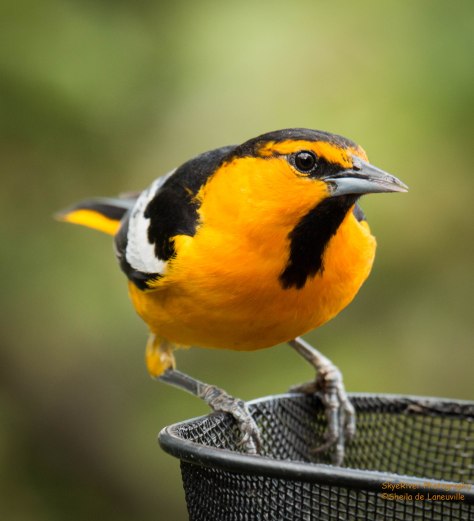
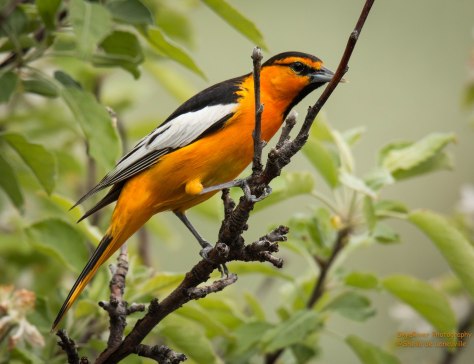
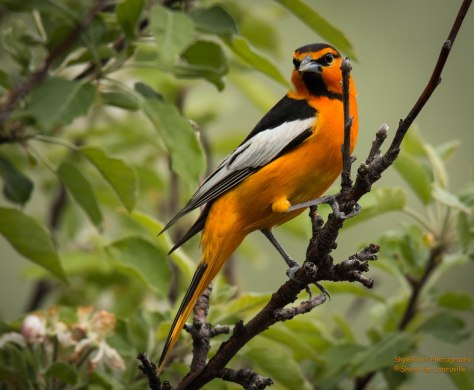
As I mentioned in one of my previous post, the Bullock’s Orioles have migrated north. Some will nest and spend the summer here in Loveland, Colorado. I look forward to their arrival every spring and enjoy seeing them in my yard. I have seen six males at my feeders so far, no females.
“Did I eat it all?”
A new feeder I purchased last week. They go through a lot of oranges; I just put these out.
“Where’s the Peanut Better?”
These photos were taken using my Canon 70D with Tamron 600mm lens.









 Wolf Song Blog