I have a passion for the outdoors and I am most happy enjoying what nature has to offer. Hobbies include photography, birding, Pickleball, astronomy, biking, and hiking. I have been happily married, for 50 years, to an amazing person.
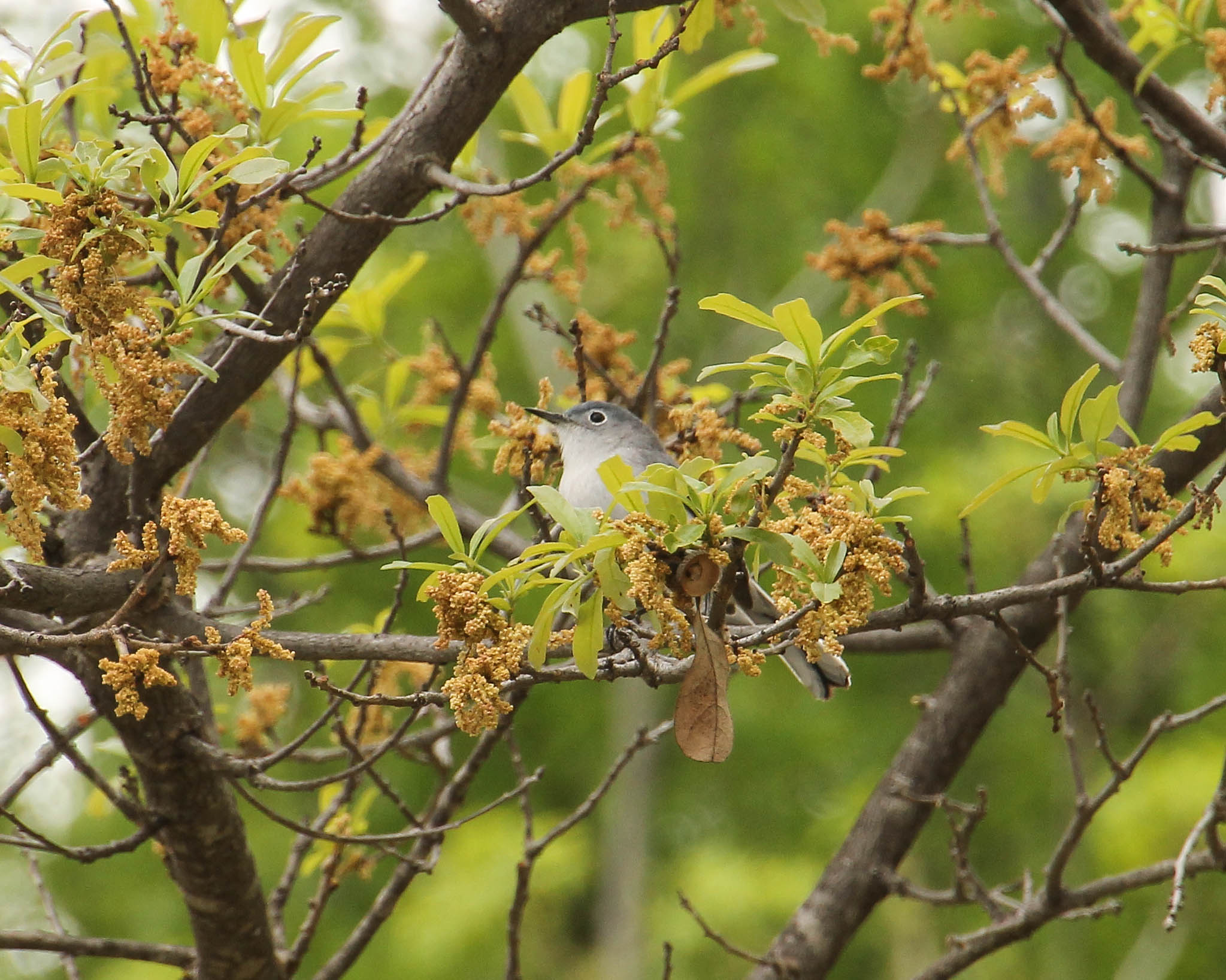
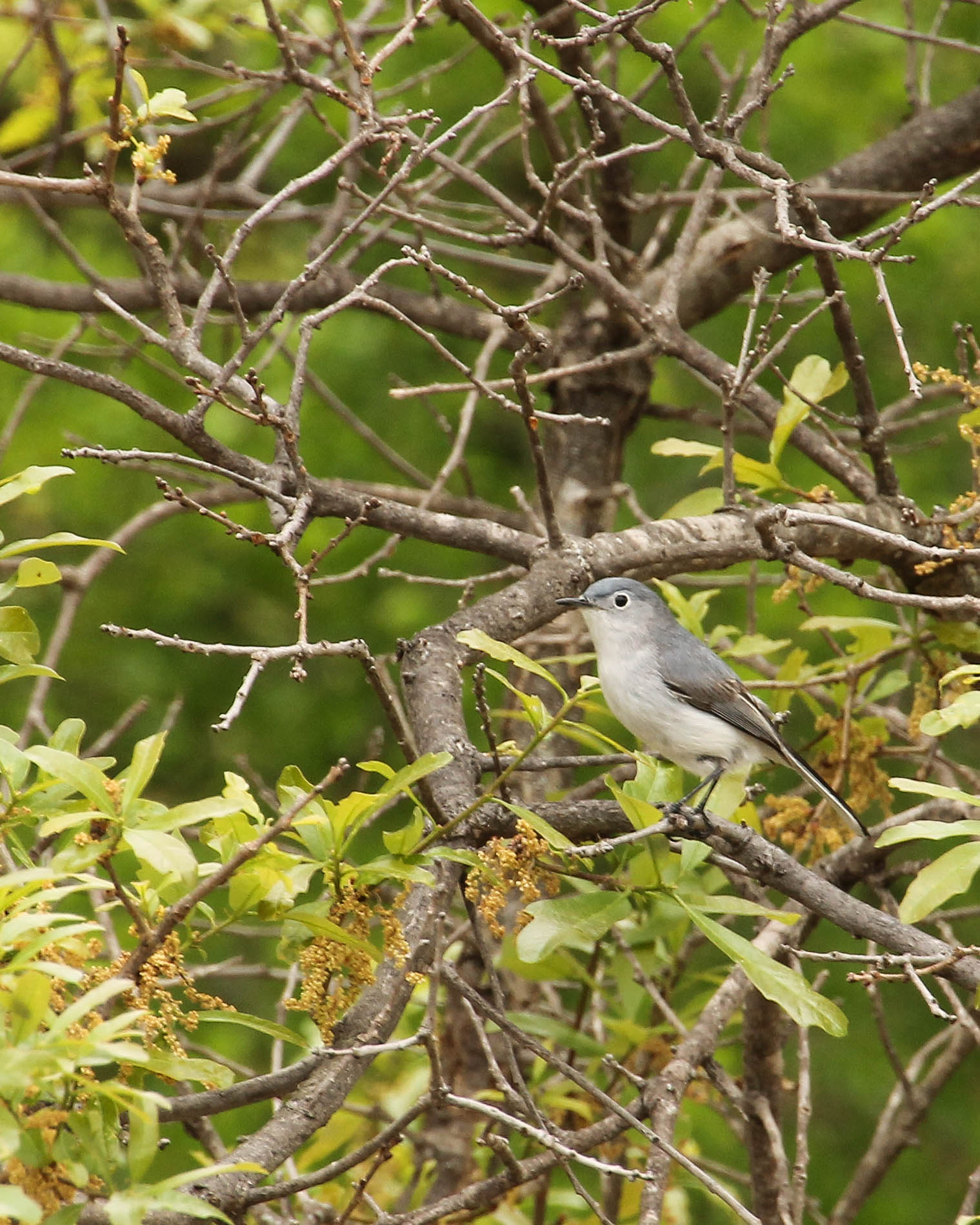
Such a tiny little bird, only 4.25 inches! It looks like a very small mockingbird.
`Male has bluish-gray upper parts and the female is more gray
`White eye ring
`Long black tail with white outer feathers
`Black bill
`Black legs
The white eye ring gives this lovely little bird big facial expressions
The Blue-gray gnatcatcher feed entirely on insects, which it pursues actively through the foliage of tall trees. Catches insects in flight. May hover briefly above food before taking it in its bill.
Its nest is interesting, a small cup made up of plant fibers, down and decorated on the outside with bits of lichen. This lovely little bird can be spotted in woodlands, thickets and chaparral.
When breeding it is monogamous and is a solitary nester. Its eggs are incubated 13 days by both sexes, stays in nest for 10-12 days and fed by both sexes. They usually will have one brood per year maybe two in the far south.
**information above taken from Smithsonian handbooks, National Geographic Society, Birds of North America**
Breeding male I believe, bacause of black line on sides of crown.
Conservation: neotropical migrant. Common victim of cowbird parasitism
Population: common, increasing with range expanding northeasterly
Neotropical Migrant – (noun) A bird that spends the summer in its breeding range in North America but migrates to Central or South America for its nonbreeding range in winter. The winter range may also include the Caribbean, and the general dividing line between breeding and nonbreeding ranges is the Tropic of Cancer at 23 degrees north latitude, though the entire range does not need to be either north or south of that division for the bird to be considered a neotropical migrant.
More than 200 species of birds are considered neotropical migrants, including at least a few species in most bird families. Many warblers,hummingbirds and shorebirds are neotropical migratory birds, as are some hawks and many other songbirds.
The exact distance and route of migration between breeding and nonbreeding ranges varies for each species, and migration time between the separate ranges may take anywhere from just a few weeks to several months. It is essential to conserve habitat not only in the birds’ different ranges, but also along principle migratory flyways so birds will have sufficient feeding and resting areas to successfully complete their journeys. (taken from the web, written by Melissa Mayntz.
Blue-Gray Gnatcatcher (long black tail with white outer feathers)
I took these photos, on April 13, 2014, sitting in the coach with the window glass open and the screen pulled back; what a nice bird blind it made. This oak tree was not too far away and this little guy fluttered around catching insects for awhile. We were camped at South Llano River State Park in Junction, Texas.
“Are you going to come out here and fill this feeder for me? Its cold out here!”
We have had COLD temperatures the last several days; lows at night getting down into the teens, highs during the day hovering around the low fifties. Rain, hail, wind and snow all during the past few days. Spring?
With the temperatures getting down so low at night (19 degrees), I felt it necessary to try my best to make sure the birds were feed well during the day. We setup several feeding stations, even purchasing a couple of new feeders.
I am tired of the Squirrels, Coons, Deer and Bear getting into my bird feeders! The bears are the worse!
It would be nice if the other wildlife wouldn’t destroy the feeders, while trying to eat. We have been taking the feeders in at night, trying to minimize the damage, but that can be a real pain!
I looked out my kitchen window this morning and there was a rabbit, chowing down on the seed I threw out on the ground. So, I should add rabbits to my list above, but they don’t destroy the feeders. I love all the critters, but just don’t want them destroying our bird feeders.
Squirrel Proof? This is one of our new feeders. A deck mount. I sure hope the critters can’t reach this one, because it is a long way down if they fall.
Love this little feeder (not a sharp photo, because the wind was blowing hard)
I found the little feeder above at Wal-Mart. It is perfect for feeding the Orioles Oranges and Grape Jelly. They seem to love it also.
Bullock’s Oriole
Bullock’s Oriole
Dip, Dip, Dip
This Oriole feeder is one I purchased last year and I fill it with sugar water and a little of the Oriole orange colored mix, which turns the water an orange color. I also fill a Hummer feeder with the same liquid, which the Orioles seem to enjoy.
“Are you still watching me?”
The photos below were taken from inside the house through the glass. I can’t seem to sneak up on these guys!
Western Tanager on a very cold MAY day
Black-headed Grosbeak (male)Sitting in the Sun
During the last couple of days we have had the following birds visit our yard:
Since a lot of birders are talking about the Orioles and their migration, I thought I would post my Friday’s Feathered Friend on the Orchard Oriole. It was fun seeing this bird for the first time a few weeks ago.
I will say, as everyone is pointing out, its time to put your Oriole feeders out; it is easy to do. Cut a few oranges in half and place some grape jelly in a dish and you might have a beautiful Oriole in your yard. Here in Colorful Colorado we have the Bullock’s Oriole.
Orchard Oriole
Orchard Oriole:
Male:
`small Oriole 6-7.75 in length
`black-hood, back and wings
`burnt-orange underparts
`single-white wing bar
`white-edged flight feathers on wings
`chestnut underparts
`chestnut rump and shoulders
`black-tail with narrow white tips
Female:
`olive upperparts
`yellowish underparts
`dusky wings with two white wing bard
Their song sounds like this:
look here, what cheer, wee yo, what cheer, whip yo, what wheer
I happy bird I would say!
Population status: common to fairly common in open woodland, farmlands, scrub-mesquite, shade trees and orchards. Declining in parts of western range. They eat fruit and nectar.
Conservation: Neotropical migrant, Common host to cowbird parasitism (sad)
**information above taken from Smithsonian handbooks, Birds of North America**
Western Swallowtail (looks more like a Two-Tailed Swallowtail, but can’t see the tail(s) clearly)
We have a Radiant Crabapple Tree in our yard. This tree was obviously grafted from two different crabapple species, because it has both red and pinkish blooms. Before, our hail storm yesterday it was in full bloom and had caught the attention of this lovely butterfly.




 Wolf Song Blog