The Pileated Woodpecker – red crest extending from forehead to nape, large black bill, scarlet mustache, white chin, white line from base of bill crosses face to back of neck and extends down neck to side and has a solid black back.
~
Added to my Birding Life List on 09/21/98
(Beach Number Four, Washington)
~
Pileated Woodpecker (listening to me as I try to get closer to him)
Pileated Woodpeckers:
drum on trees and logs to claim territory and attract a mate
the male roosts in the nesting cavity before the eggs are laid and afterward, incubates them there at night
bore deep into trees, dig on the ground and on fallen logs for food
eat ants, beetles and a variety of other insects, acorns, beechnuts, seeds of tree cones, other nuts and various fruits
are common to fairly common in the Southeast
vulnerable to habitat loss and forest fragmentation
have adapted to habitat changes
compete for excavated nesting cavities with European Starlings
**information above taken from Smithsonian handbooks, Birds of North America**
“Now you see me, now you don’t!” (This is how I saw him most of the time.)
He stopped pounding on the log for a second.
Stephen F. Austin State Park
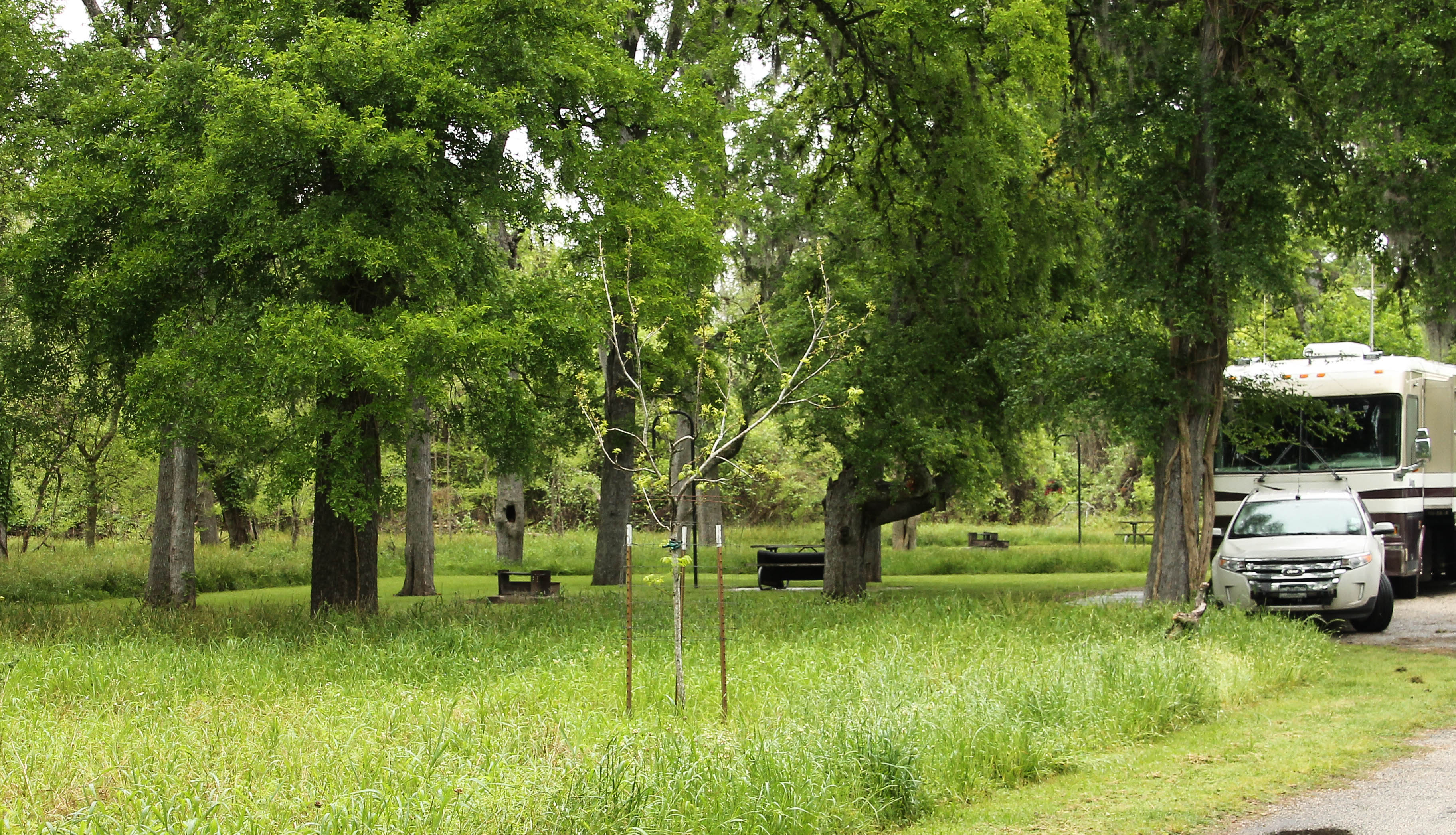
The photo above shows our backyard from April 6th to April 10th. This is a beautiful Texas State Park located in San Felipe, which is about 20 miles west of Katy, Texas and it is a terrific place to see birds.
While there we saw the Tufted Titmouse, Northern Mockingbird, Eastern Bluebird, Carolina Chickadee, Black Vulture, Red-bellied Woodpecker, Common Ground Dove, Wood Duck, Red-winged Blackbird, Chipping Sparrow, Carolina Wren, Mourning Dove, American Crow, Northern Cardinal and Indigo Bunting.
Our lovely and very green backyard for a few days. (Look close and you can see a few Northern Cardinals.)
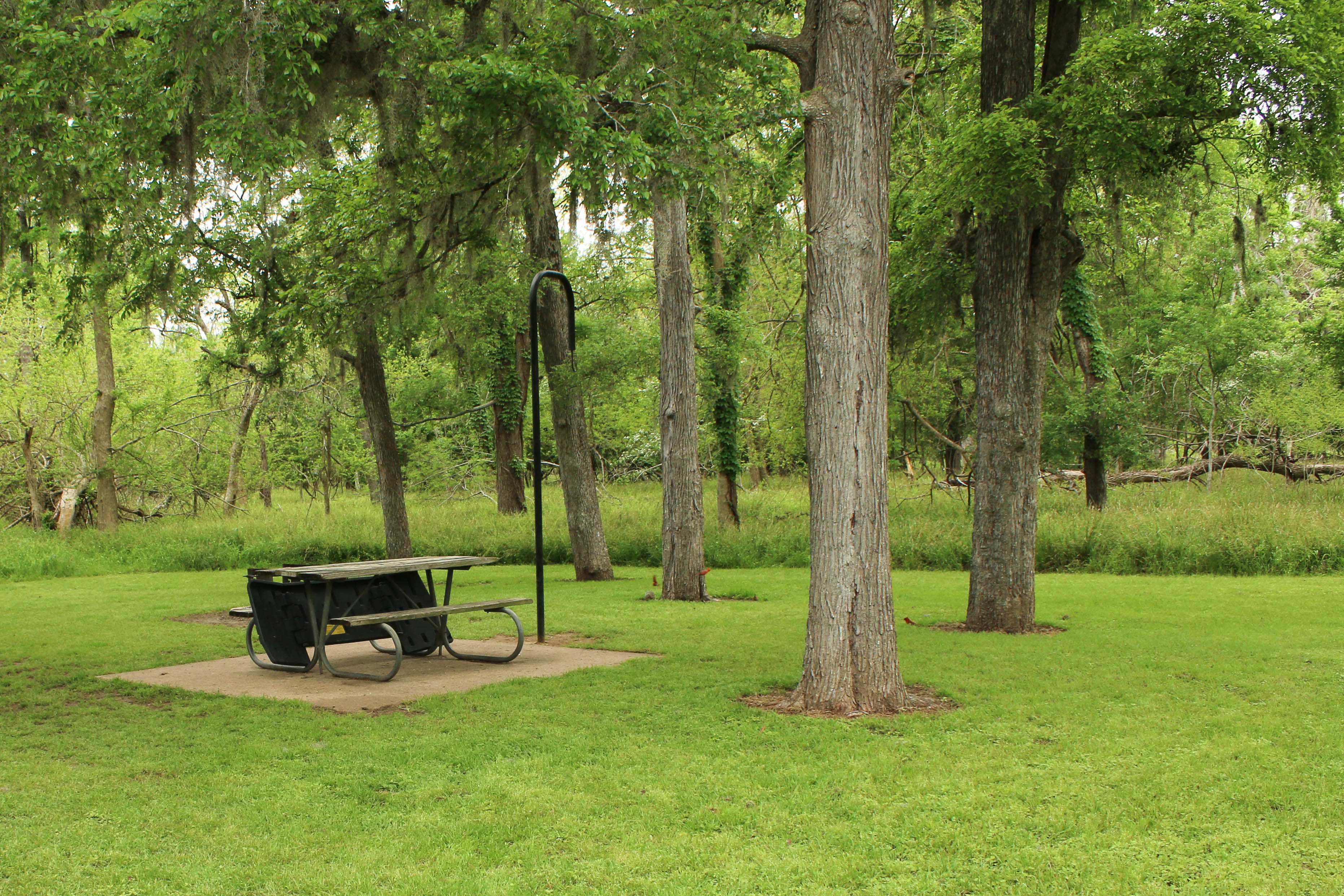
Notice the felled trees in the background on the right of the photo above; this is where the Pileated was when we pulled into our site. It was a nice welcome!
Just as I am! Every Friday you may participate in Feathers on Friday at Prairie Birder.
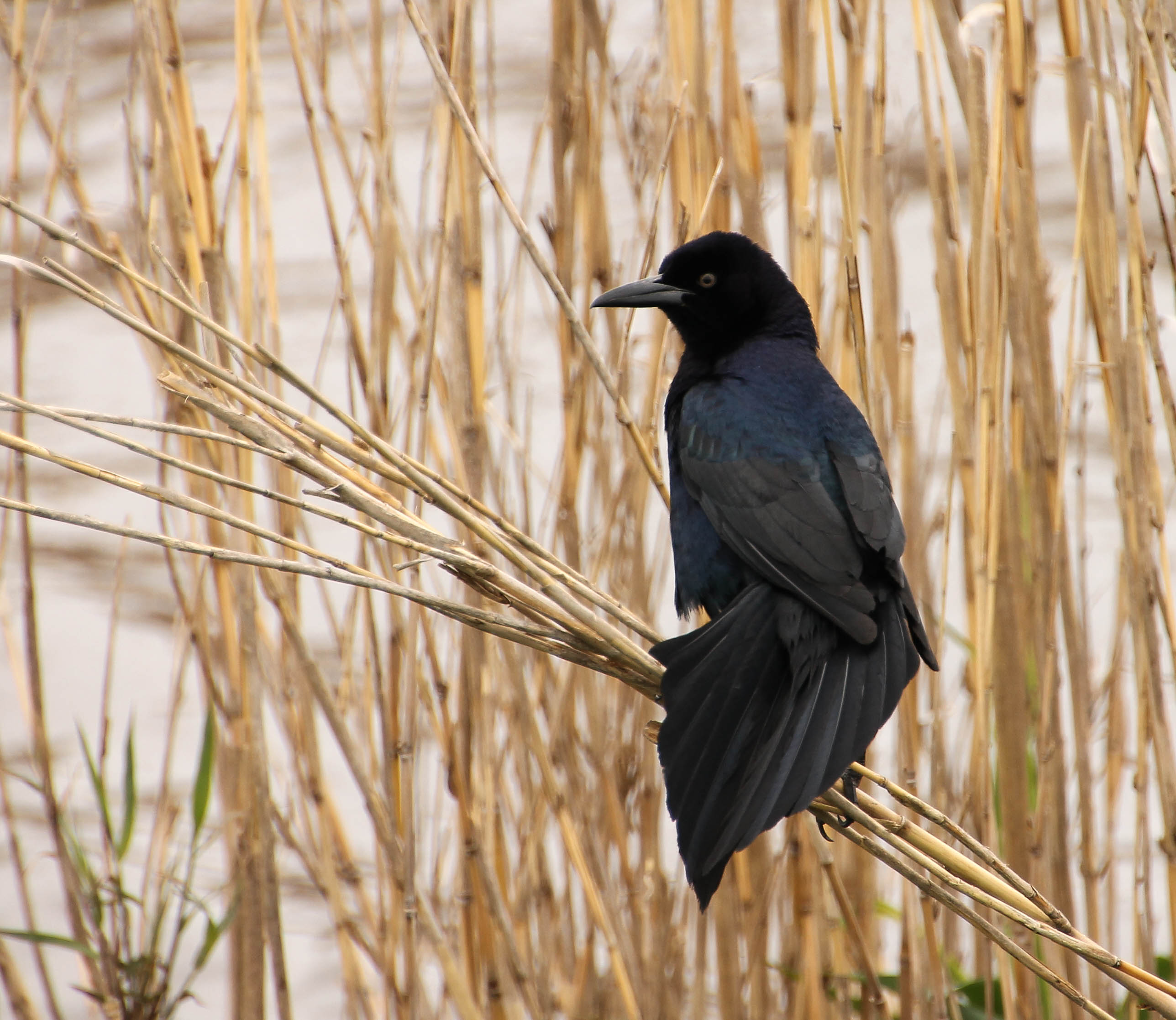
The Boat-tailed Grackle – brown or dull yellow eyes, long keel-shaped tail, black overall, iridescent purple on head and back, black legs and black bill.
~
Added to my Birding Life List on 04/10/93
(West Palm Beach, Florida)
~
The Boat-tailed Grackle is a very large, glossy black bird.
The Boat-tailed Grackle’s common name refers to its long tail, often held in a V-shape to form a “keel.”
Found along the coast from Texas to Long Island, this songbird prefers salt and brackish marshes, where it breeds in colonies and socializes in noisy flocks.
The Boat-tailed Grackle has been expanding its range northward since the 1940’s, probably due to milder winters north of the Carolinas.
The female is a light, warm brown with dark brown wings and tail. The female’s “ear” is darker brown under a pale eyebrow. The eyes of both sexes are yellowish.
Boat-tailed Grackle
I photographed this beautiful bird while visiting the Anahuac National Wildlife Refuge this past week.
What a beautiful black bird
Just as I am! Every Friday you may participate in Feathers on Friday at Prairie Birder.
We rolled into Beaumont, Texas last Thursday with the expectation of visiting a few birding areas located along the gulf.
Friday morning we headed toward the little Texas town of Winnie. I had read **(see special note later in this post) that this area offered fabulous birding opportunities. So, with our binoculars and cameras packed in the car, we set out.
High Island or Anahuac, which one to visit first?
We didn’t know which area(s) to visit first; the birding sanctuaries and rookeries around High Island, Texas or the Anahauc National Wildlife Refuge outside of Winnie.
We knew our time was limited and we only had two full days to fit in all in. Silly us, we should have scheduled more days in this location.
We turned off the interstate and headed south toward Winnie and High Island, and as we approached the turn-off to ANWF, we decided to head over to the High Island sanctuaries and rookeries first.
We didn’t know if we could run by these rookeries, see what was there, and then zoom over to ANWF or what.Silly us!
Birders Welcome! Of course they are!
Once we reached the town of High Island and drove around for a few minutes, we realized we needed to ask for information. I guess it was just dumb luck that we were passing a motel and saw a sign stating “Birders Welcome”.
We pulled into the motel and I ran in to ask the question, “where are the rookeries?”. The people were not only extremely friendly, they were also generous. Getting back into the car, with a map in hand, we set out to find the rookery.
After a few wrong turns we managed to find the Smith Oaks birding parking lot. When we pulled into the lot we were stunned, “look at all these cars”. We should have known we were not the only folks that wanted to visit the rookeries at the peak of breeding season.Silly us!
I will remember this event, with pure joy, for the rest of my life.
Okay, we will look around, hop back into the car and head to the next place. Not a chance, I could have stayed right there for days.Silly us!
Other than the rookery at Avery Island, I had never seen such a place. Hundreds of Egrets, Spoonbills and Cormorants flying, fighting, mating, snoozing and nesting. What a sight to behold!
Reluctantly, we finally got back into the car, in total amazement and me with lens envy, and headed over to another birding area called Boy Scout Woods.
Wow, even more cars and people.
Unbeknown to us it turns out the Audubon Society of Houston’s annual spring birding event was in full swing. People from all over the United States and perhaps from outside the US attend this event each year.
We registered with the HAS, met some wonderful people, walked around in the woods and added one new bird to my life list! Number 360 the Louisiana Waterthrush. What a beautiful bird.
Be sure, if interested, to read the High Island history page.
What a wonderful day!
We drove back to our coach in Beaumont tired, but extremely happy for this experience. It would have been nice to go back to High Island, but we knew we had to see Anahuac National Wildlife Refuge.
**Gay, a blogger friend from http://www.good-times-rollin.blogspot.com visited Aunahauc National Wildlife Refuge and wrote about the visit on her blog. Go take a look at her beautiful blog.
Judy is a volunteer at the refuge and writes about her experiences on her fabulous blog.
After reading both of these blogs about Anahuac National Wildlife Refuge, I knew we needed to stop there. Also, Judy had visited the Smith Oaks Rookery and posted her gorgeous photos on her blog.
The next morning, following our visit to High Island, we pulled into the refuge.
Anahuac National Wildlife Refuge. Their new Welcome Center
As I entered the brand new Welcome Center, I was met by a person with a friendly face and kind eyes. As I glanced at her name tag, conformation was made, but I already knew that I was about to meet Judy!
Howard and I were lucky that she was there that day; it made our visit to ANWF even more special!
It was a thrill to meet a fellow blogger, birder and nature lover. She showed us the ANWF maps, told us what we might see and gave us a few suggestions on where to go. So off we went to explore!
Other, than the day being cloudy and very windy, hubby and I had a wonderful time! The refuge is beautiful!
Thank you Judy, it was a great pleasure to meet you.
Perhaps, one day down the line we will meet again.
Next year, we know where to stay.
No more Silly Us! Next year we will stay a lot closer and a lot longer in order to experience these areas of Texas.
Until next year!
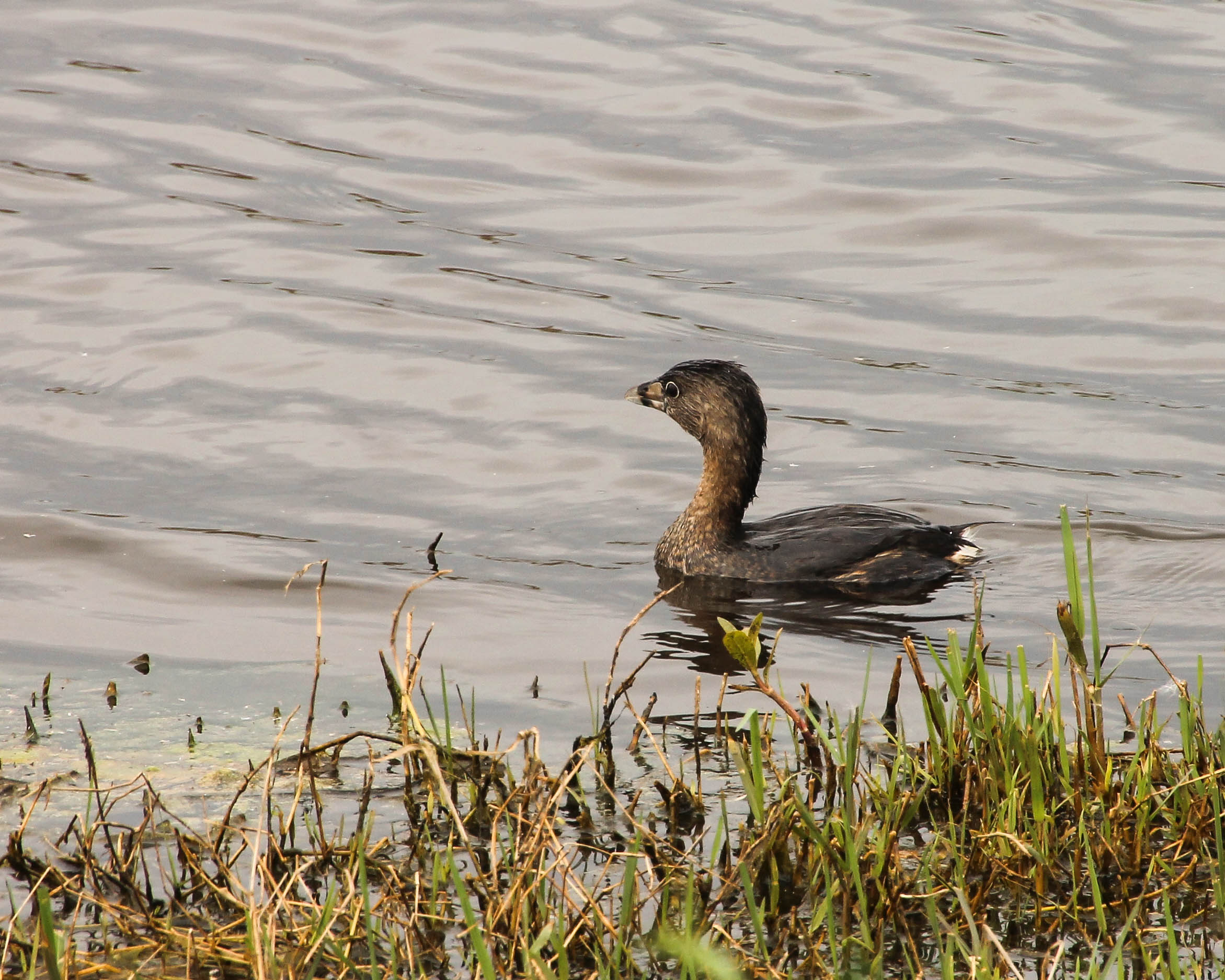
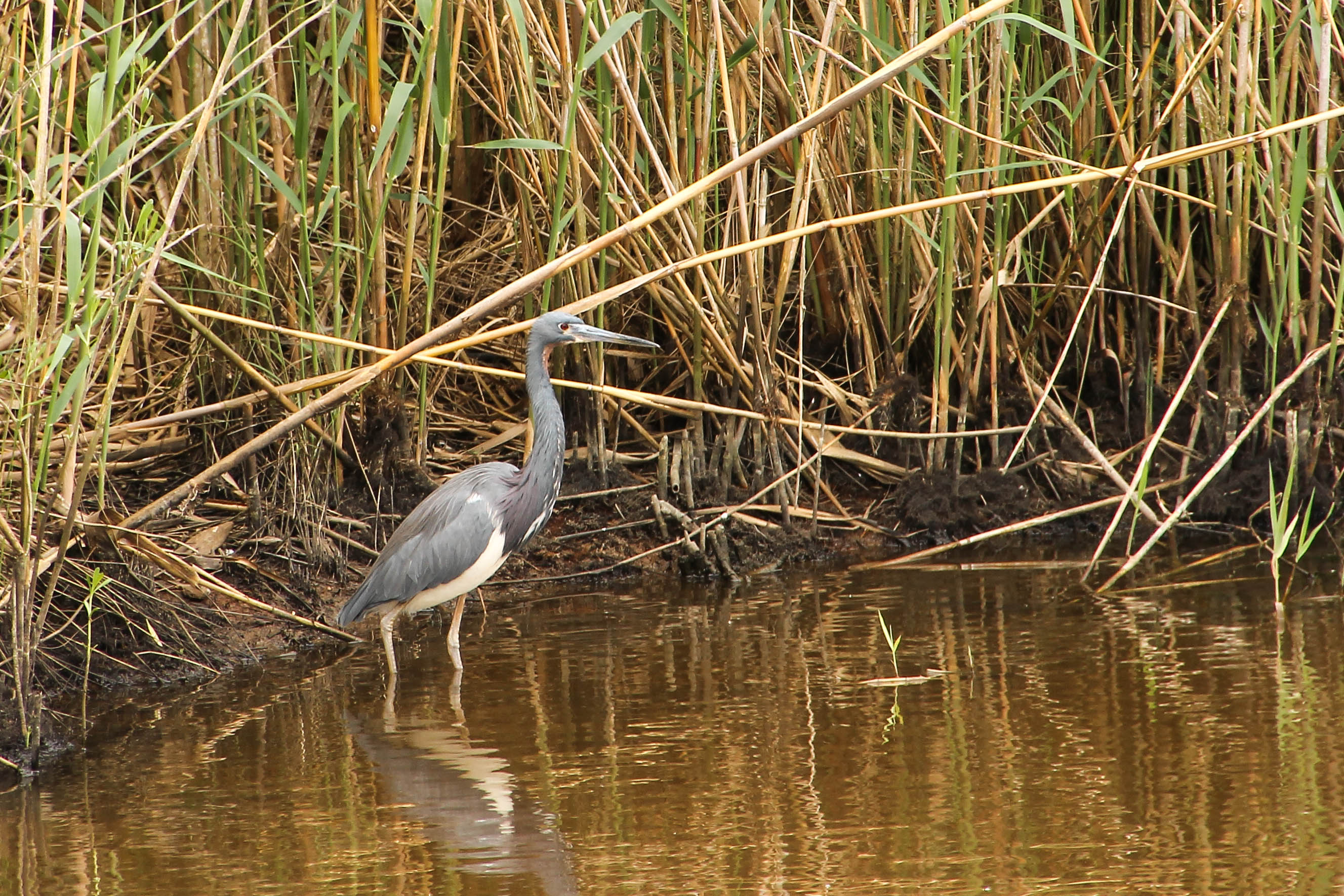
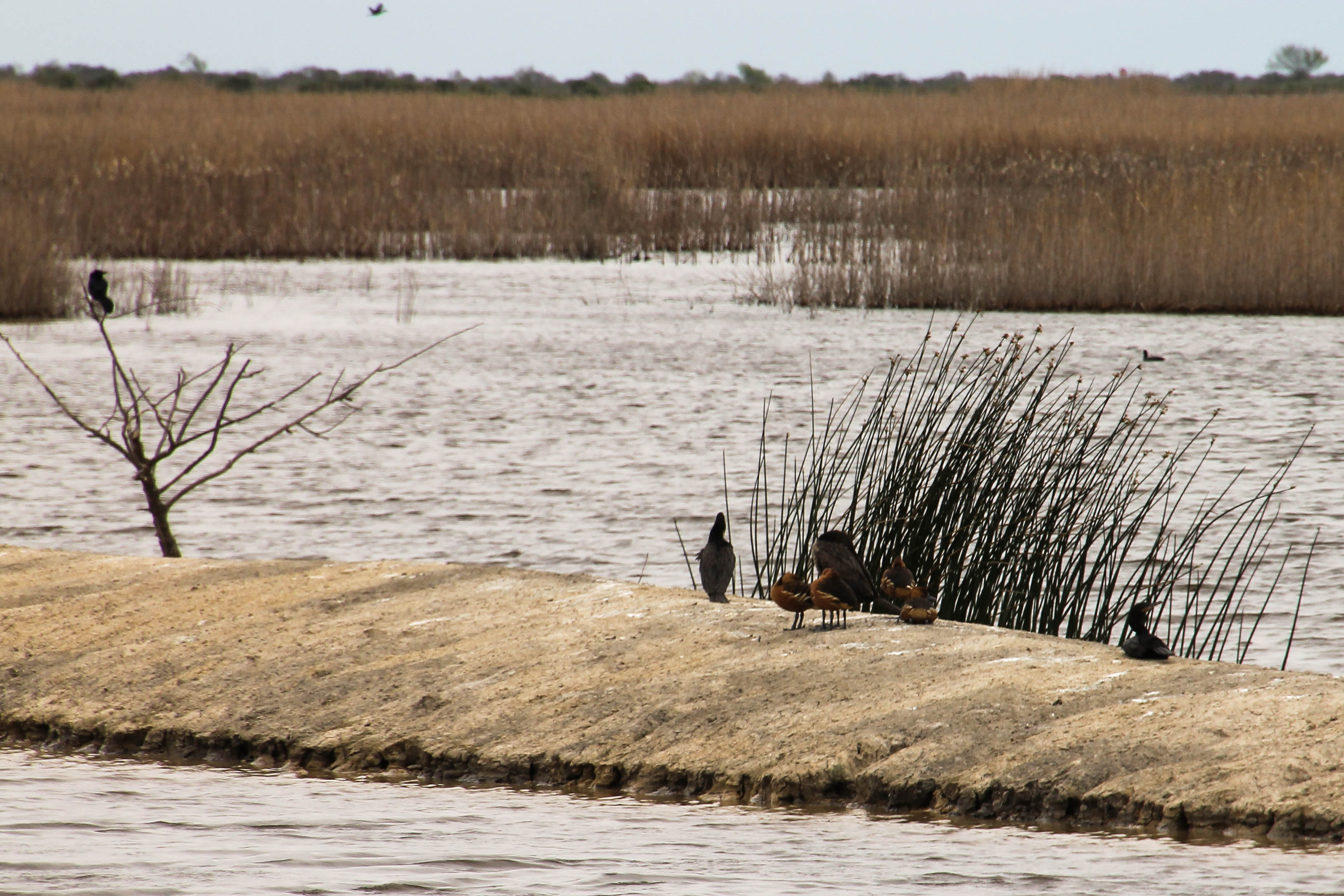
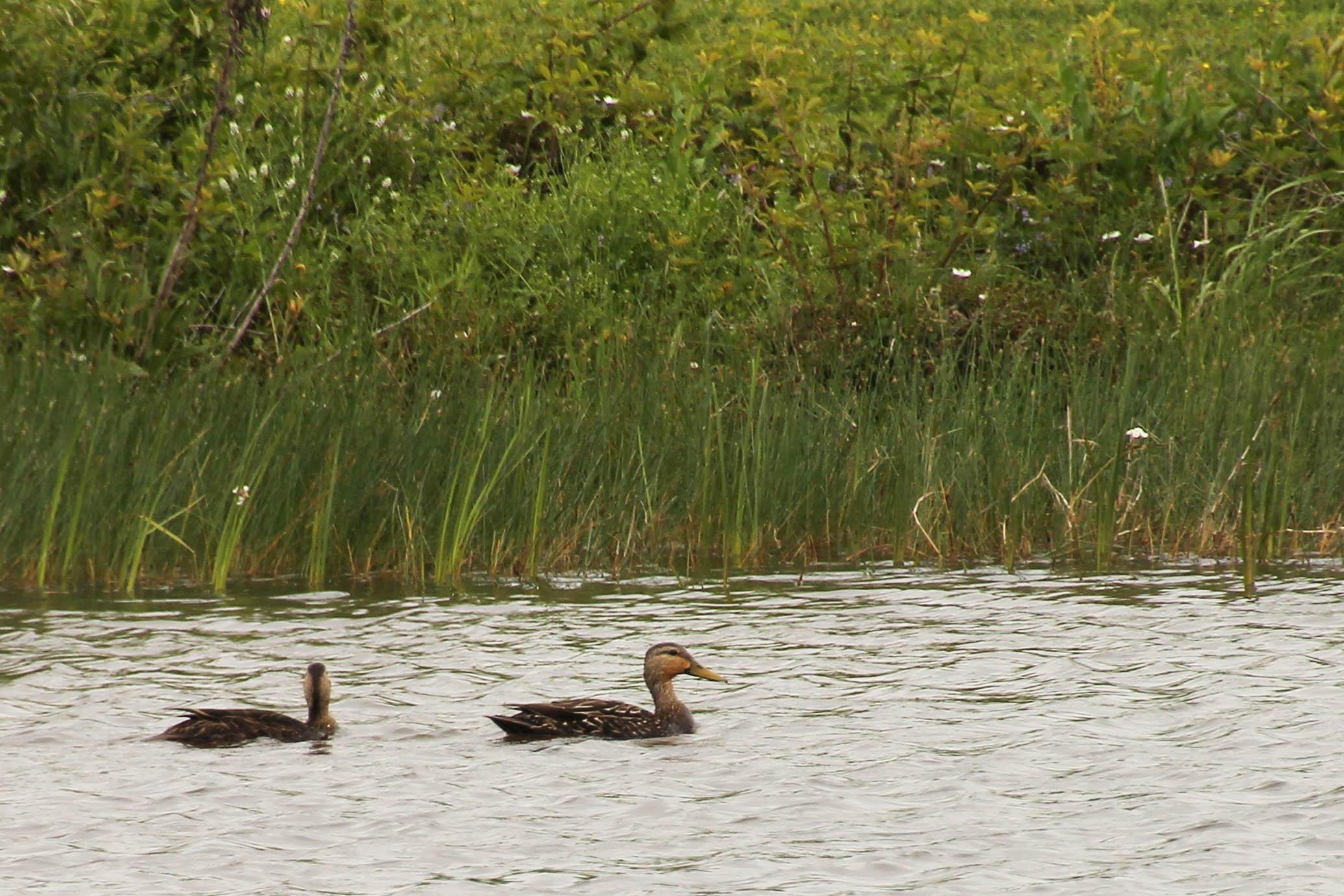
Here are some of the 37 species of birds we saw at ANWF. I will post, in a separate blog, the photos from High Island.
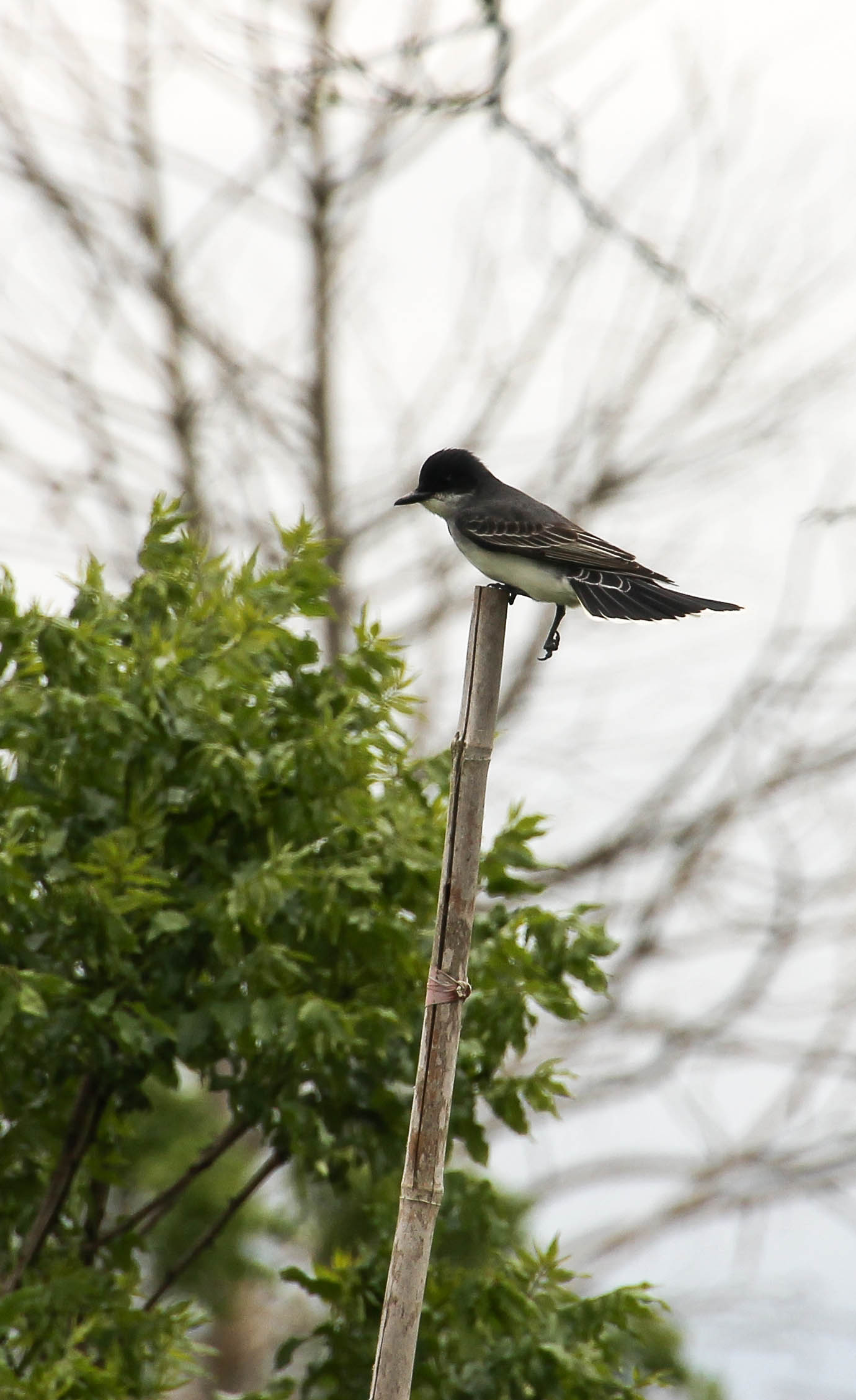
“Pay attention Sally” I am not sure what these are: American Black Duck or Mottled Duck“Do they have handicap access here at ANWR?” Eastern KingbirdSavannah Sparrow I am not 100% sure of this ID
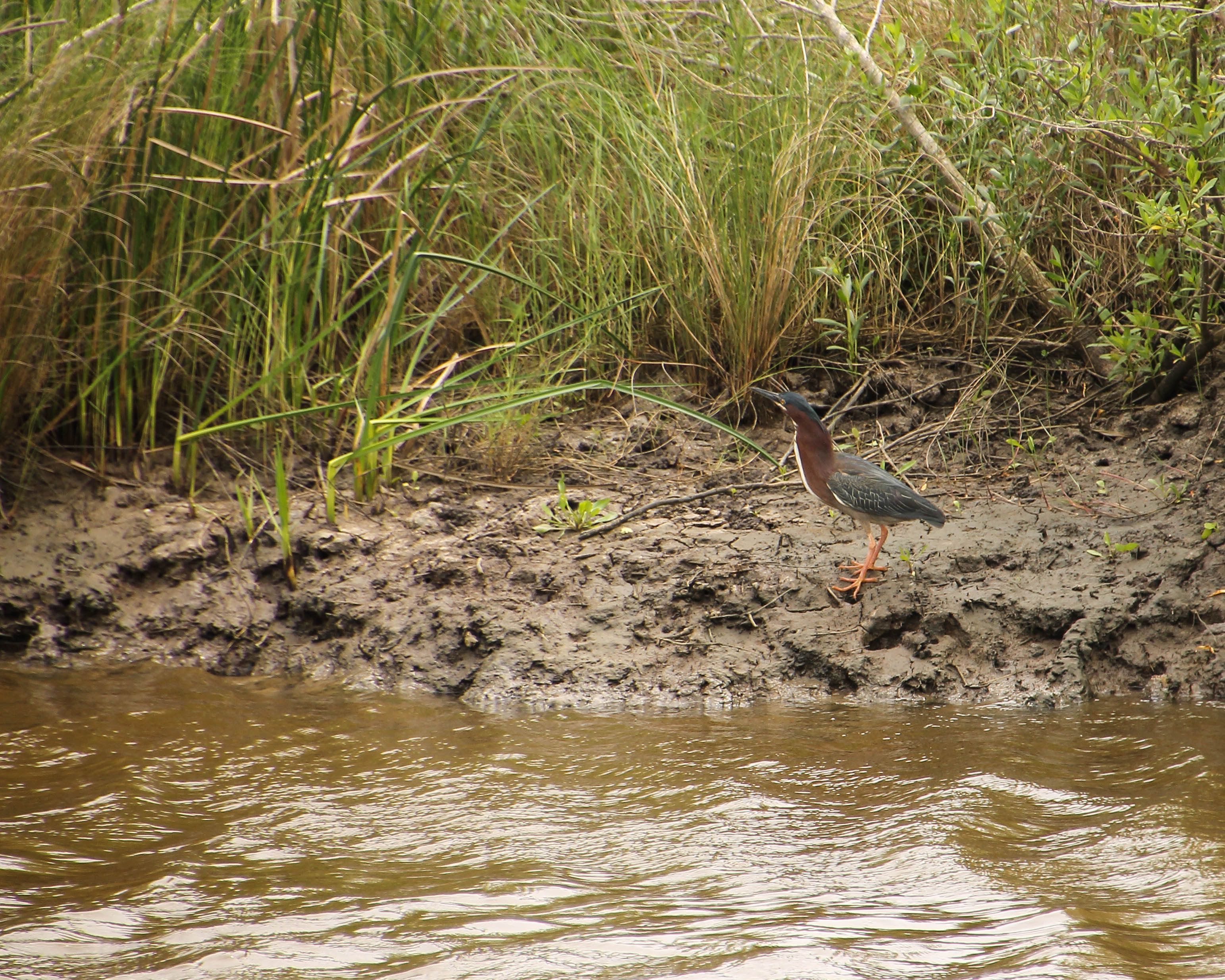
In full view – Green HeronWhite-tailed Hawk Far away and being chased by a blackbird
Red-winged Blackbird (female)Maybe the White-tailed Hawk is being harassed by the ducks
Greater Yellow Legs I am not sure about this IDLaughing Gull
What does, a salt dome, pepper pods and a 200 acre jungle have in common? A trip to Avery Island, Louisiana, and a good time!
The salt dome extends eight miles beneath the earth’s surface and its protruding “island” part of the formation rising above the surface is Avery Island.
The pepper pods, obtained shortly after the Civil War, are special capsicum peppers. Seeds from these capsicum peppers, grown on the Island, are exported to Central and South America, where tabasco peppers are cultivated and harvested.
The 200 acre jungle is home to the world’s most beautiful sanctuaries for the preservation and study of flora and fauna. Edward McIlhenny, son of Tabasco sauce inventor Edmund McIlhenny, was a noted naturalist and explorer and decades ago he cultivated what is today called The Jungle Gardens of Avery Island.
Live Oaks and Lazy Lagoons
It all began when Edmund McIlhenny cultivated a crop, invented a product over 125 years ago and founded a company on Avery Island.
As their current day brochure states. Much of the world knows about Tabasco pepper sauce.
McIlhenny Company Tabasco Sauce Brand Pepper Sauce!!
**I want to give credit for the information in this blog to the wonderful writers at Tabasco, I used their brochures in writing this blog.
The Tabasco Visitors Center. I love our flag and here with it are the Louisiana State Flag and the Tabasco flag.
Wednesday, April 2nd we traveled to Avery Island to visit Tabasco. We always have to be conscience of the time we are away from the coach, because of our two beautiful four-legged friends. So when we drove to Avery Island we needed to make a decision on what we wanted to see as we only had time to visit one of two tours. Did we want to tour the Jungle Gardens or take the Tabasco plant tour? It was not a tough decision.
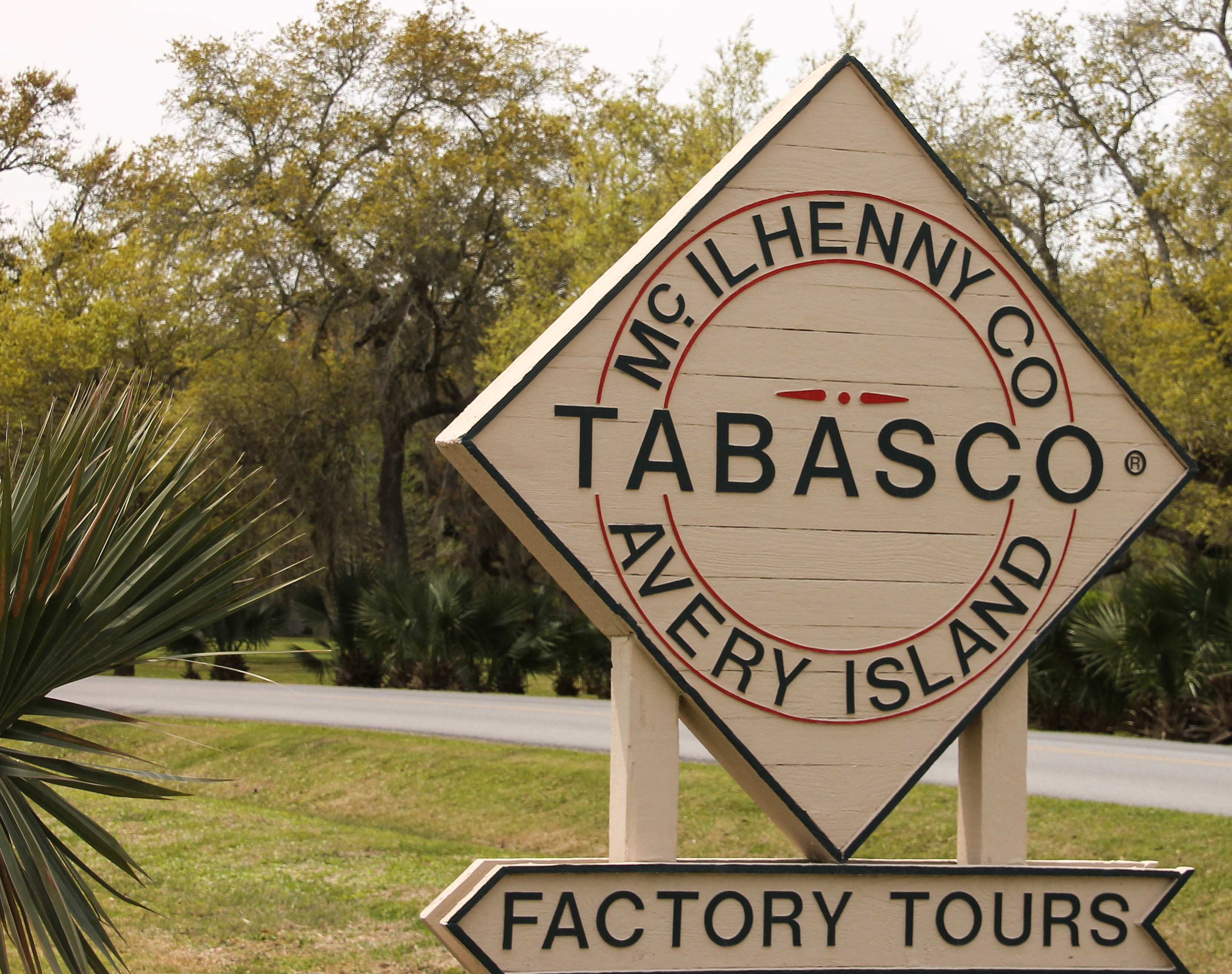
Tabasco factory tours
We decided to toured the Jungle Gardens. What beautiful grounds they have; we could have spent the entire day hiking around admiring these gorgeous gardens and taking photos!
A meandering road through The Jungle GardensLooking for UFO’s or perhaps UFB’s.
The 200 acres of jungle gardens are home to a large collection of some 600 varieties of camellias, including some that McIlhenny developed, along with thousands of azaleas, acres of wildflowers, groves of evergreens, english hollies and wistaria vines, just to mention a few.
The 300 year old Cleveland OakHave you ever driven through a Wisteria Arch?
You can see Live Oak trees through out the gardens.
When I look at this felled tree, I have to wonder how long it lived and how long has it been since it died.
Beautiful Azaleas and lagoons are everywhere
Bees and Flowers
Wisteria Flower
A lovely white Azalea
A bee enjoying a pink Azelea
Twisted Wisteria Vines
Wisteria Arch, Wisteria was first introduced into New Orleans around 1875.
This Live Oak tree is named for Grover Cleveland. He visited the McIlhenny family and this tree around 1891. It is over 300 years old.
The jungle gardens are a birder’s paradise! We made the right decision in taking this tour.
Over one hundred years ago, Edward McIlhenny helped save a beautiful egret from extinction – the Snowy egret. In 1895 when the snowy was being hunted for its plumage, Edward, built an aviary on Avery Island, and then captured and raised eight wild snowy egrets.
For the love of this bird, it all started over 100 years ago. The beautiful Snowy Egret
After they had raised their hatches and were ready to migrate, he released them. The snowy egrets returned the next spring and every spring since.
Today this rookery is fondly called “Bird City” where some 20,000 Snowy Egrets, plus many other species of birds, return each spring to raise their young.
The RookeryAn Anhinga coupleThe Great Blue Heron enjoying The Jungle Gardens
For the love of the Great Blue Heron:
For the Love of Herons
Others also enjoy The Jungle Gardens:
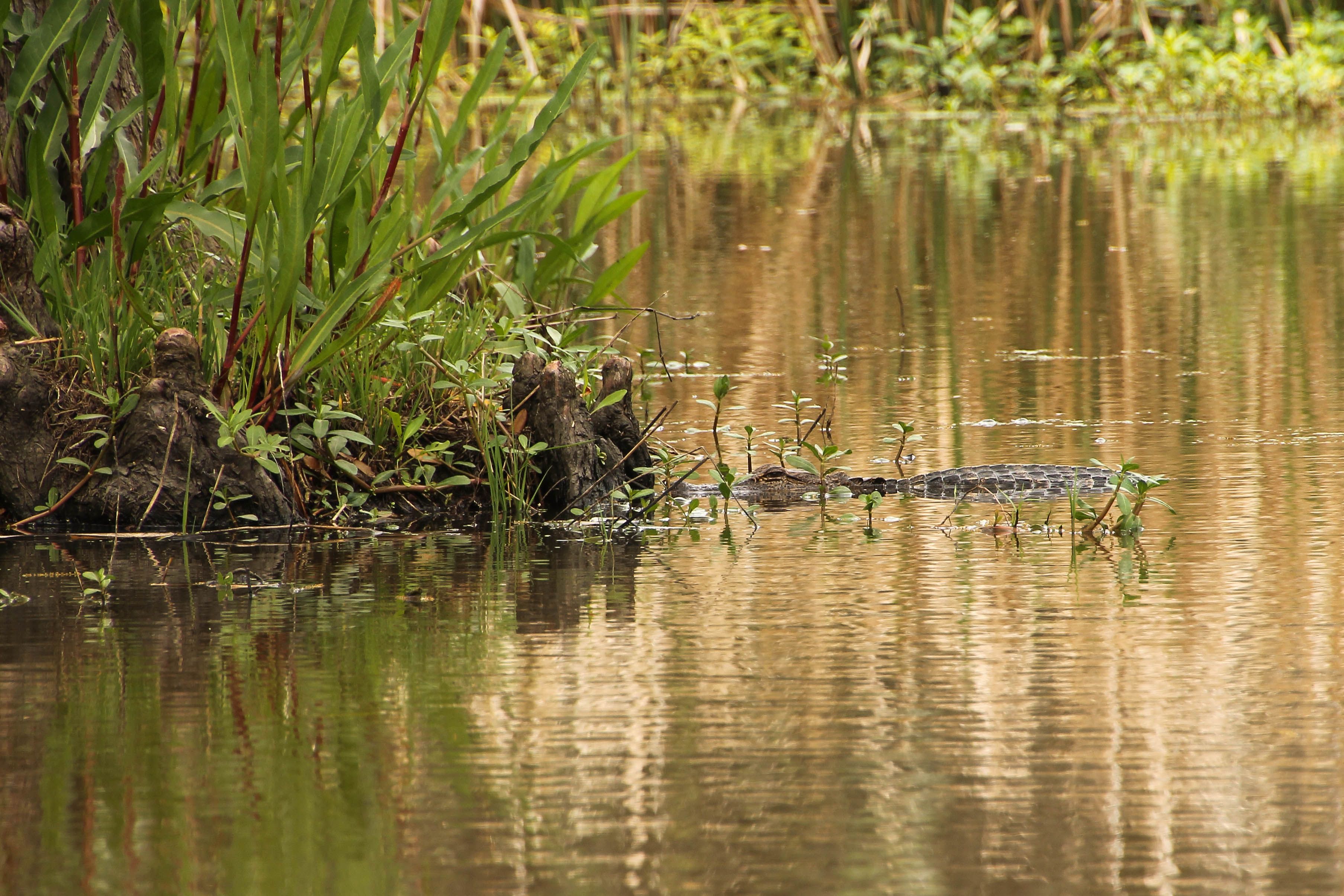
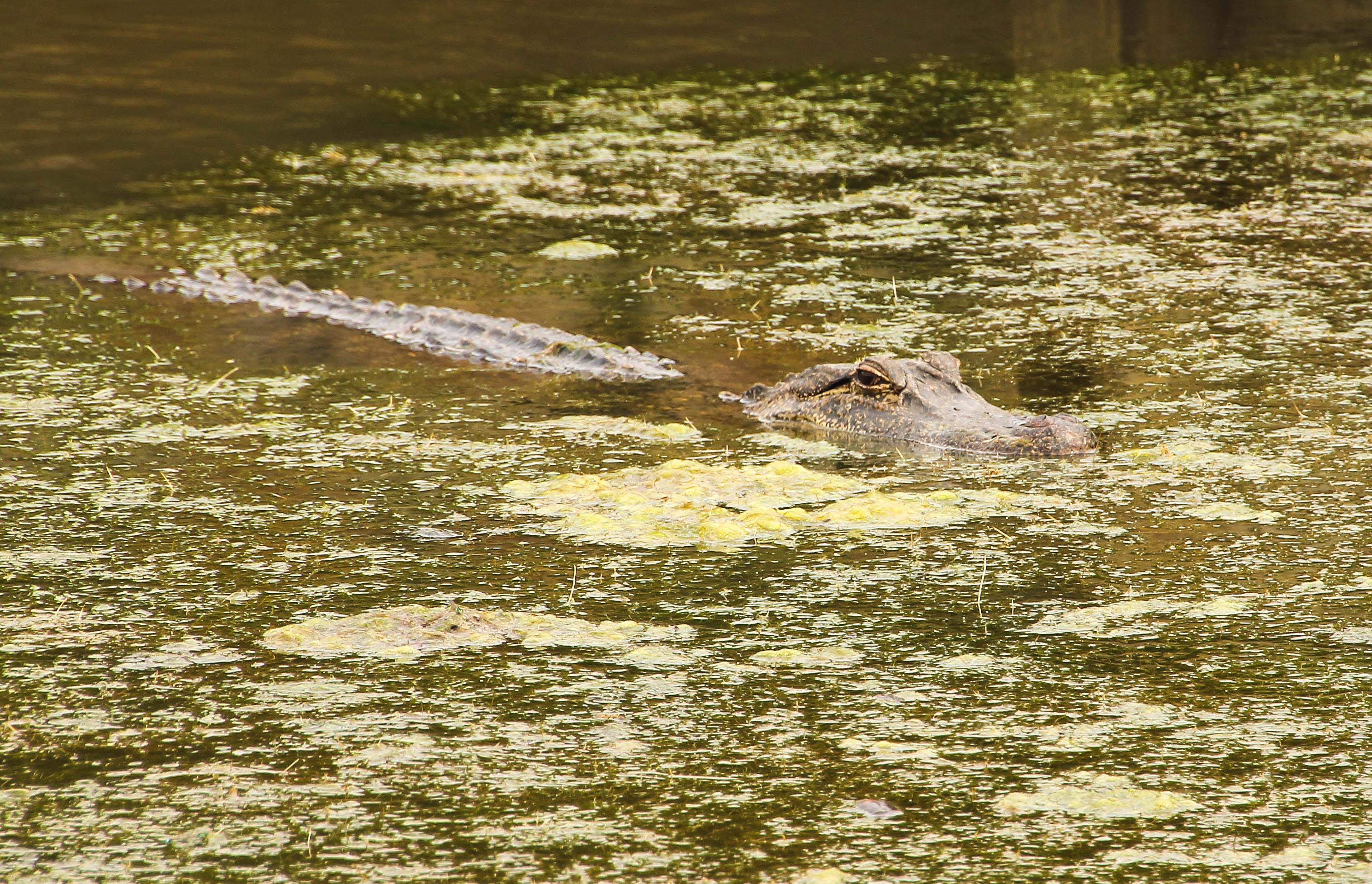
A snoozing little guy!Nature’s ultimate camouflage design at workI Spy
As the time for our departure from Avery Island approached, we stopped at the Tabasco Store to look around. We enjoyed a nice cool cup of homemade ice cream, of course made with Tabasco peppers, sampled some of their flavored sauces and even purchased a few items to bring home. It was another fun day spent in Cajun Country!
The Tabasco Country Store
Side note: On our way down to New Iberia, Louisiana and then out to Avery Island we stopped for lunch at a local place called Landry’s. They serve a different daily lunch to a huge number of hard working folks! The food was delicious!
On this drive we were impressed with the oil and gas related businesses we passed. Thousands of people employed in this industry in numerous small Louisiana towns. From, large oil companies, oil service and training companies, to local support businesses like Laudry’s all employing hard working people.
We should all thank these businesses that supply our oil and gas, and the folks that work in them. It made us happy to see the booming economy in this area, to know that America is rich in oil and gas and that Louisiana is employing lots of people to work in these industries.
~
We said farewell to Louisiana, for now, and drove to Beaumont, Texas!
While in Beaumont we enjoyed two full, wonderful days of birding. We met some nice folks from the Houston Audubon Society in High Island and it was a special treat meeting a fellow birder and blogger at Anahuac National Wildlife Refuge. More on meeting Judy and how we spent these exciting two days later.
We arrived this morning, April 6th, at Stephen F. Austin State Park and we will be here for several days. As I sit here typing I can even count the number of Northern Cardinals we are seeing, so many in one place!














 Wolf Song Blog