Category Archives: Photos-Birds

Photos that I have taken of Birds.

~Water

~Grand Canyon, October, 2017

Water – I guess it seems like a strange subject to post about the Grand Canyon, but it is one I am still reflecting on.

After arriving and setting up camp, in The Trailer Village RV Park at the Grand Canyon, Howard and I noticed the birds, elk and deer hunting for water.

Not knowing anything about water resources within this national park, other than the fact the Colorado River flows through the canyon, after awhile I was complaining to Howard, “Why can’t the park service at least have a small pond for the birds to drink out of?”. Yeah, I beautiful pond with a water fall. Perfect!

~

During our 4 night visit, I watched several species of birds trying to get a drip of water from the water faucets at the RV sites. Their size didn’t matter, from the smallest — Pygmy, White-breasted and Red-breasted Nuthatches, to the largest — Jays and Ravens, with every size in between. They expended a tremendous amount of energy for a few drops of water.

Red-breasted and White-breasted Nuthatches
Nuthatches

~

Notice a drip at the faucet and a drip at the end of the bill.

_MG_1115
Red-brested Nuthatch

~

One day Howard and I were sitting in the coach and noticed a small crowd gathering near us. “What are all these people looking at”, I asked Howard. I went outside and saw an Elk at an RV that had just pulled in. I man and his wife were in the process of setting up camp; connecting their electric and water.

Water was dripping from a compartment on the RV. They were quite upset with this young Elk when it began drinking from the open hatch. I heard the wife say, “How are we going to get rid of him?”. It was funny and sad at the same time.

_MG_1010
A very thirsty Elk.

This Elk wouldn’t leave the RV. The site between us and this RV was empty, so I ran over there and turned on the water faucet. The Elk heard the water running and eventually went to drink from it.

It must have liked the water from the RV better, because after awhile it went back to the RV. By this time the situation wasn’t amusing anymore to the owners of the RV, because the man retrieved a broom and tried to chase it away. The Elk was very persistent, but non-aggressive.

One evening after dark we came back to the RV Village from walking along the rim and watched a small herd of deer doing the something.

~

One day as we were walking along the rim of the canyon we noticed this sign. I guess I’am not the only one feeling sympathy for these animals.

_MG_1097
“Please DO NOT turn on the water faucet for the Elk!”

~

Another day we came upon these Elk drinking water from this “ditch”. I don’t know if this is what they call a water “seepage” or not.

_MG_1101
Grand Canyon Stream Train in the background.

~

Where do wildlife get water?

Here is a web-site I found, one of hundreds probably, on water sources in the Grand Canyon.

Spring-Types

Seeps and springs – the true local water of Grand Canyon – offer significant resources to visitors and wildlife alike. The water from Roaring Springs, for example, provides the park with its entire domestic water supply. And at even the smallest seeps, abundant plant and animal life grows and flourishes. In fact, the ecosystems of seeps and springs represent some of the most complicated, diverse, productive, provocative, and threatened ecosystems on earth.

~

The Colorado River is one of the principal rivers of the Southwestern United States and northern Mexico (the other being the Rio Grande). The 1,450-mile-long (2,330 km) river drains an expansive, arid watershed that encompasses parts of seven U.S. and two Mexican states. Starting in the central Rocky Mountains in the U.S., the river flows generally southwest across the Colorado Plateau and through the Grand Canyon before reaching Lake Mead on the ArizonaNevada border, where it turns south toward the international border. After entering Mexico, the Colorado approaches the mostly dry Colorado River Delta at the tip of the Gulf of California between Baja California and Sonora.

Known for its dramatic canyons, whitewater rapids, and eleven U.S. National Parks, the Colorado River system is a vital source of water for 40 million people in southwestern North America.[6] The river and its tributaries are controlled by an extensive system of dams, reservoirs, and aqueducts, which in most years divert its entire flow for agricultural irrigation and domestic water supply.[7][8] Its large flow and steep gradient are used for generating hydroelectric power, and its major dams regulate peaking power demands in much of the Intermountain West. Intensive water consumption has dried up the lower 100 miles (160 km) of the river, which has rarely reached the sea since the 1960s.[7][9][10]    (taken from wikipedia


_MG_1110
Gray-headed Junco, sitting on top of a water faucet.

~

Water in the Grand Canyon, not easily found, not easily explained.
 

~Sunrise, Visiting Critters, RV Site Photos, Status of Edge, with an additional post needed for our trip to the Ruins and to town.

~Homolovi State Park, Winslow, AZ, Tuesday, October 17, 2017


~Sunrise…

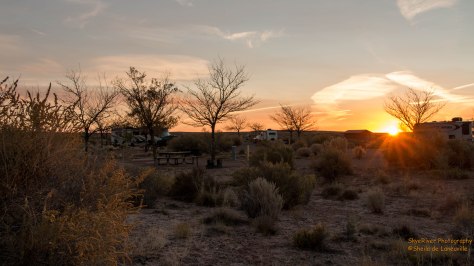
“I guess I might as well get up”, I told Howard this morning at 6:15. “Maybe I can capture a sunrise photo.” We don’t get up very early any more, and we linger way too long over coffee. It works for us. However, not this morning.

Howard had to be at the Winslow Ford dealer for 8:00am; a very tough chore for him. He did make it and luckily for him there is a Subway within walking distance of the dealership that serves breakfast sandwiches. We have never had a Subway breakfast sandwich, but they look good on their website. He told me later it sandwich was good.

Wishing I would have gotten outside a few minutes earlier.


Sunrise

_MG_0768

~Park Sites…

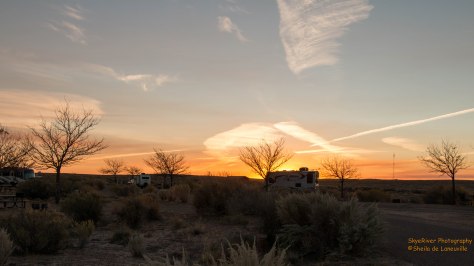
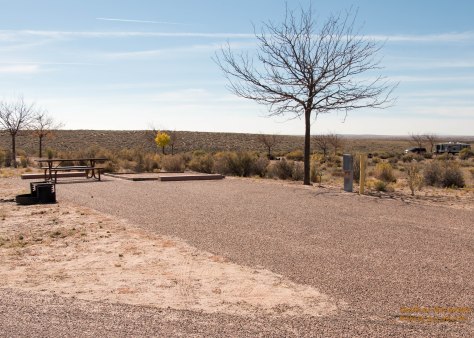
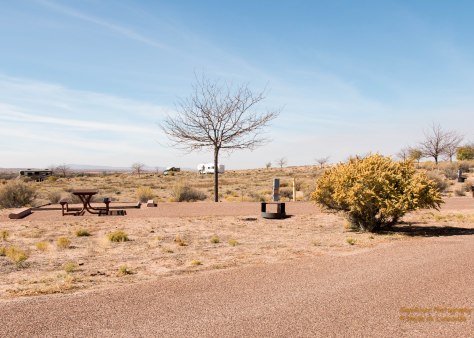
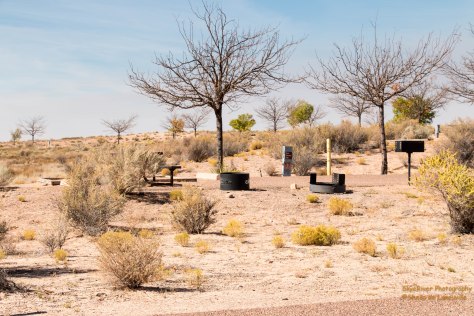
I thought it would be nice to show a few of the sites here in the park. They are big, level and have plenty room in-between them.

_MG_0787
Site 33 a pull through

~

_MG_0782
Site 6, back-in

~

_MG_0781
Another back-in

~

_MG_0783
Typical terrain in the park

~

~Critters…

_MG_0777
Look who came by for a visit. He was so excited he was shaking.

~

_MG_0780
“Okay, gotta go!”

~

_MG_0790
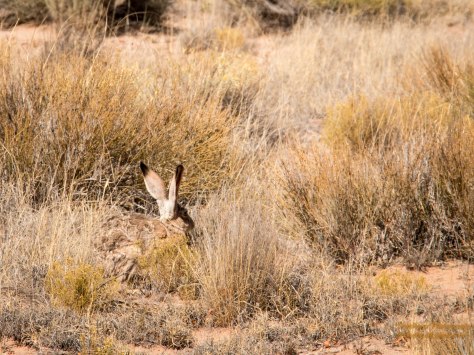
A Jack Rabbit

~

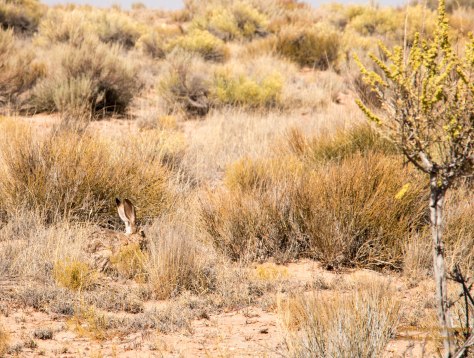
_MG_0789
“Find me”

~

~Status of our Ford Edge…

Howard got back from the Ford dealer around 12:30pm. They ran diagnostics and downloaded software all for $200.00 plus dollars. They told us that the transmission needed to be ‘dropped’ and the clutch(es) checked. They also told us that they didn’t have time, in the near future, to do the work.

With that, we are headed in the morning to the Grand Canyon, keeping with our plans. On Tuesday morning we will bring the Edge to the Ford dealer in Cottonwood, AZ for them to do the work. Appointment made. We will be staying at Dead Horse Ranch State Park for the week, as we planned.

~~Tomorrow…

I will post Part 2 of our stay at Homolovi State Park. We took a ride this afternoon to see the ruins, tour the visitor center, and enjoyed a late lunch in town. And, we stood on a corner! (And, I was trying so hard to get caught up with the blog/days.)

PS: If you enjoy dark, clear skies this state park is worth a visit. The sky last night was beautiful, with a prominent Milky Way.

~Look Up Every Now and Then~


~Spring birding in Texas-


~South Llano River State Park, Junction, TX, Spring, 2017


A few more bird photos from our stay at South Llano River State Park; I think I am getting close to publishing all of them.

_MG_9607
Lincoln’s Sparrow


~

_MG_9504
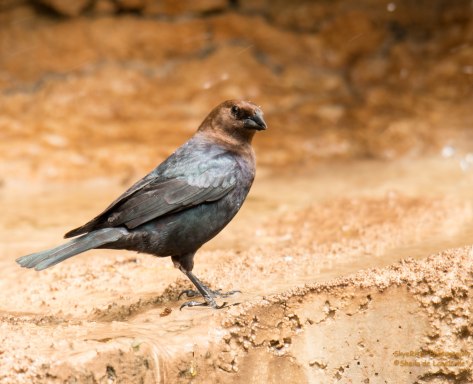
Brown-headed Cowbird

~

_MG_9538
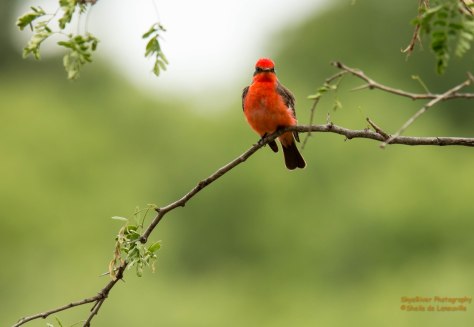
Vermilion Flycatcher

~

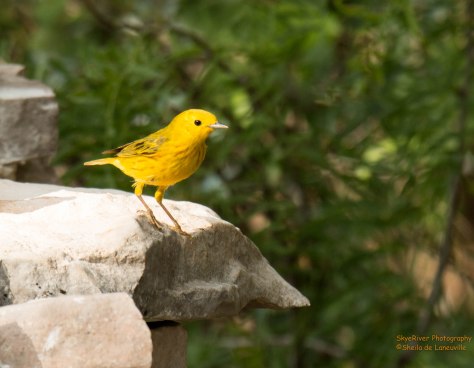
Yellow Warbler
Yellow Warbler

I only saw this Yellow Warbler once; flew in to get a drink of water and flew away. Might have been nesting.

~

_MG_9748
House Sparrow

~

_MG_9716
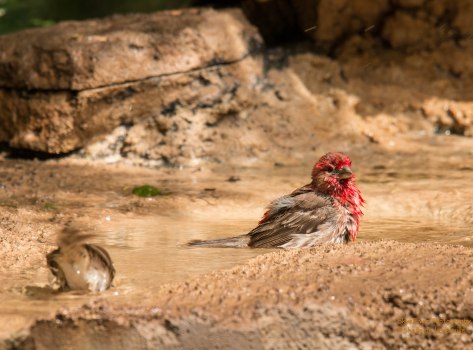
House Finch

This male House Finch is starting to show his breeding colors.

~

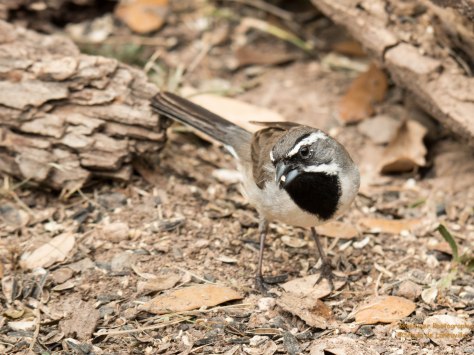
Black-throated Sparrow

~

_MG_9600
Black-chinned Hummingbird

~

_MG_9598
Northern Cardinal pair

~

House Finch
House Finch

~

_MG_9918
Summer Tanager (female)

~

_MG_9922.jpg
Yellow-rumped Warbler and a very wet Black-crested Titmouse

~

_MG_9604
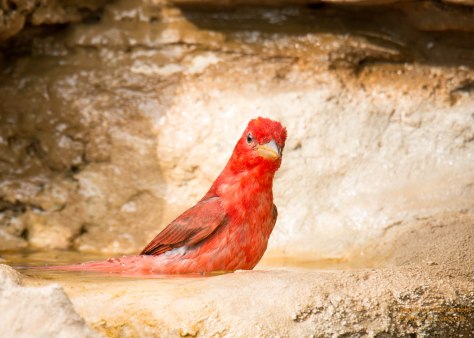
“Has anyone seen my mate? She is a pretty yellow girl.”

Summer Tanager (male)

~

_MG_9867
Carolina Chickadee

This Carolina Chickadee just didn’t want his photo taken.

~

Happy Birding!

~Safe Travels Little Ones

~Loveland, CO, October 6, 2017

Wednesday was the last time we saw the two Hummingbirds that have been with us for a long time. Drinking coffee yesterday morning we commented that “they must be gone”. During the day we kept watching for them, and when we didn’t see them again this morning we knew they must have begun their long journey south. I am glad, but sad.

I truly miss seeing them! They provided us with lots of entertainment this season.

_MG_9600
Black-chinned (male)

This photo was taken back in April at South Llano River State Park.

“Travel safe, and I truly hope you make it to your destination.”


~Birding in Texas, White-winged Dove

~South Llano River State River, Junction, TX, Spring, 2017


_MG_9461
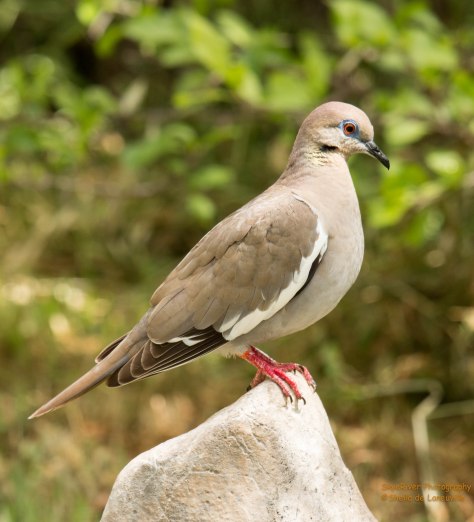
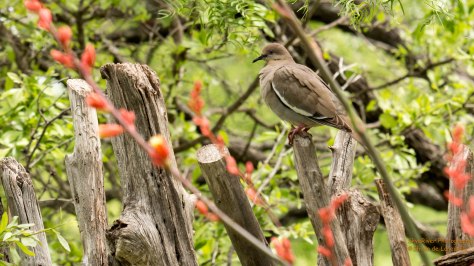
White-winged Dove (adult) Note the dark cheek patch and blue around the eye

These beautiful doves are easy to photograph, they are slow moving and like to perch for extended periods of time. They were plentiful in South Llano River State park this past Spring. The males were beginning to show subtle breeding colors, brighter red feet and legs, and yellowish hues around the back of neck. We only get to see them while traveling south. They have a limited range in the US, mostly Texas.

~

_MG_9750

~

_MG_9432

~

_MG_9743

~

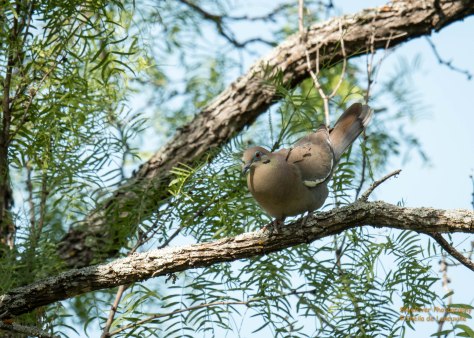
White-winged Dove

I was sitting in one of the blinds when a Texas farmer came in and sat down. He was very friendly and a good photographer. He commented on the large number of White-winged Doves we were seeing. He stated him and his wife have too many doves around their farm. I could tell by the way he spoke, they didn’t seem to care for these doves. I’am not sure if they caused them problems or they just didn’t like them. Maybe they ate too much bird seed!

~

_MG_9863

~

This from Wikipedia- “The white-winged dove is a dove whose native range extends from the south-western United States through Mexico, Central America, and the Caribbean. In recent years with increasing urbanization and backyard feeding, it has expanded throughout Texas, into Oklahoma, Louisiana and coastal Mississippi. It has also been introduced to Florida.”

Happy Birding!


_MG_9476