A small flock of Blue-headed vireos landed in Fairview Riveside State Park one day this past week. If I remember correctly, it was after heavy thunderstorms. Another birder, here in the park, was telling me about them.
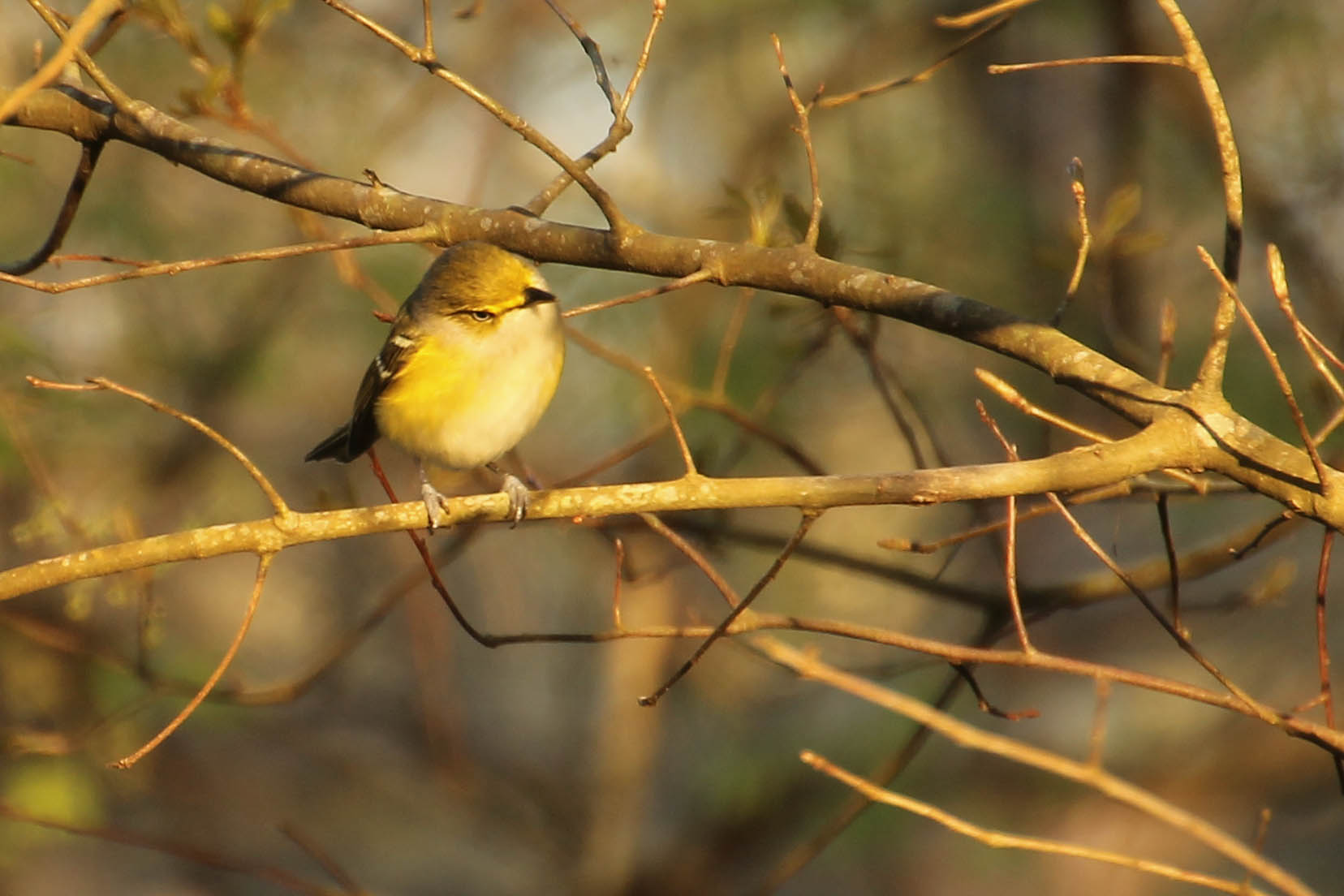
This morning, while on a walk, we first heard and then saw a tiny bird flitting about. I was hoping it might be a Blue-headed Vireo, it wasn’t. The bird we saw and the one in the photo below is a White-eyed Vireo.
This is the only photo of the White-eyed, from this morning, that is worth showing and it isn’t good. If only it wasn’t such a small bird and only if it didn’t zip here and there so darn fast. [grins]
White-eyed Vireo
I have seen the Solitary and the White-eyed previously and it would have been nice to record, as a new bird, the Blue-headed. Maybe another time.
This info taken from wikipedia: The Blue-headed Vireo is a common and vocal bird of northeastern forests. Formerly lumped as a “Solitary Vireo” with the more western Plumbeous and Cassin’s vireos, it is now considered a separate species.
Fast forward several hours…..
We went for another walk this evening and we saw the White-eyed Vireo again! This time I managed to capture a few nice photos, which was fun and a challenge.
White-eyed Vireo (Setting sun hitting the little guy just right)White-eyed Vireo Beautiful little bird
Notice the white eye!
I believe, because the setting sun was highlighting this Vireo just right, the photo looks like it has been color enhanced, but it has not!
This info taken from All About Birds: The White-eyed Vireo is a small and secretive bird of shrubby areas of the eastern and southern United States, the White-eyed Vireo is more noticeable for its explosive song than its looks.
It was a fun walk for sure, not only because I managed to photograph the White-eyed again, but also because I added two, yes two, new birds to my Birding Life List.
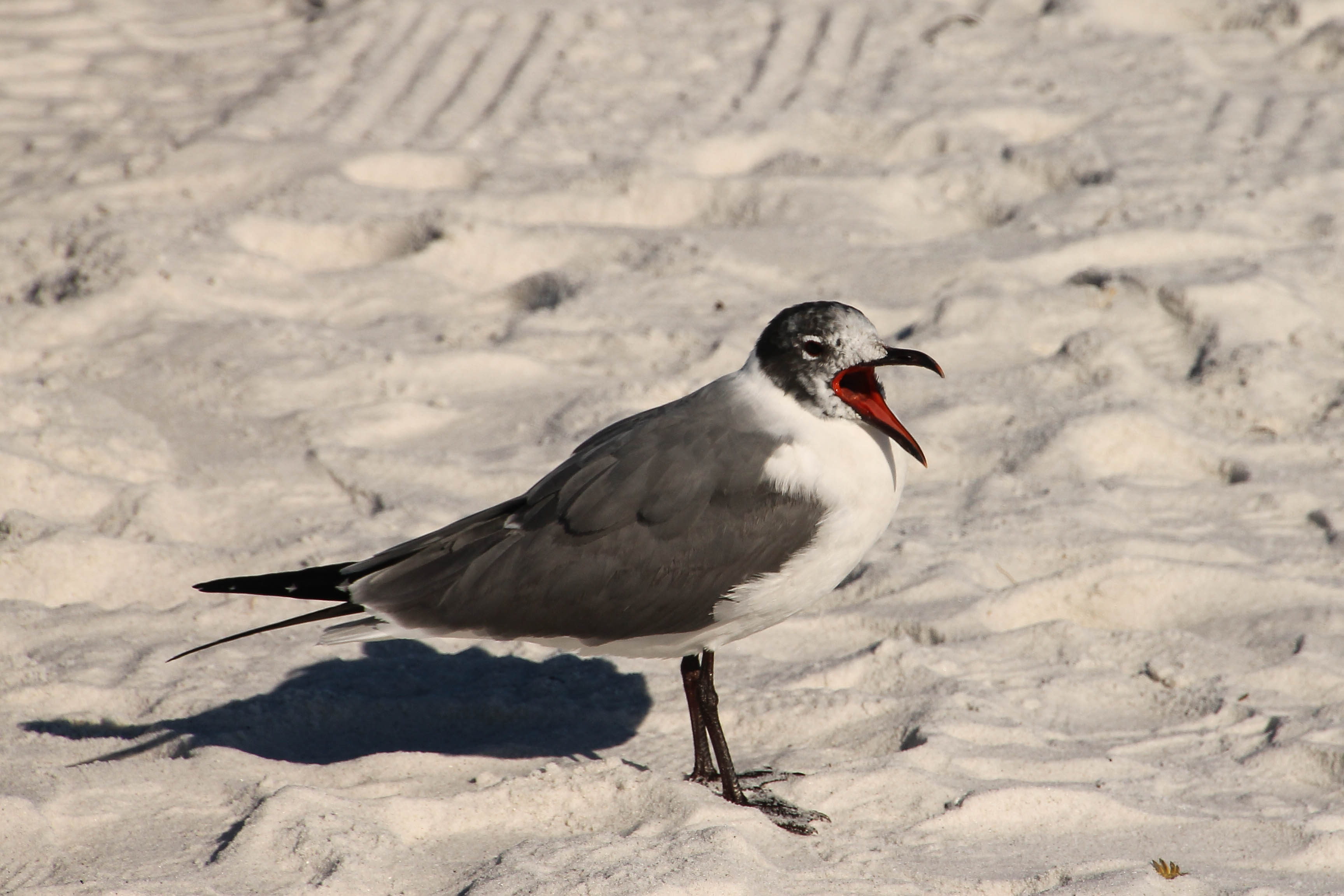
~Laughing Gull~ (adult) Black hood, black legs, white underparts, white crescent marks above and below eyes, reddish beak, broad white collar.
Added to my Birding Life List in April 10, 1993~
Laughing Gull“Go Away”“I’am getting bored”
Laughing Gulls were named, because they have a laughter like call! They are medium-sized gulls with fairly long wings and long legs that impart a graceful look when they are flying or walking. They have stout, fairly long bills. Adult Laughing Gulls are medium gray above and white below.
Summer adults have a crisp black hood, white arcs around the eye, and a reddish bill. In winter, the hood becomes a blurry gray mask on a white head.
The legs are reddish black to black. Immatures are much browner and more subtly patterned than adults; they take 2-3 years to gain adult plumage.
In the early 20th century, the Laughing Gull was threatened by the feather trade. Today they are common, stable over much of their range and numbers have been increasing in the northeastern US in recent years.
If you are interested in learning more about the Laughing Gull, please visit this web-site or any other birding web-site:
I found the fact that they take 2-3 years to gain adult plumage very interesting. I took these photos on a beach near Destin, Florida about a week ago. Notice the white tail, therefore I think it is an adult in winter plumage. Some people don’t like gulls; however I enjoy watching and photographing them. I believe they serve a purpose along our shorelines.
This gull was standing about 10 feet from the edge of the Gulf, looking out over the waves, perhaps waiting for a Pelican to drop a morsel of food at its feet.
~
Just as I am! Every Friday you may participate in Feathers on Friday at Prairie Birder.
Some of my information for this post was taken from Field Guide to Birds of North America, Smithsonian Handbook, Birds of North America and Cornell Lad of Ornithology and their website All About Birds.
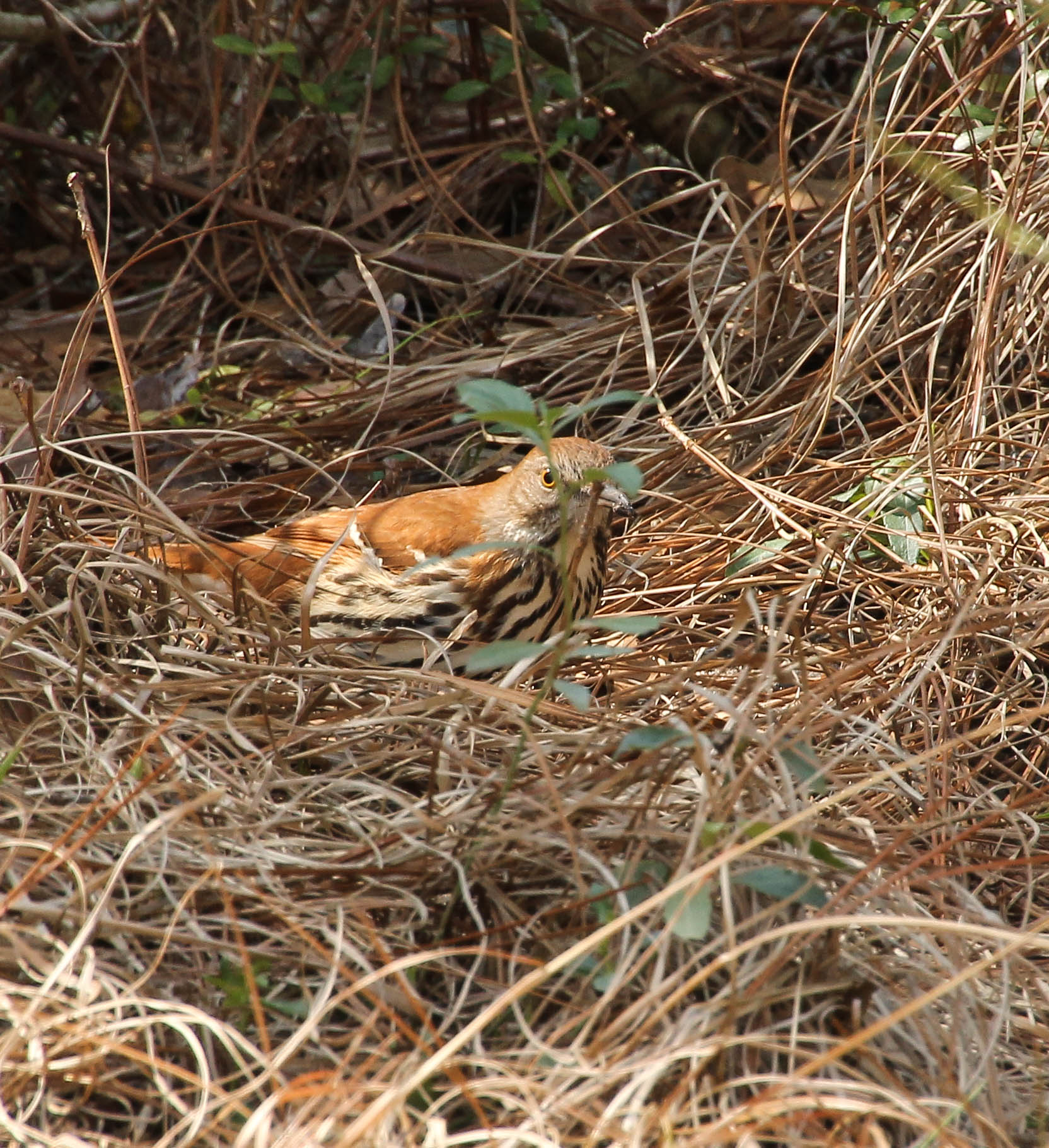
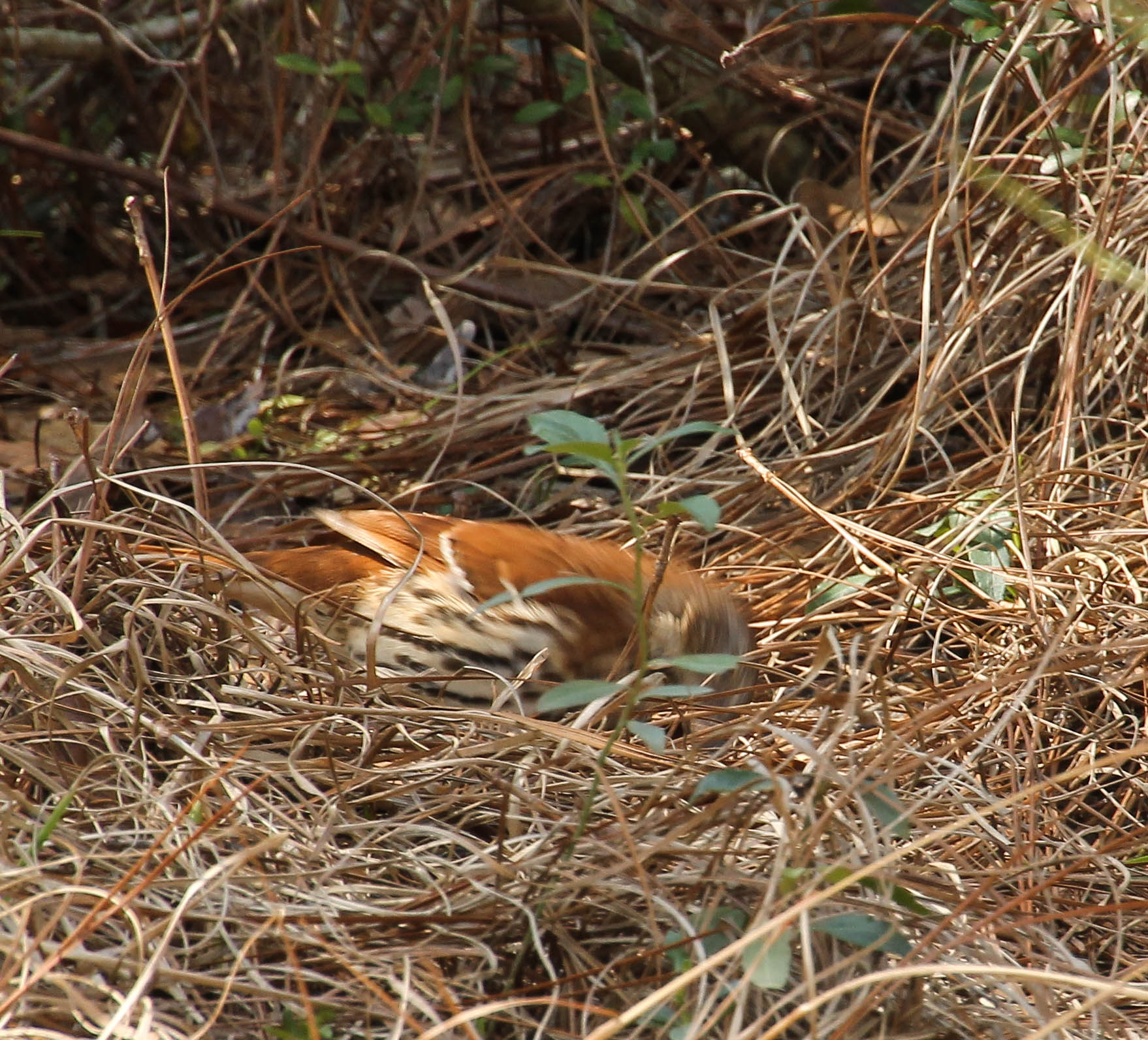
~Brown Thrasher~reddish-brown above, streaked below, yellow eye and down-curved bill
Added to my Birding Life List in January of 1988~
Brown Thrasher
~
“I’am trying to hide”
~
This Brown Thrasher was a frequent visitor to a wooded area near our campsite. I was delighted to see this bird and amused watching it hunt for food. At times it looked like a jack-hammer, repeatedly stretching upward and then coming down pounding the ground with its large bill. At times you would see dead leaves and pine needles flying in all directions as it sweep the forrest floor with its curved bill.
~
Jack-hammer Thrash
~
A nice view showing its streaked body and white-wing bars
If you are interested in learning more about the Brown Thrasher, please visit this web-site or any other birding web-site:
It can be tricky to glimpse a Brown Thrasher in a tangled mass of shrubbery, and once you do you may wonder how such a boldly patterned, gangly bird could stay so hidden. Brown Thrashers wear a somewhat severe expression thanks to their heavy, slightly downcurved bill and staring yellow eyes, and they are the only thrasher species east of Texas. Brown Thrashers are exuberant singers, with one of the largest repertoires of any North American songbird. (description as taken from All About Birds)
~
Enjoy Birdwatching!
It can be entertaining as well as educational!
~
Just as I am! Every Friday you may participate in Feathers on Friday at Prairie Birder.
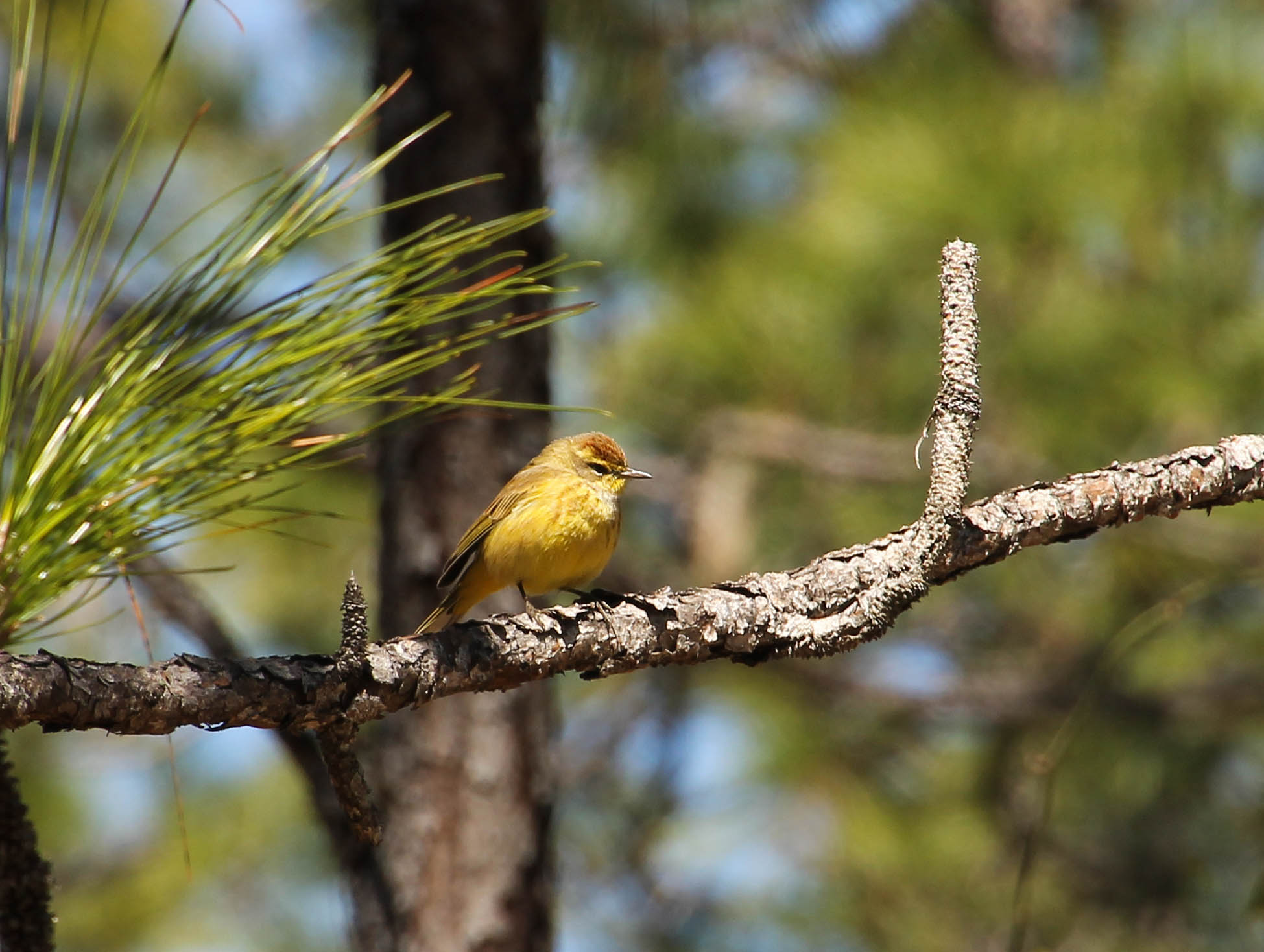
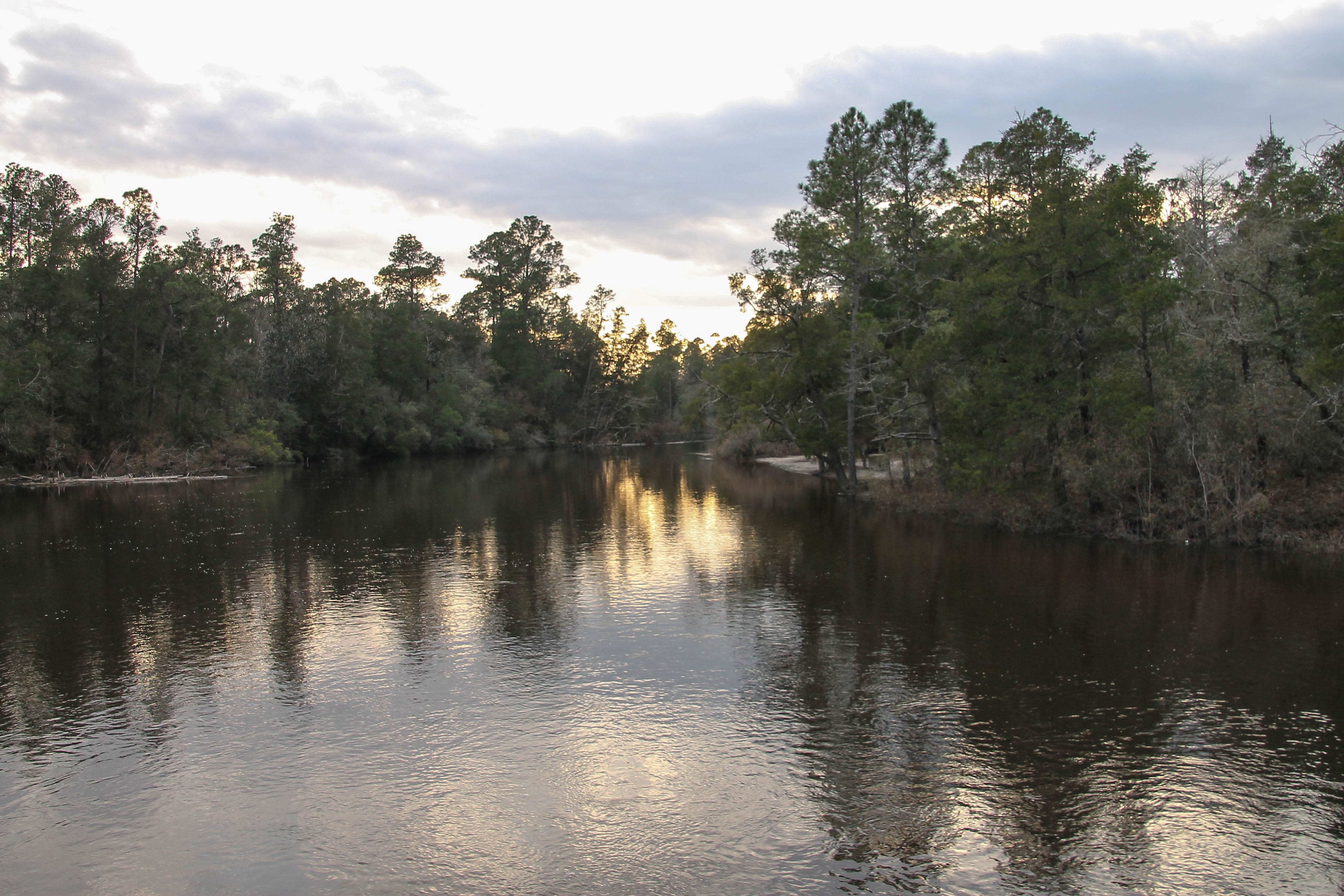
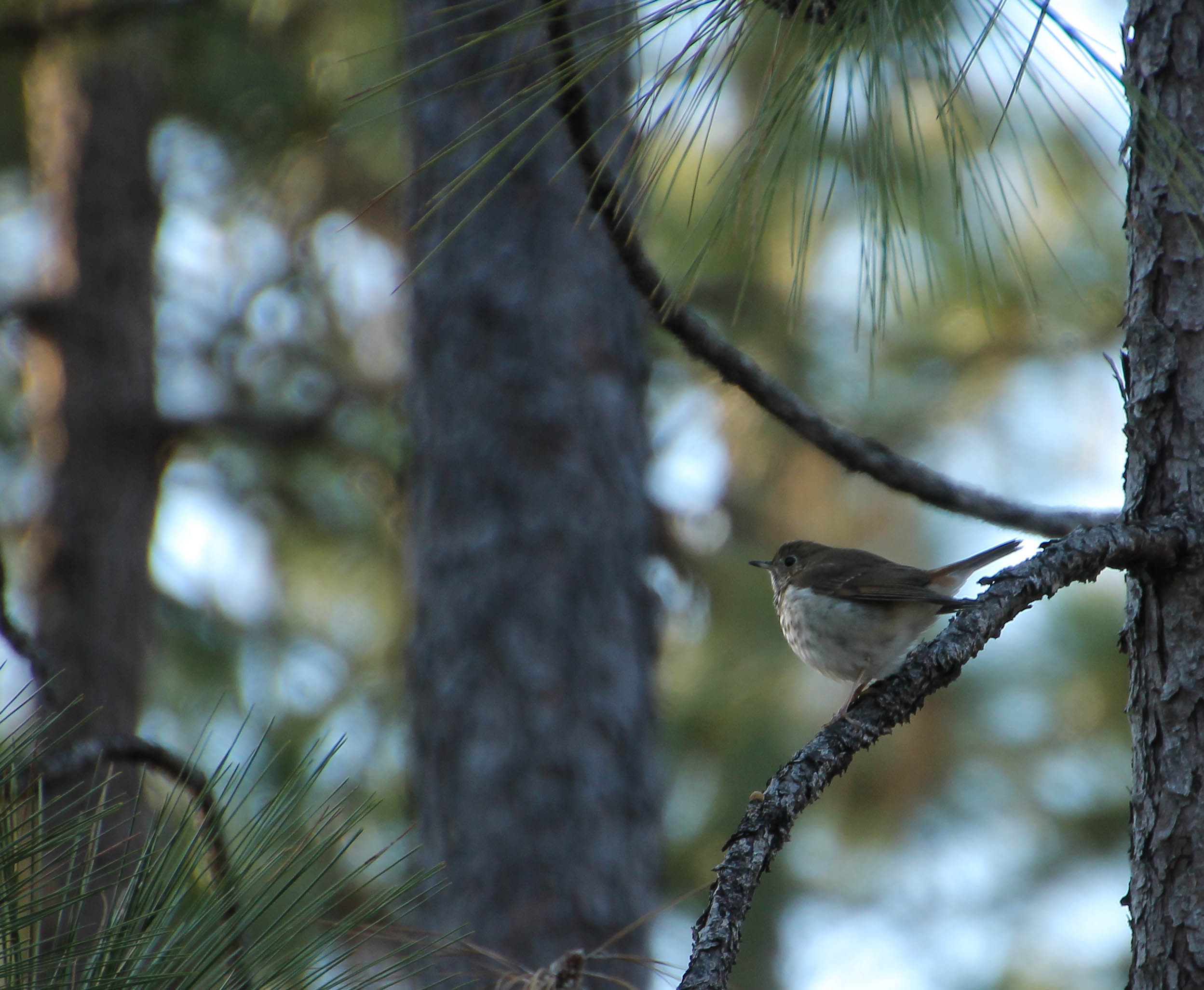
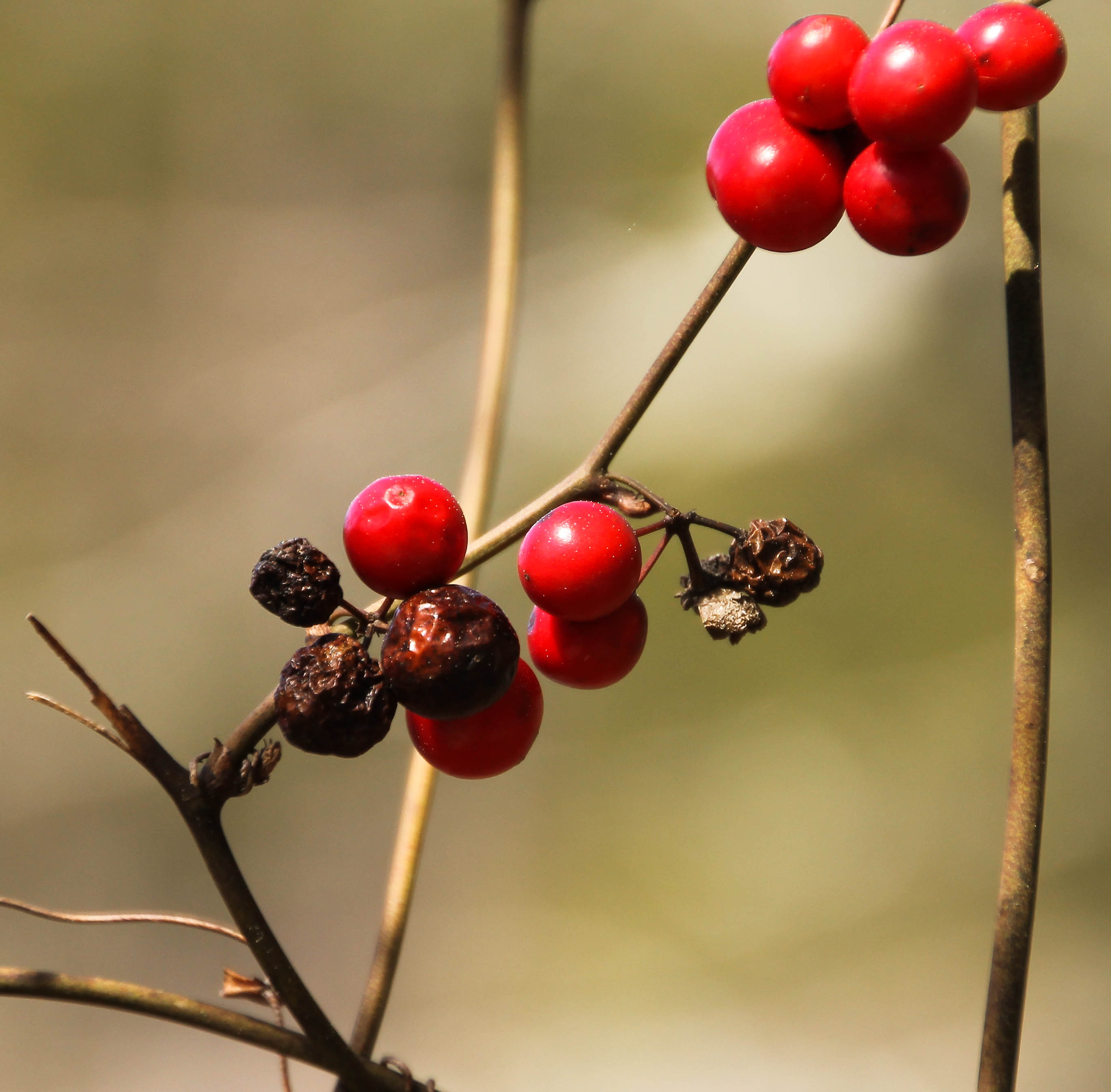
A bog along a trailPalm Warbler sitting in a Long Leaf PineSunset on the Blackwater River (As close as it get to one!)I think a Hermit ThrushLife and Death Berry Bushes along a trailOld Bridge leading to Blackwater River Campground. Beach in the foreground.
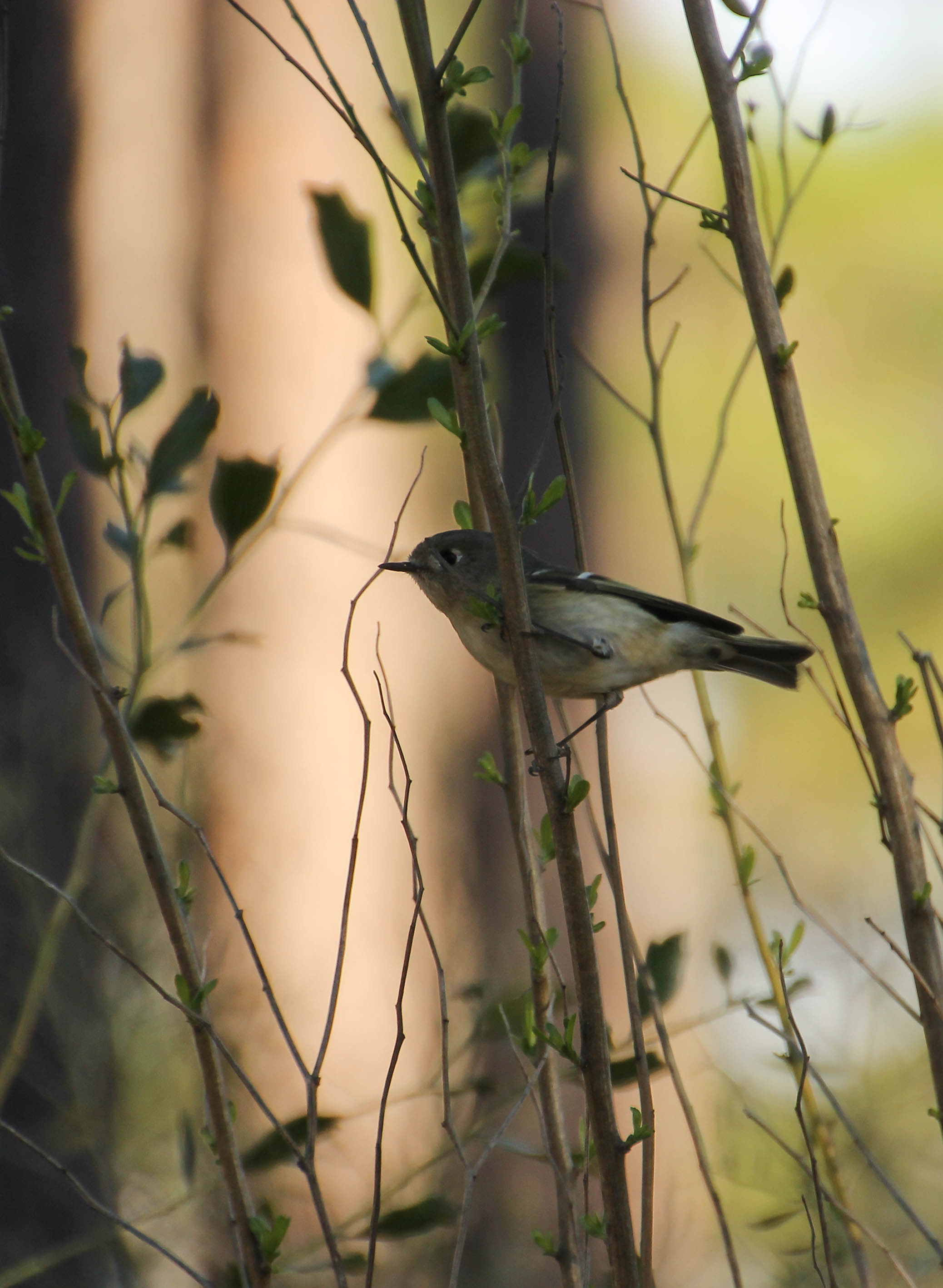
Ruby-crowned KingletFace of Determination
It was a nice, sunny day today, at Blackwater River State Park, with temperatures hovering around 55 degrees. We spent time outside so things were good! A lot of the trails are covered with water due to heavy rains and river runoff, so we are limited to where we can hike. We saw another Fox Squirrel today, this one black with a white face, but he was too fast for me to get a photo.
This one and a half hour loop trail is covered with river water, in places, making it impossible to hike.
Tonight’s low will be 27 degrees; a little too “cool” for me! Where are our mild temperatures?
A few additional photos of our, February, 2014, visit to Eastbank camp-ground on Lake Seminole. We have moved on, slowly continuing our journey back to Colorado. We had a wonderful time at one of our most favorite places to spend a few days.
One Last SunsetAn Eastern Bluebird sitting in a Sycamore TreeEastbank Campground=Site A01
Kevin, can you spot Howard’s antenna?
As darkness begins to decend; bats are flying around!
Ever try to photograph bats, at night, in flight?
Through the Pines
Camped among these pines were several ladies, perhaps a women’s club, in their RV’s each with at least one Kayak! They were having fun!
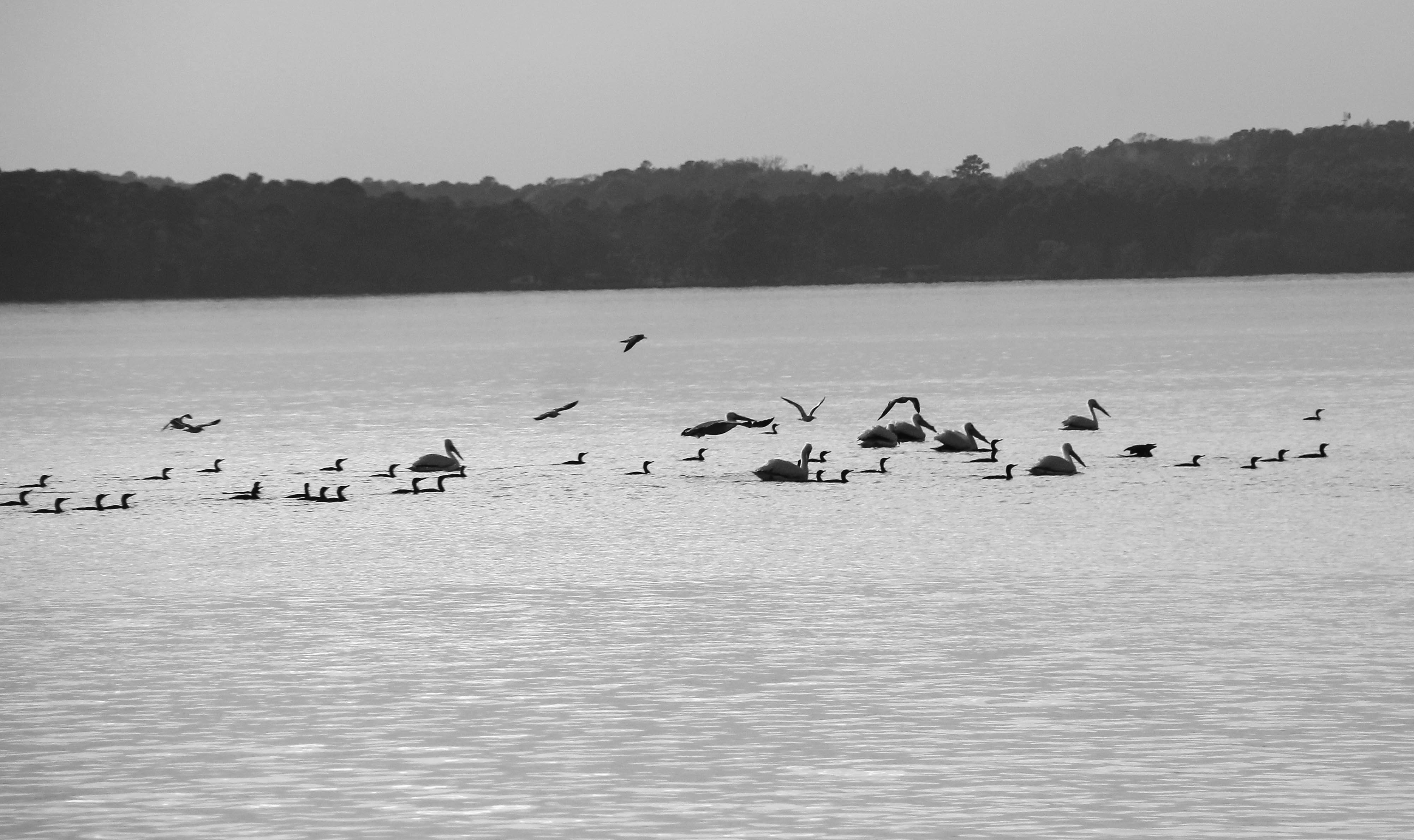
A pretty little Palm WarblerEastern PhoebeLate Evening Activity —As we sat and watched, wave after wave of White Pelicans and Cormorants, landed on the lake. Hundreds!












 Wolf Song Blog