I have a passion for the outdoors and I am most happy enjoying what nature has to offer. Hobbies include photography, birding, Pickleball, astronomy, biking, and hiking. I have been happily married, for 50 years, to an amazing person.
We sadly leave family and friends in Mississippi and Louisiana….until next time our hearts remain with each of you.
Two weeks ago we visited our family in Purvis, Mississippi. We had a wonderful time and it was truly sad leaving them. They spoil us rotten while we are there.
We stay at my brother and sister-in-law’s farm. While there we also get to see my younger sister and many nieces, nephews, greats and great-greats! Love you guys and thanks for making us feel loved and welcome!
A few Mississippi photos:
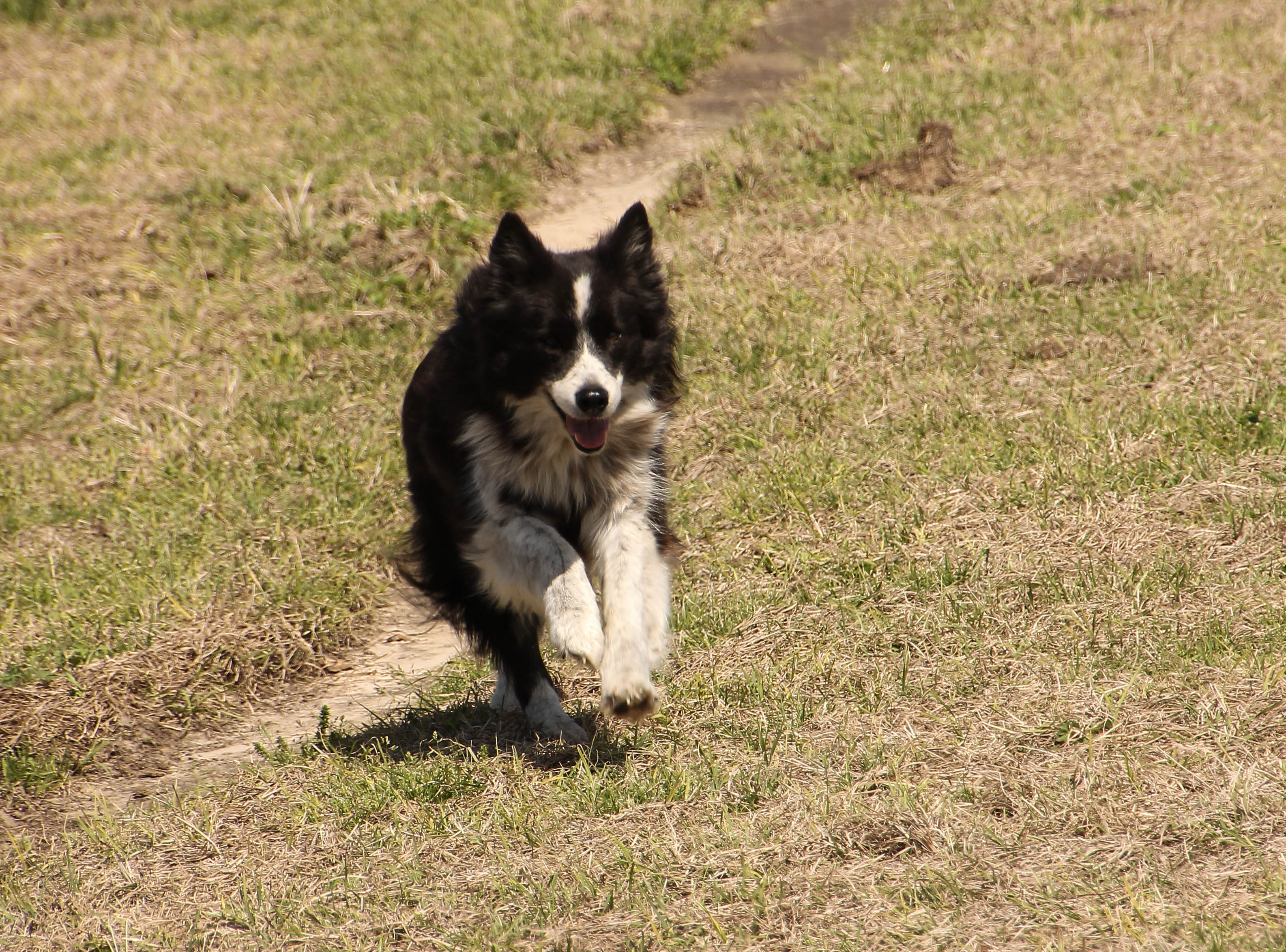
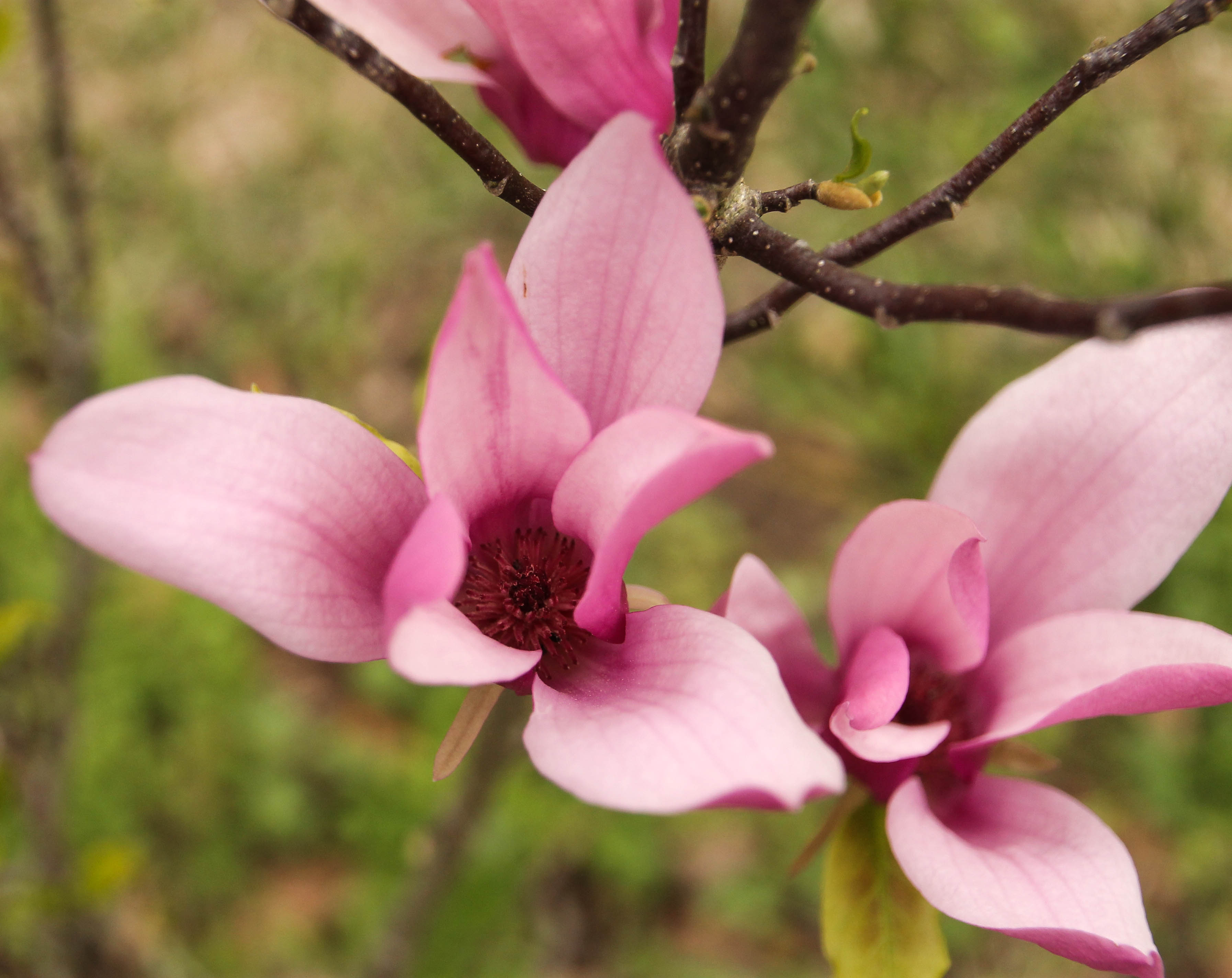
Annie She loves to chase cows and run off critters at nightJapanese Magnolia (my brother loves to plant trees and blooming scrubs)Another variety of Japanese MagnoliaSing Baby Sing I saw twenty-three species, of bird this visit
Big Red, Hot Rod, Lace and Fat Mama/Lena before she foaled. All across the Front PondFront Pond, Howard and Leland going to see if the Wood Ducks were in the bog. We saw 14!
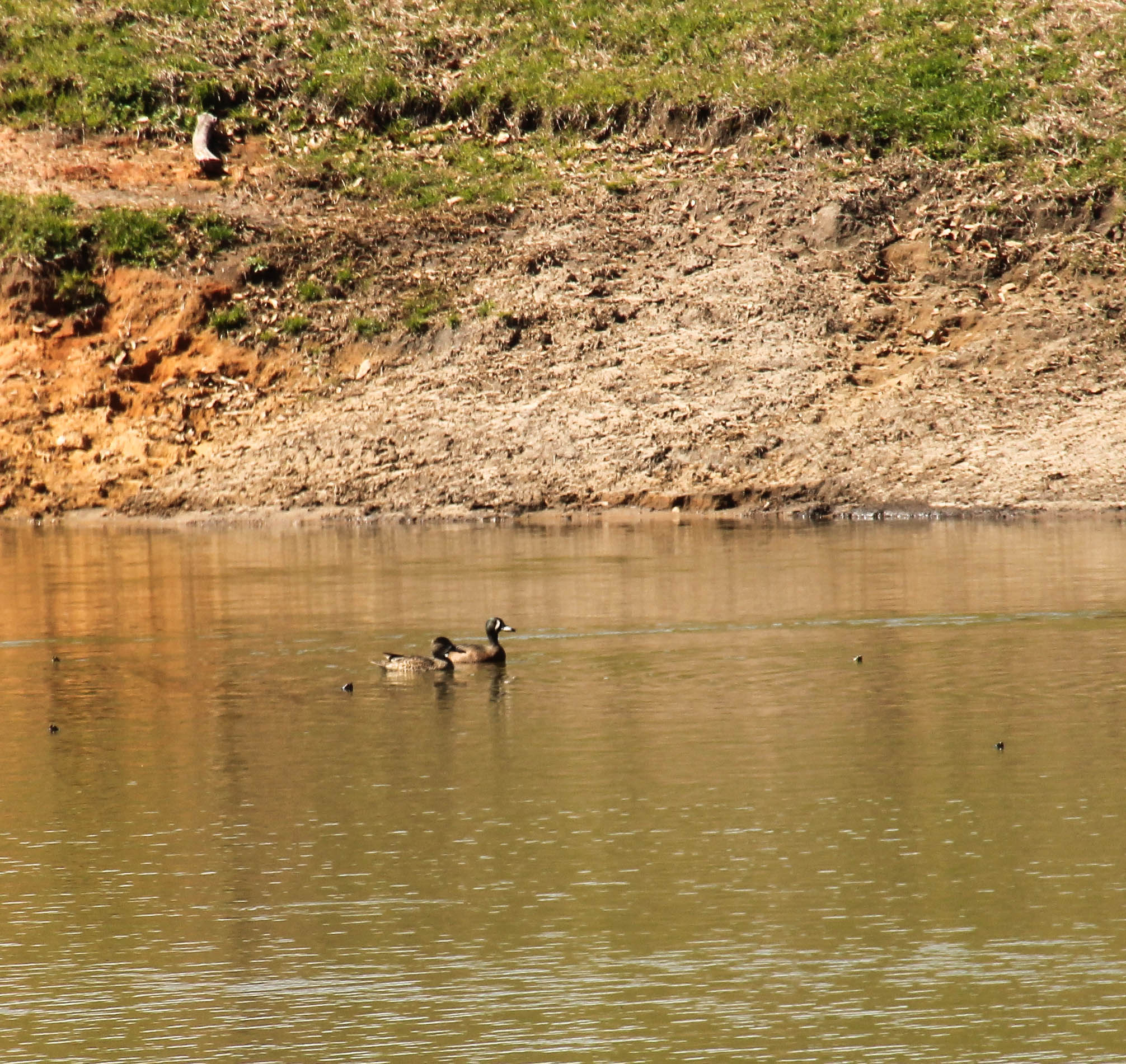
A pair of Blue-winged Teals visiting the Back PondRed Missippippi Mud -back pondTracks, probably TurkeyAnother view of the back pond
Goodbye Mississippi, we’ll be back!
After our visit in Mississippi we drove to Madisonville, Louisiana and again stayed at Fairview Riverside State Park. We stay there, because it is close to friends, who also spoil us rotten! We had a great time and hope to see yawl soon. Love you guys!
I have been posting a few photos from Fairview Riverside State Park and I have a few more to share, including my new bird sightings!
A beautiful Cypress Tree
One evening we had dinner with Howard’s brother and our sister-in-law, who drove from Hobe Sound, Florida to visit with SIL’s family in Metairie. Remember we spent time visiting with them and family in Hobe Sound. We will see all of you very soon, with all our love!
We all met at a restaurant in Covington, Louisiana. Howard and Bob’s childhood friend and his family jointed us for dinner and we had a very enjoyable time visiting.
One morning we drove the 22 mile causeway over Lake Pontchartrain traveling, as they say, from the north shore to the south shore to the city of Metairie, which is near New Orleans. We went to visit with our 82 year old cousin. Joy is her name and she is a joy to be around.
As you can see we had a busy time and again our visit has come to an end. This morning we pulled out of Fairview Riverside State Park and pointed our nose west!!!
Goodbye Madisonville, Louisiana, we’ll be back!
We are slowly making our way home to Colorado, stopping along the way where ever we want, to enjoy birding, hiking, sightseeing and some more good eats!
We are staying a few days in Duson, Louisiana (can you say the cajun pronunciation of Duson). While here we will visit a state park in Abbeville, Louisiana to see if we would like to stop there on future trips through this area. We really love the State Parks!
Tomorrow night we plan to eat dinner at a restaurant near Lafayette, while a cajun band plays their unique style of music!
We have not decided on a specific route home.
We don’t have any firm plans beyond this point, except to visit some of the national wildlife areas near Beaumont, Texas, hoping to see some migrating birds.
A small flock of Blue-headed vireos landed in Fairview Riveside State Park one day this past week. If I remember correctly, it was after heavy thunderstorms. Another birder, here in the park, was telling me about them.
This morning, while on a walk, we first heard and then saw a tiny bird flitting about. I was hoping it might be a Blue-headed Vireo, it wasn’t. The bird we saw and the one in the photo below is a White-eyed Vireo.
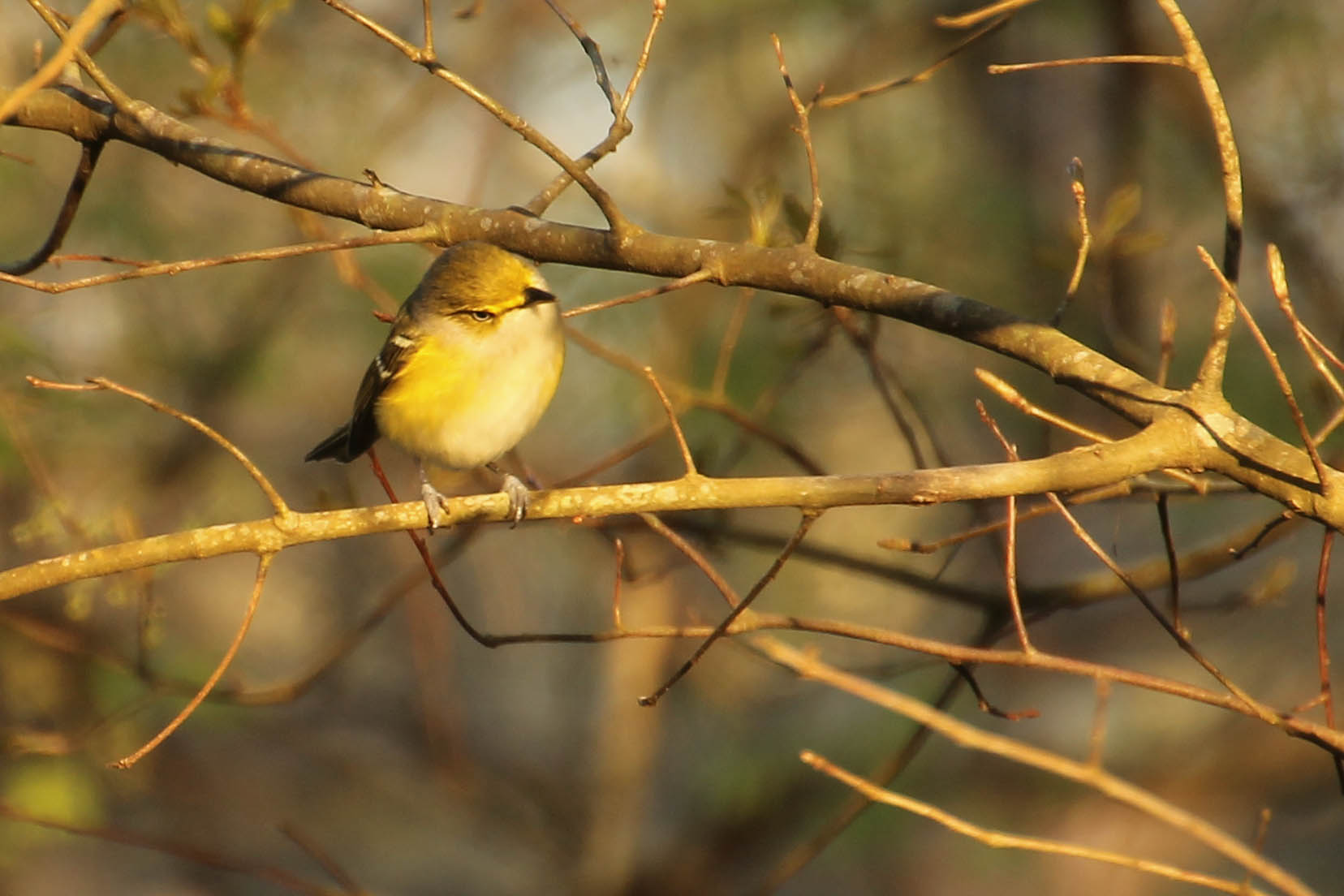
This is the only photo of the White-eyed, from this morning, that is worth showing and it isn’t good. If only it wasn’t such a small bird and only if it didn’t zip here and there so darn fast. [grins]
White-eyed Vireo
I have seen the Solitary and the White-eyed previously and it would have been nice to record, as a new bird, the Blue-headed. Maybe another time.
This info taken from wikipedia: The Blue-headed Vireo is a common and vocal bird of northeastern forests. Formerly lumped as a “Solitary Vireo” with the more western Plumbeous and Cassin’s vireos, it is now considered a separate species.
Fast forward several hours…..
We went for another walk this evening and we saw the White-eyed Vireo again! This time I managed to capture a few nice photos, which was fun and a challenge.
White-eyed Vireo (Setting sun hitting the little guy just right)White-eyed Vireo Beautiful little bird
Notice the white eye!
I believe, because the setting sun was highlighting this Vireo just right, the photo looks like it has been color enhanced, but it has not!
This info taken from All About Birds: The White-eyed Vireo is a small and secretive bird of shrubby areas of the eastern and southern United States, the White-eyed Vireo is more noticeable for its explosive song than its looks.
It was a fun walk for sure, not only because I managed to photograph the White-eyed again, but also because I added two, yes two, new birds to my Birding Life List.
~Canada Goose – black head and neck, white chin strap, blackish bill, brownish gray upper parts, white under tail coverts.
~
Added to my Birding Life List in July of 1984
(while on vacation in Yellowstone National Park, WY)
~
A Canada Goose drinking a sip of water
The Canada Goose is the most common, familiar and widespread goose in North America.
They are native to North America and breed in Canada and the northern United States in a variety of habitats. The Great Lakes region maintains a very large population of Canada Geese.
Canada Geese occur year-round in the southern part of their breeding range, including most of the eastern seaboard and the Pacific coast. Between California and South Carolina in the southern United States and northern Mexico, Canada Geese are primarily present as migrants from further north during the winter.
Mini and Moe (they mate for life and are monogamous
Canada Geese will mate for life. Like most other geese, family units remain together through winter and until they return to breeding grounds. Incubation is 25-30 days by the female, young leave nest at 2-2 days, young feed themselves with the help of their parents.
Black head and neck, white shin strap, black bill, white under tail coverts
These geese are called dabblers and grazers, feeding on a variety of aquatic and terrestrial plants.
I am sure you have been treated to the familiar honk-a-lonk song of these geese and have seen them flying over in their distinctive V formation!
I had a wonderful time photographing these geese while staying at Meaher State Park in Spanish Fort, Alabama.
If you are interested in learning more about the Canada Goose, please visit this web-site or any other birding web-site:
Information on the Canada Goose was taken from several birding books and web-sites to include: DK Smithsonian Handbook on Birds of North America, National Geographic Society and Wikipedia.







 Wolf Song Blog